

7 Old-School Soups And Stews No One Seems To Eat Anymore
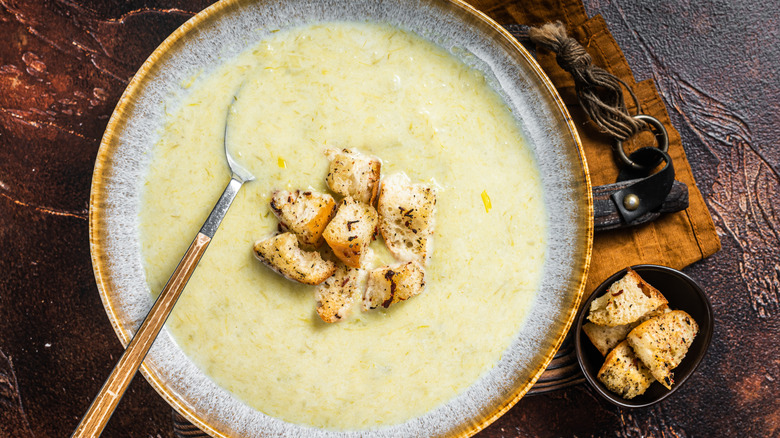
On a cold fall or winter's day, nothing warms up your insides like a hot bowl of soup or stew, served with lots of crusty bread and plenty of butter. For some, only chicken noodle soup will do, while others prefer minestrone, Italian sausage, or French onion. But it would be very unlikely that today, anyone would reach for, say, a steaming-hot bowl of turtle soup or a dish of Hoover stew.
Some soups and stews have gone seriously out of fashion. In some cases, it's because the key ingredient just isn't really eaten anymore (such as weeds or turtles), while for others, it's more to do with the circumstances that made them popular in the first place, like the Great Depression or World War II.
Below, we've rounded up some of the soups and stews that used to be popular but no one seems to eat anymore. Mutton stew, anyone? We didn't think so.
Turtle soup
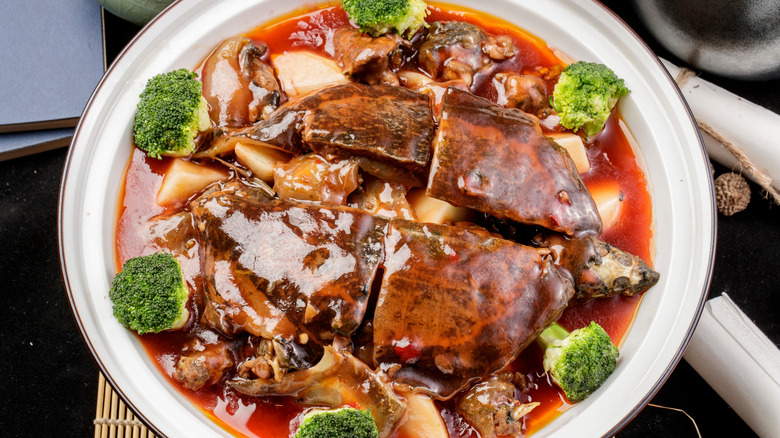
You know those foods that sound like one thing, and then turn out to be something entirely different? Like grasshopper pie, for instance. Usually, unless you're making it with cricket flour, it doesn't contain any real insects. That's just one example — there's also a Garbage Plate, which doesn't contain any trash, and toad in the hole, which is just sausages and batter. You get the gist. Turtle soup, though, is not in this club.
It might seem strange to some now, given it is illegal in most countries to hunt sea turtles, but the marine animals used to be eaten quite regularly by European sailors during the British empire. Sailors ate them because they were easy to catch and cook, and by the mid-1700s, rich people had also developed a taste for turtles, which they ate in soup. In fact, once upon a time, serving turtle soup was seen as the height of class and sophistication.
In 2025, though, in most countries, turtles have been off the menu for some time, even in fine-dining restaurants. After all, the green sea turtle, once hunted for its meat and eggs to near extinction, is now endangered. That said, turtle soup is still eaten in some regions, including Singapore and the Cayman Islands, although some claim it is now falling out of favor with many people in these places, too.
Vichyssoise
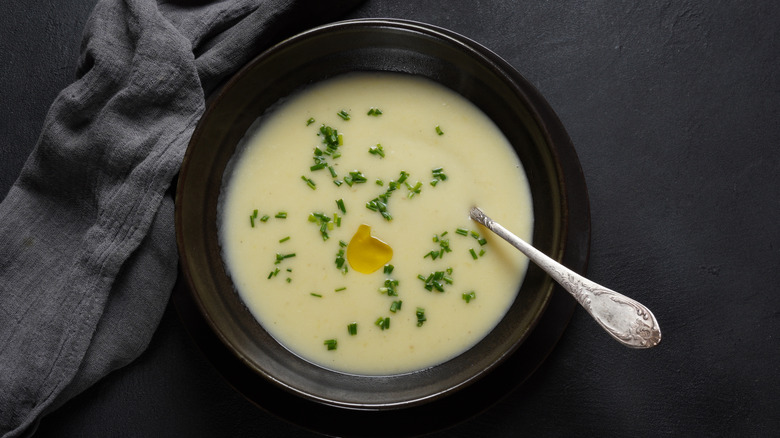
Vichyssoise sounds like an incredibly sophisticated French dish, but it's basically just a chilled version of potato and leek soup. It was first whipped up back at the beginning of the 20th century by a popular French-American chef named Louis Diat. He was trying to recreate the soups of his childhood, but they were too hot for New York's intense summers, so he served his rendition of potato and leek soup cold.
Diat's soup was so beloved in Manhattan's Ritz-Carlton where he worked, he gave it a name inspired by his hometown: vichyssoise. Other restaurants recreated his recipe, and soon, brands were even selling it in cans. But that's when tragedy struck.
In the 1970s, a can of vichyssoise sold by Bon Vivant ended up causing two deaths by botulism. It was a PR nightmare for the soup and for Bon Vivant, and while it is still served in some places, vichyssoise hasn't really risen back to popularity since.
Hoover stew
During the Great Depression, people had to make do with very simple dishes to get by. There was water pie, for example, which was literally just pie crust, water, flour, sugar, vanilla, and butter; bread and butter pickles; and of course, Hoover stew.
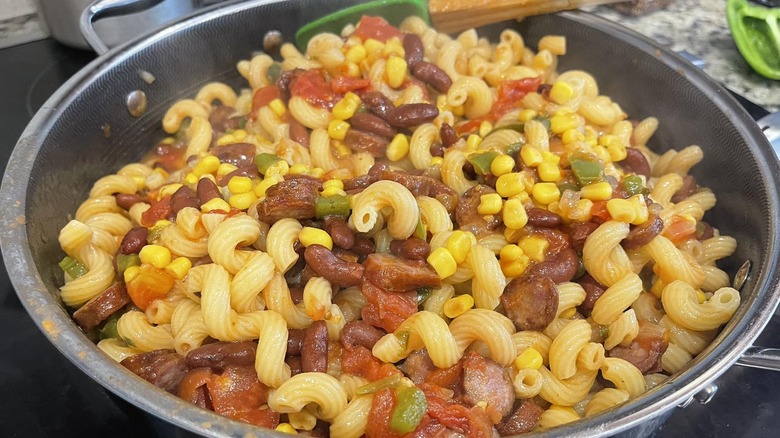
Hoover stew was a popular recipe during this era because it was hearty, which was essential for getting through the day when food was scarce. It usually consisted of ingredients like crushed tomatoes, canned corn, beans, pasta, and hot dogs, which were mixed up and simmered in large vats before being served to people from soup kitchens across the country.
If you're wondering about the name, there's a pretty straightforward explanation: It was to get back at the president. Ultimately, many Americans were angry at President Herbert Hoover and blamed him for causing the economic crisis that led to the Depression. His name was also given to the slums that popped up around major cities at this time — people called them "Hoovervilles."
Hot dog soup
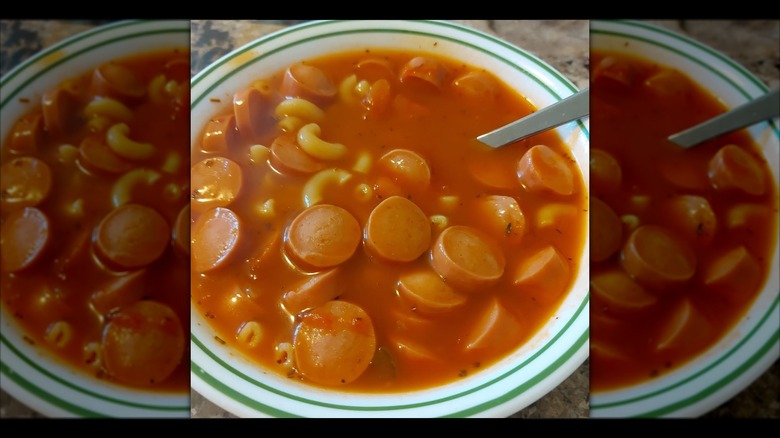
Hot dogs are, of course, still an American favorite. According to the National Hot Dog and Sausage Council, in 2024, people in the U.S. collectively spent more than $8.5 billion on hot dogs and sausages. But how many of them put them in a cheese soup? We can't say for sure, but we're going to guess not that many. A few decades ago, however, this was a classic dinner dish.
Hot dog cheese soup is exactly what it sounds like. One 1955 recipe from a magazine instructs readers to combine chopped frankfurters with two cups of shredded processed American cheese, as well as ingredients like bouillon cubes, hot water, butter, and milk. The same magazine includes recipes for hot dogs with noodles, hot dogs with eggs, hot dogs in a dish with two cans of baked beans, and cabbage salad with hot dogs. Clearly, hot dogs were having a moment.
Another mid-century recipe from a Campbell soup advertisement encourages readers to make a hot dog casserole by combining hot dogs with Campbell's Cream of Mushroom Soup and cooked potatoes. Hot dog soup stuck around for a while after that. One recipe from the 1980s, for example, instructs home cooks to combine hot dogs with tomato soup, potatoes, salt, pepper, and butter.
Mutton stew
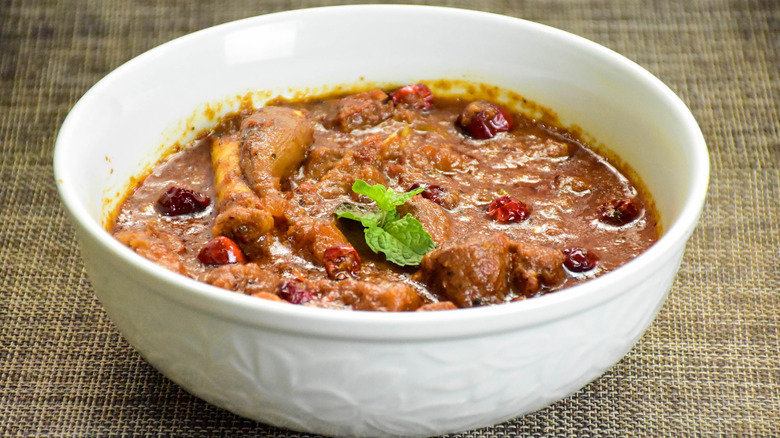
Throughout history, in many different cultures, people have embraced mutton stew. It's a Navajo Nation staple, for example, and it was also beloved in medieval England. But in the U.S. today, it's not a common sight. In fact, mutton, in general, isn't really eaten much in the States.
But it hasn't always been this way. Mutton in various formats was once a common sight on restaurant menus across America. But after World War II, people steered clear of it. That was largely because one of the main foods available to soldiers during the war was canned mutton, which put many of them off the meat entirely when they returned home.
There are other reasons why mutton isn't as common in the U.S. Firstly, there isn't much of a sheep farming industry in the country, and secondly, mutton simply takes a lot of time and effort to prepare.
Hamburger soup
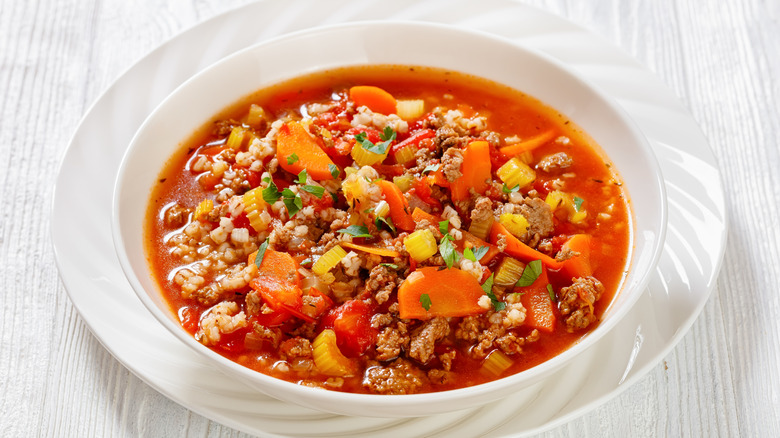
We've had hot dog cheese soup, and now we give you hamburger soup. It's not as common now, but many remember visiting their grandmothers or aunts and being served a big stew-like dish filled with hamburger meat, tomato soup, and beef broth. Many also remember being fed the soup by their busy moms, who, in the 1970s, would leave it to simmer all day before serving it up in the evening, with enough to feed the whole family easily and cheaply.
Apparently, even former President Ronald Reagan was a fan of hamburger soup. In fact, one 1984 extract from McCall's magazine explains that the dish, made with ground beef, onions, garlic, carrots, and celery, was served during "informal evenings" at the White House. According to the article, his taste for the humble dish shows that Reagan was one for "earthy, unpretentious" meals. Another favorite of his was, apparently, macaroni and cheese with dry mustard.
Dandelion soup

Dandelion isn't a common ingredient on menus or in cookbooks now, but this simple yellow-flowered weed is actually edible. The leaves can be cooked just like collard greens, while the flowers can be used to make jelly and the roots for tea. In fact, people have eaten dandelions for a very long time. During the Great Depression, for example, dandelion salad was a cheap and nutritious meal for many families.
Dandelion soup used to be eaten across Italy, and so, many Italian Americans used to make it, too (and some still do occasionally). One famous Italian American who was a big fan of dandelion soup was Al Capone. According to a book written by his niece, the infamous gangster's family would regularly combine dandelion greens with other classic Italian ingredients like olive oil, garlic, onions, chicken stock, Romano cheese, and salt and pepper to make a rich and flavorful soup.