

The Best Steakhouse In Connecticut Holds A Patent On How It Ages Its Beef
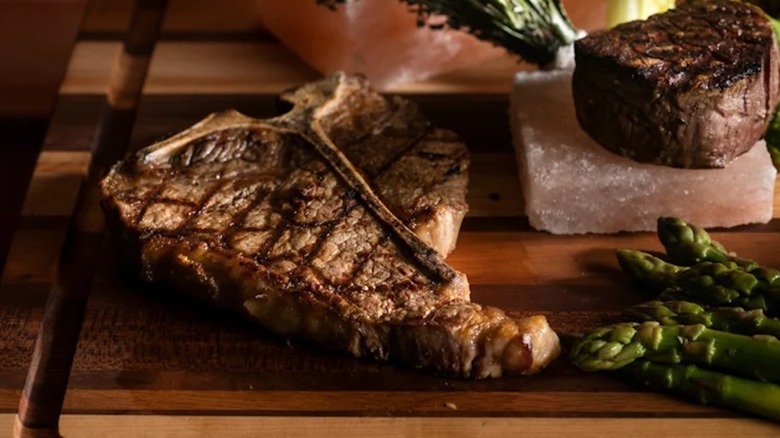
While some chefs focus on cooking techniques, others become obsessed with preparation long before any ingredients hit a hot surface. Dry aging meat is one such method used to impact the taste and texture of beef, and one steakhouse has come up with such a unique approach to dry aging that its processes are protected by law. Located inside of a casino in Connecticut, David Burke Prime Steakhouse is one of the absolute best steakhouses thanks to its patented process that dry ages steaks in a meticulously controlled room decorated with slabs of glittering salt.
The patent for David Burke Prime Steakhouse's dry aging process details the dimensions of a salt brick wall and the logistics of the enclosed space. The paperwork was first filed in 2009 by David Burke himself and outlines a timed cycle where salt racks and salt blocks are stacked in such a way that maximizes their surface area exposure with uncovered steaks as they are left to age. The longer the slabs of meat are kept in the room and moved closer to the salt rocks, the more complex the flavors of the protein pieces will become over time, resulting in profiles that are rich with layers of savory umami.
Uncovering an exclusive process
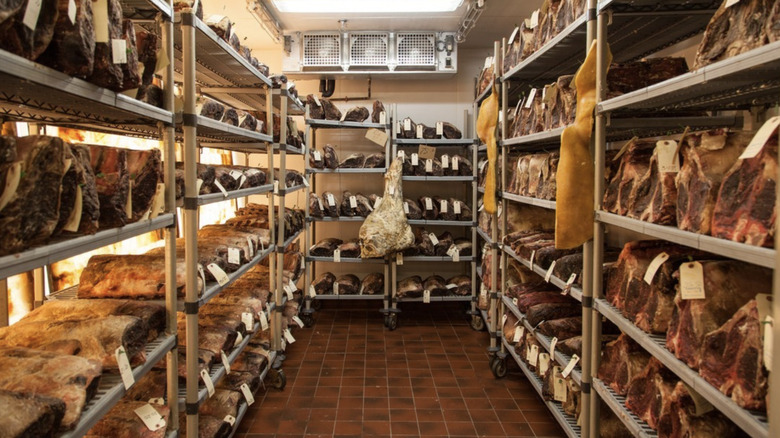
The meat closet at David Burke Prime Steakhouse is lined specifically with pink Himalayan salt rocks that help beef age. While the salt is considered to have antibacterial properties, a timed set of UV lights helps maintain the sterile environment of the room. Along with absorbing flavor from the salt, the beef also becomes mouthwateringly tender as moisture is drawn out of the meat. Steaks are left aging until it is time to take the meat out of the room to cook.
Those visiting the restaurant can tour the dry aging room to witness this patented process firsthand. Not only does the steakhouse wow visitors with tender steaks, however. The wine tower also commands attention. The 35-foot, 3-story assortment of over 15,000 bottles collected from all over the world is sure to impress — you'll probably need a glass or two to look over the bill, after sampling some of the dry-aged meat.
An 18-ounce ribeye that's been dry aged for 30 days will take $79 out of your wallet, and if you're bringing a date, 38-ounce ribeyes that have been dry aged for 55 days run upwards of $172. Cheaper items exist on the menu, but while you're at David Burke Prime Steakhouse, you might as well savor your chance to taste the steakhouse's legally protected dry aging process.