

16 Iconic Regional Beef Dishes From Across The US
Every region in the United States is known for its food culture, from the south's gumbo, to the Midwest's barbecue, to the northeast's lobster rolls. No matter where you go in the country, you'll be introduced to dishes that have become synonymous with each area. Despite the differences between the regions, each one has taken a primary ingredient — beef — and turned it into something spectacular. Unique ingredients, flavor profiles, and cooking methods set each meal apart, but so do their lesser-known origin stories.
As these famous beef-based meals continue to increase in popularity thanks to social media platforms like TikTok, a few questions arise: How did these regional specialties come to be? Who do we have to thank for inventing them? And, of course, why were they created? Whether it be a mother looking to alter a traditional recipe to suit her children's tastes, a restaurateur seeking to try something different, or a fusion of American and ethnic dishes brought to the states by immigration, these 16 regional beef dishes have rich histories that make them even more special to their places of birth.
New England boiled dinner
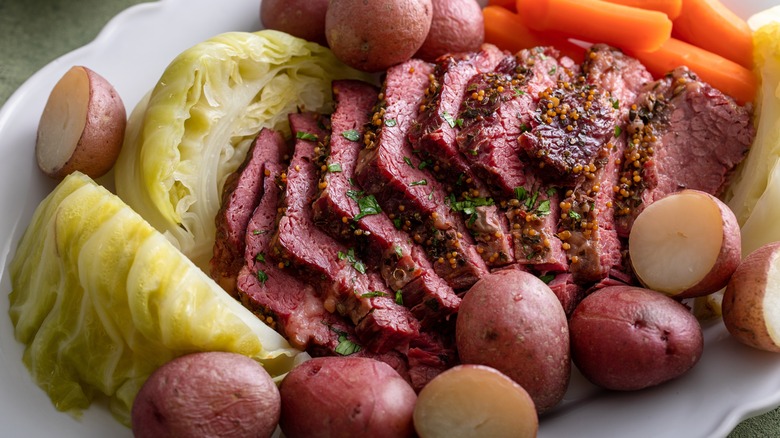
The northeast may be best known for its seafood dishes, like stuffed quahogs and lobster, but there's another staple dish that's been well loved by New Englanders for centuries: the boiled dinner. A one-pot, slow-cooked meal featuring meat, vegetables, and potatoes isn't unique to the northeast, as variations exist all around the world, but New England's boiled dinner looks a little bit different. Composed of corned beef, cabbage, and potatoes, it's a perfect example of the fusing of American and Irish cultures.
The boiled dinner has been around in the U.S. since the colonial era, but it didn't include the same three ingredients used today. The modern recipe came about in the nineteenth century when famine brought an influx of Irish immigrants to the northeast. Corned beef, an expensive delicacy in Ireland, was cheaper in the U.S. and soon became the showstopper ingredient, often made for Sunday dinners and/or St. Patrick's Day. Given the affordability of the ingredients, the boiled dinner was common for low-income families.
North Shore roast beef sandwich
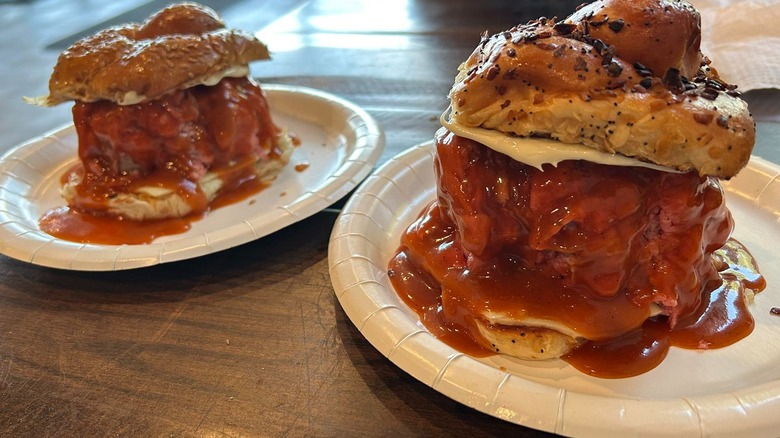
We're sticking around in New England for this next one. The North Shore roast beef sandwich, also known as the North Shore 3-Way, was born at Kelly's restaurant in Revere in 1951. The "3-Way" refers to the three ingredients that accompany the roast beef: American cheese, mayonnaise, and barbecue sauce.
The sandwich was invented when Kelly's proprietors needed something to do with leftover meat. Originally, the owners sold hot dogs to beachgoers, but also worked as caterers on the side. When a wedding they were meant to cater was called off, leaving them with three whole roast beefs, they decided to slice it up and serve it on buns at their hot dog stand. After selling out within an hour, Kelly's started selling only roast beef sandwiches.
Kelly's continues to be a big name in the realm of North Shore roast beef, but other restaurants have partaken in the dish's popularity. The Modern Butcher in Danvers only sells roast beef sandwiches on Saturdays and is known for selling out quickly. Bloggers have noted arrival at 9:30 in the morning, and an hour later, the line had already wrapped around the block.
Philly cheesesteak
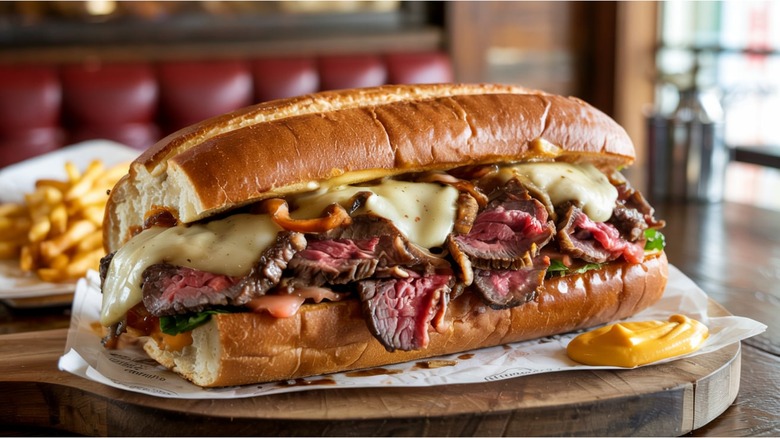
Though it's widely associated with its namesake, the Philly cheesesteak can be found in all forms across the country. Shaved or sliced steak, cheese, and grilled onions on a long torpedo roll, the dish is an all-American favorite with humble origins.
Per National Geographic, it was 1930 when Italian-American brothers Pat and Harry Olivieri, who ran a hot dog cart in South Philadelphia, made a spur-of-the-moment decision that led them to purchase beef scraps instead of hot dogs from their vendor. Pat added grilled onions to the beef and stuffed the filling into a roll. Soon after, a passing cab driver requested the same thing. As the story goes, the cab driver told Pat to sell this sandwich instead of hot dogs, and as a result, Pat's King of Steaks restaurant was born.
Though cheese wasn't added to the sandwich until a decade later, the invention inspired a revolution in Philadelphia. Cheesesteak restaurants like Geno's and Jim's Steaks popped up across the city before the rest of the country jumped on the bandwagon, serving both familiar and unique versions of the dish.
Beef on Weck
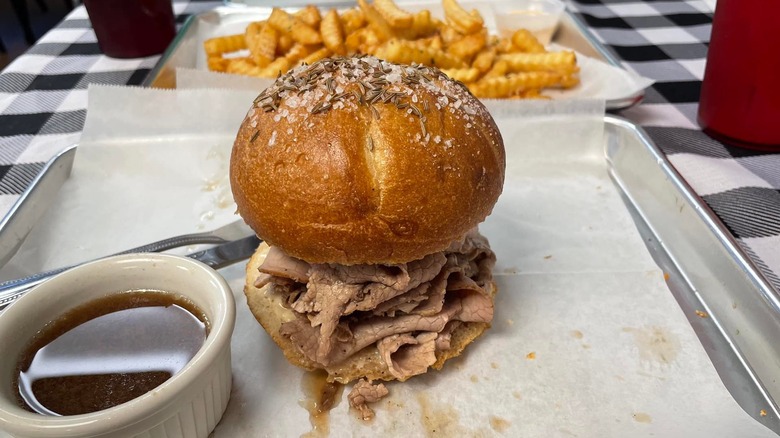
A visit to Buffalo will introduce you to another regional specialty, beef on weck. "Weck" is a more Americanized term for the German kümmelweck roll, which is topped with caraway seeds and salt. Other than the titular ingredient, the sandwich is composed of thinly-sliced roast beef and horseradish.
Beef on weck was created in the late 1800s, largely in part by a German immigrant named William Wahr. Wahr was employed as a baker at the Delaware House, a boarding house and tavern, per Buffalo Stories. A roast beef sandwich was already being served there, but it was Wahr who suggested turning the plain rolls into kümmelweck rolls, leading to a permanent recipe change.
While the sandwich increased in popularity for locals, it gained even more attention in 1901 when it was served at the Pan American Exposition. Many visitors came to Buffalo for the exposition that year and were exposed to beef on weck, turning it into a beloved dish for those beyond western New York.
Pit Beef
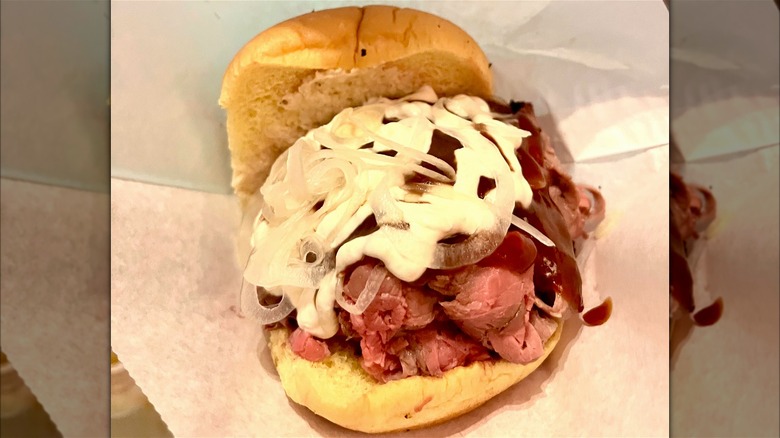
While discussing beef sandwiches, let's travel south to Baltimore, birthplace of pit beef. It's made with top round beef grilled over charcoal so the meat has an outside crust, yet remains juicy and almost raw on the inside, and the thin slices are piled onto a brioche roll. It's typically slathered in barbecue sauce, though some variations supplement the sauce for horseradish.
The name "pit beef" comes from its origin in the 1970s, when the working class neighborhoods along the Pulaski Highway in Baltimore would prepare it on roadside stands over open pits. Because of this, the dish was widely associated with the working class until others began hearing rave reviews. By the 1990s, pit beef had expanded beyond the Pulaski Highway stands and into restaurants across Baltimore, like at Chap's Pit Beef, built by Gus Glava in 1987. It continues to be a significant cultural dish, sitting at the top of Maryland's list of staple foods right beside the better known blue crab.
Mississippi Pot Roast
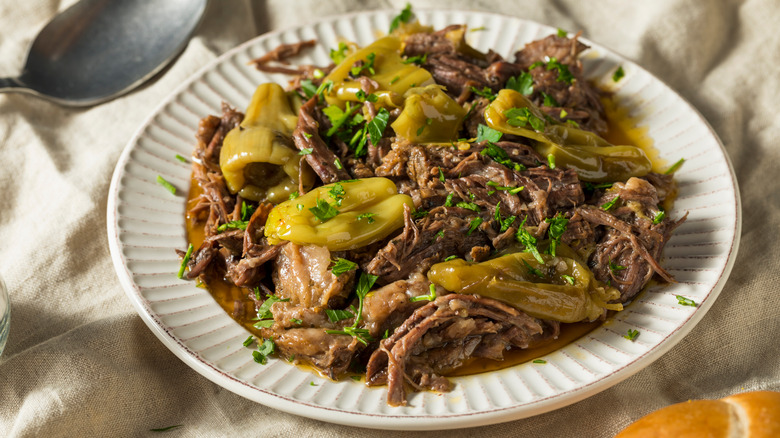
Further south in Mississippi, a more family-friendly version of classic pot roast has become an iconic dish since its creation in the 1990s. Robin Chapman is credited with inventing Mississippi pot roast as an alternative to a family recipe that was a bit too spicy for her children. The new recipe sees a chuck roast slow-cooked with a stick of butter, a packet of ranch dressing mix, a packet of au jus gravy mix, and pepperoncini peppers.
But how did the tweaking of a classic meal end up as a Mississippi staple, so popular that the recipe has since gone viral on social media platforms like TikTok and Pinterest? After the pot roast was a hit with her family, Chapman brought it to a potluck dinner at her church, where a friend asked for the recipe. That friend submitted the recipe to a cookbook created by the church, and as more and more people discovered it, it was eventually shared across food blogs before social media took it by storm.
Creole beef daube
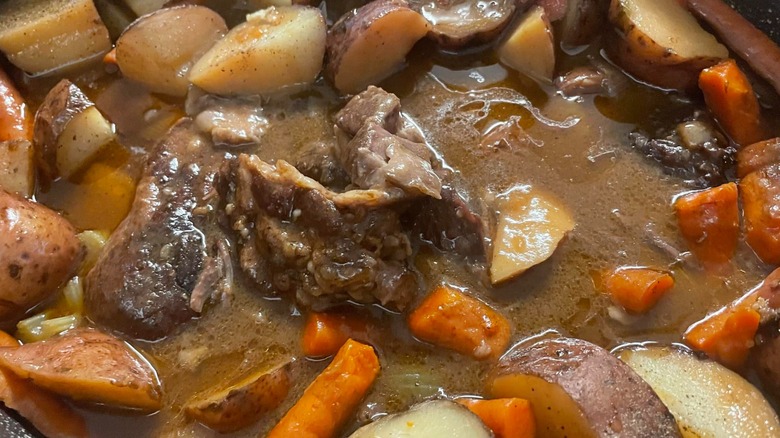
Just across the pond from Mississippi, in Louisiana, you'll find the famous Creole daube stew, a perfect blend of Southern, French, and Italian cuisines. Given the large number of Creole and Cajun populations in Louisiana, it isn't surprising that this beloved dish meshes American and French flavors and techniques. What some people may not know, however, is that many Italian immigrants, specifically Sicilians, also settled in the New Orleans area in the 1800s. The combining of such prominent ethnic cuisines was practically unavoidable — thus, the Creole daube stew was born.
A classic southern-style beef stew was elevated when both the French and the Sicilians introduced crucial components to the now-beloved dish: the French brought the daube, a technique for slowly braising meat involving larding or stuffing the roast before cooking; and the Sicilians brought red "gravy" or tomato sauce, in which the meat was braised, and garlic to be used in the stuffing. Add onions, celery, bell pepper, and Creole seasoning, and you've got Louisiana's specialty daube stew.
Smoked brisket
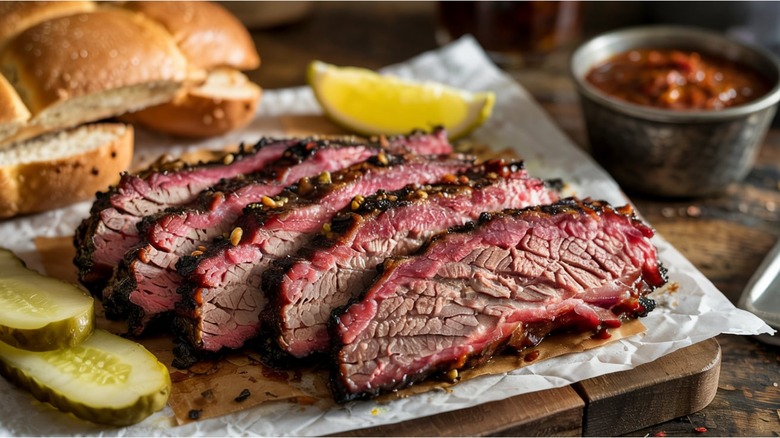
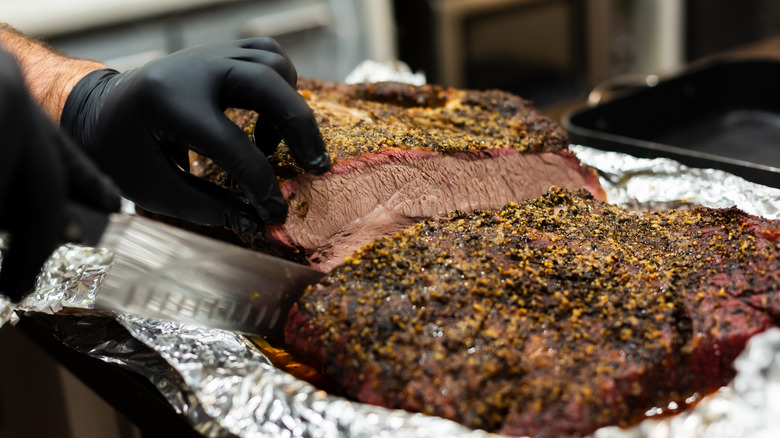
It's safe to say that when we think of Texas, barbecue comes to mind immediately; smoked brisket in particular. Contrary to what many people might think, brisket didn't get its start in America. In fact, it's a dish of Jewish origin introduced by German and Czech immigrants in the 1900s.
When brisket was first served in Texas, it was prepared in the classic, Eastern European style made mainly for Passover: oven-baked in gravy and served with carrots and potatoes. It's not known for certain why restaurateurs began smoking brisket rather than baking it. One theory suggests that it was tested out as a method for serving "take-out" to Mexican farmworkers. Another theory claims it was the best way to cook leftover meat before it could spoil, given the lack of refrigeration.
The shift from baking to smoking isn't the only change that led to brisket becoming a southern delicacy. Texan brisket is slathered in a dry spice rub before smoking to give it even more flavor, as opposed to the classic style of relying on the meat's own juices.
Chicken fried steak
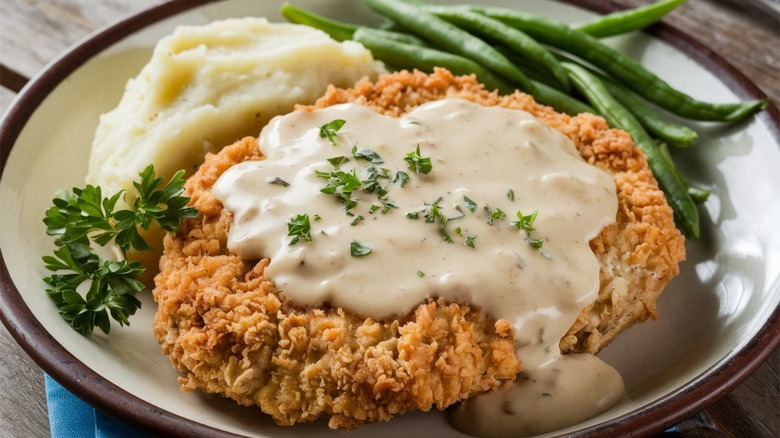
We're not finished in Texas yet. Chicken fried steak, the beef version of classic fried chicken, may be a popular dish across the entire south, but it got its start in Texas — and, like brisket, it was introduced by Jewish immigrants from Germany and Austria. While frying meat in oil is a common cooking technique around the world, Germans and Austrians took it a step further by battering veal in eggs and flour before pan-frying. Unfortunately, this "schnitzel" recipe had to be replaced with cheaper meats when veal became too expensive.
After immigrating to Texas in the 1800s, beef became the meat of choice for this dish, as cattle was abundant and inexpensive. As schnitzel transformed, it started to be referred to as chicken fried steak in 1914. The name is simply an ode to the preparation method being the same as that of fried chicken, and while the dish is associated with the American south, it's important to remember exactly how it came to be.
Santa Maria tri-tip
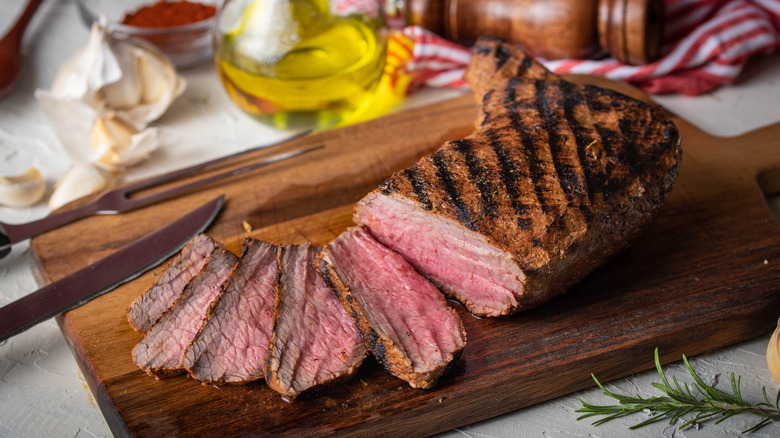
We're leaving the south behind for the west coast to discuss a Californian specialty: the Santa Maria tri-tip. Its invention is largely credited to Bob Schutz, a butcher, who owned the Santa Maria Market in the 1950s. Until Schutz's experiment, the triangular piece of sirloin was typically only used as stew meat or ground beef — the reason being that there's only one tri-tip per sirloin, and butchers didn't see a point in displaying the cut when they only had so much of it.
The Santa Maria tri-tip, served barbecue-style, isn't always attributed to Schutz. A meat wholesaler named Otto Schaefer also claimed to have invented it and served it at rodeos, where patrons from far and wide fell in love with it. From there, it's said that Schaefer's customers recreated it and took credit for its invention. Though we may never know if it was Schutz, Schaefer, or someone else who first had the idea for the tri-tip, it continues to be one of California's most well-loved meals.
Hawaiian Loco Moco
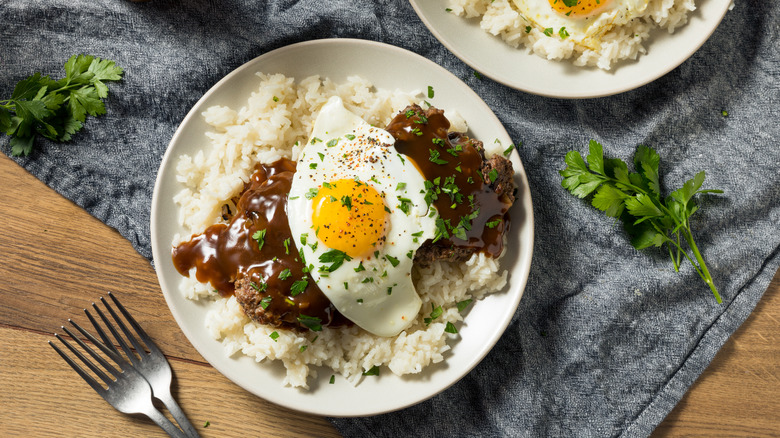
Another iconic beef dish from the Pacific side of the country is Hawaiian Loco Moco: a bowl of rice topped with a beef patty, a fried egg, and heaping portions of gravy. It's become a staple comfort food within the Hawaiian islands as a simple combination of American and Asian favorites — but where did the idea come from?
In 1949, a group of teenage boys asked the proprietors of Lincoln Grill in Hilo, Hawaii, for a new after school snack that they could afford, and suggested combining the aforementioned ingredients. The owners, Richard and Nancy Inouye, sold the dish for only 30 cents. The boys played on the football league for the Lincoln Wreckers Athletic Club, and the club was later credited with creating loco moco.
Another question still stands: why is it called "loco moco"? As the story goes, the boy who came up with idea was nicknamed "Crazy", so "loco" was used as a synonym for his name. "Moco" was added simply because it rhymed.
Idaho Finger Steaks
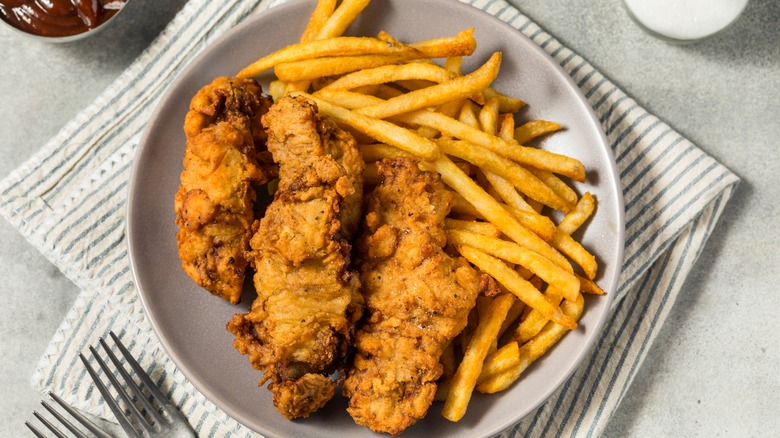
Next stop, Idaho. The state known for its potatoes is also home to a beloved beef dish: Idaho finger steaks, beef sliced into finger-length cuts, breaded and battered, deep-fried, and served with French fries and a dipping sauce. The meal isn't just interesting because it's a twist on chicken tenders — it's also interesting because nobody can agree on who created it.
The first origin story is attributed to Mylo Bybee, a chef at The Torch Lounge in Boise during the '40s and '50s. Bybee wanted to use every piece of meat possible, including the trimmings, which he then fried and served as a casual meal. The dish became The Torch's most popular menu item, though according to Bybee's widow, his exact recipe died with him.
However, the competing story claims that Clair Hawkins, owner of the drive-in Red Steer restaurant chain, created the dish under a different name in the '50s: Crinkle Steaks Dinner. When the dish increased in popularity, Hawkins opened B and D Foods in 1976 to sell finger steaks to restaurants.
The Slopper
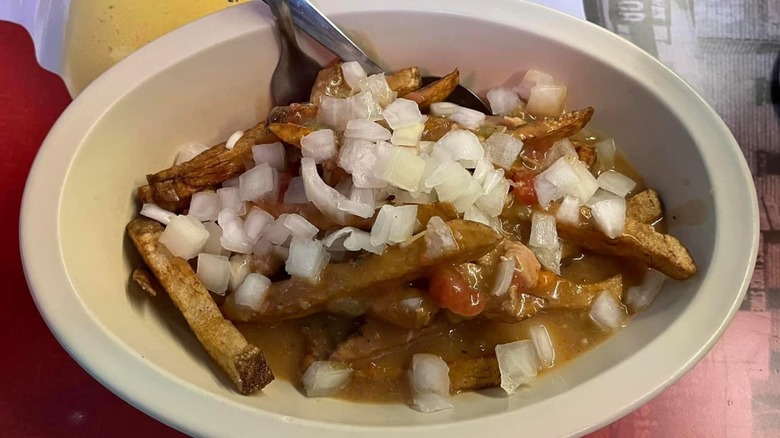
The Slopper is specific to Colorado, and it's basically just an open-faced cheeseburger topped with onions and sometimes fries or oyster crackers, and smothered in green chile sauce. As with many other dishes on this list, the true origin story of the Pueblo-based creation is unconfirmed, with the messy debate centering around not only competing restaurants, but between a diner and restaurant owners, too.
In the 1950s, brothers Johnnie and Joe Greco were said to have created the meal at their restaurant, Gray's Coors Tavern. The brothers claimed that the name originated from their restaurant after they began serving the dish regularly, and one customer referred to it as "slop." However, the diner in question, Herb Casebeer, is also said to have created it himself when he specifically requested chile sauce on his cheeseburger. Apart from the Gray's Coors Tavern controversy, an establishment called Star Bar, also in Pueblo, claims it was the first to introduce the Slopper in the 1960s.
Reuben sandwich
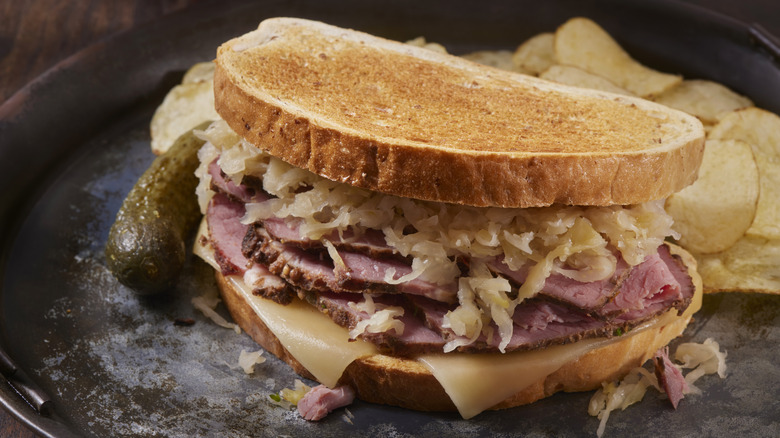
Now for another recognizable player: the Reuben. Thin-sliced corned beef with sauerkraut, Thousand Island dressing, and Swiss cheese on rye bread, the sandwich is most popular in Nebraska, and two of its three competing origin stories take place in the city of Omaha back in 1925.
According to this particular tale, Bernard Schimmel, owner of the Blackstone Hotel, created the sandwich especially for his friend, Reuben Kulakofsky, who was visiting with other friends for a poker match. After Kulakofsky and others fell in love with it, Schimmel added it to the menu. The second story is that Kulakofsky himself created the sandwich at the hotel, leading Schimmel to add it to the menu.
The Kulakofsky vs. Schimmel debate isn't the only one out there. Another story suggests that the sandwich was invented in New York in 1914 by the owner of Reuben's Restaurant. The owner and chef threw a few ingredients together at the request of Annette Seelos, who was closely associated with Charlie Chaplin.
Kansas City burnt ends
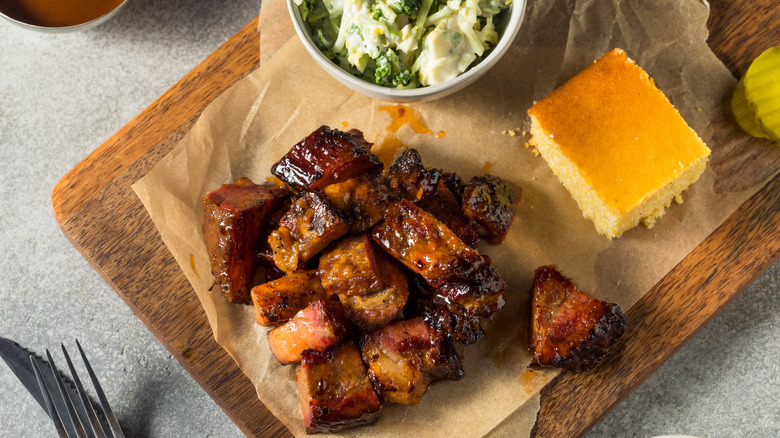
Next on the list is burnt ends, a dish made popular in Missouri. Henry Perry, a Tennessee native, brought his barbecue and meat smoking skills to Kansas City in 1907, where he owned a shop in a predominantly African American area. His apprentice, Arthur Bryant, adopted his techniques and recipes after his death, and eventually opened Arthur Bryant's restaurant, which welcomed many recognizable faces at the time, like Joe DiMaggio and Frank Sinatra.
In 1972, a now-famous Playboy article was released that specifically praised Arthur Bryant's burnt ends: literally the burned edges of a smoked brisket that were given away for free. As burnt ends transformed from throwaway scraps to a main dish, some people started smothering them in barbecue sauce and even smoking them again to make them caramelized.
Though neither Perry nor the Bryant brothers ever actually sold burnt ends, they unknowingly started a food revolution in Kansas City, with the very first recipe for the dish coming from Perry's original recipe for brisket.
Chicago Italian beef
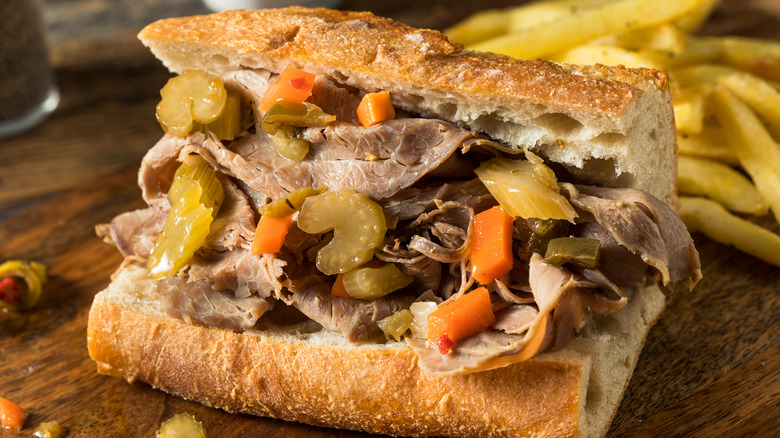
Our trip around the country ends in Illinois with the Chicago Italian beef. It's another roast beef sandwich with an interesting story behind it, which starts in the Italian-American neighborhoods of Chicago. Anthony Ferreri, a peddler, sold sandwiches to anyone he could at the end of World War I, but the sandwich in question wasn't on his menu until he attended a "peanut wedding."
Because of the large-scale poverty of Italian Americans during this time, cheap food like peanuts was often served at events. At this particular wedding, roast beef was being served in thick slices, and Ferreri decided to slice it thinner to feed more people. He later cooked the beef in its own juices, again to be cost-effective, and made sandwiches out of it that were topped with pickled vegetables.
Ferreri's son, Al, opened a sandwich shop in 1938 as a front for his illegal gambling, with his father's creation as one of the most popular menu items. In 1980, it was named the number one sandwich by Chicago Magazine.