

The Big No-No When Visiting An Apple Orchard And Gathering Your Harvest
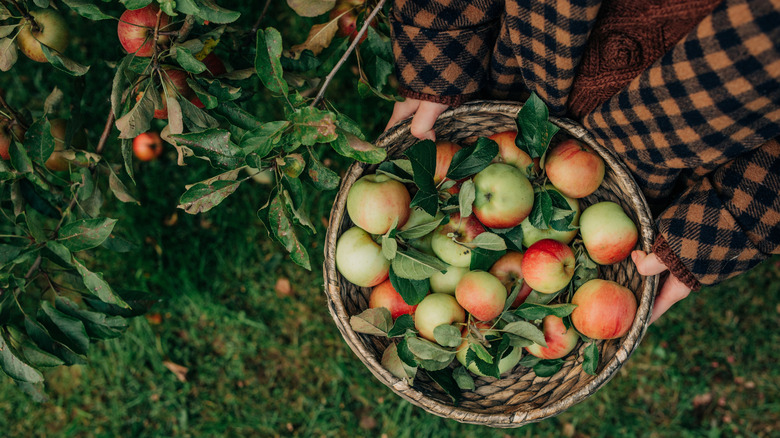
Every fall, softly-lit apple orchards fill with families in flannel, spending time together in an autumnally iconic and wholesome group activity, and fighting the urge to give a fruit-laden tree a satisfying shake. There's a primal instinct to test whether a little brute force might rain abundance into your basket, but don't do it.
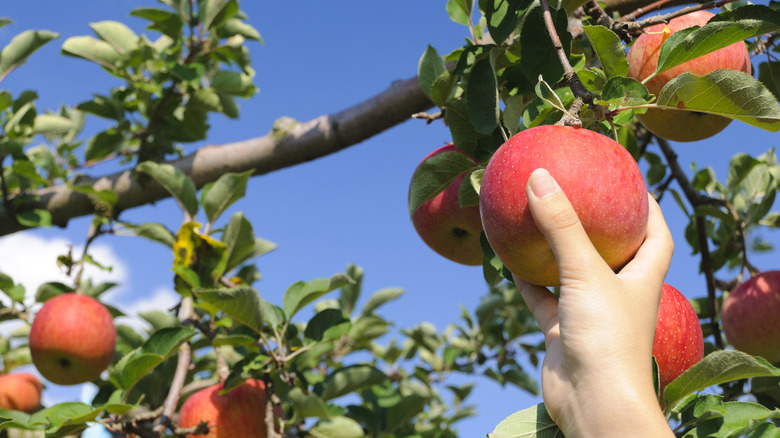
A good harvest shouldn't be a contest of strength. Remember when the enchanted trees in "The Wizard of Oz" get mad at Dorothy when she tries to pick an apple? That probably won't happen, but when an apple is ripe, it wants to fall, no yanking or shaking needed. Each fruit forms an abscission layer (a natural weak point at the stem) and a gentle twist will free fruit from branch without harming the tree. Shaking breaks twigs and buds that would become next year's blossoms, and falling can bruise the fruit, ruining the very purpose of apple picking.
A well-tended orchard is cultivated on patience. Every spur on a branch is the potential fruit of seasons ahead, and growers spend the year collaborating with their trees, pruning, pollinating, and protecting them from frost and blight. Treating the tree as a vending machine instead of a living partner disrespects that labor. You can buy as many apples as you want at the supermarket; the point of an apple picking excursion is the experience, not how quickly you pick or how heavy your basket weighs at the end of the day.
How to be a good orchard guest and tree steward
Treating the trees roughly, by shaking, yanking, or climbing, comes from the impatient results-driven value system of our modern world, where if you want something, you had better grab it fast. But fruit trees don't work that way. They are living organisms, and they break under harsh handling. The best practice to just be present, gentle and intentional. Cradle the fruit, lift upward, and lightly twist or rock until the stem gives. If you get a little lost in the enthusiasm of the harvest, and end up with a heavy harvest, that's no crime. Apple trees are designed to be bountiful, and people have long been preserving the apple harvest with ingenious recipes, so you can try things like apple sauce or dehydrating slices for longer storage.
Most orchards welcome guests but they require good manners to stay open. Don't approach the experience as a catch-as-catch-can raid, and don't trample fallen apples; those could be destined for cider. Read signage and respect rules like staying within marked rows, so you don't compact the soil around young roots. When you've picked an apple, set it carefully in the basket to prevent bruising, and resist overfilling your bag, because apples appreciate breathing room. The bounty you will receive is the warm, waxy smell of ripening fruit and the sense that you've participated in an ancient tradition. The orchard's trees give abundance, but only if met with care — just ask Dorothy. Pick thoughtfully, move gently, and let the trees keep their dignity.