

For The Healthiest Sourdough, Make Sure To Ferment The Dough This Long

Fermentation is responsible for the delicious, tangy flavor and the perfectly chewy, airy crumb in your favorite sourdough loaves. That's because these loaves rely only on the fermentation of yeast and lactic acid bacteria as natural leavening agents. Research has shown that fermented products are beneficial to health, and that includes fermented grains as well. To reap the health benefits of sourdough, what are the ideal time and temperature requirements? The answer depends on whether you are fermenting at room temperature or higher or if you prefer to ferment in the refrigerator.
Cooler areas, such as the refrigerator, slow down fermentation, while warmer areas, like proofing ovens or climates (ideally between 74 degrees and 76 degrees Fahrenheit), ferment more quickly. That being said, when it comes to making sourdough, more nutritional benefits can be seen in longer fermentation times, ranging anywhere from 12 to 48 hours. That means that doing so in the fridge will give you more control over the overall process. With a longer fermentation, you'll infuse your dough with a more acidic flavor, resulting in a lower pH, a lower glycemic index, and more resistant starch. Just be sure that you don't make these common mistakes when making sourdough.
Slower fermentation makes sourdough more nutritious
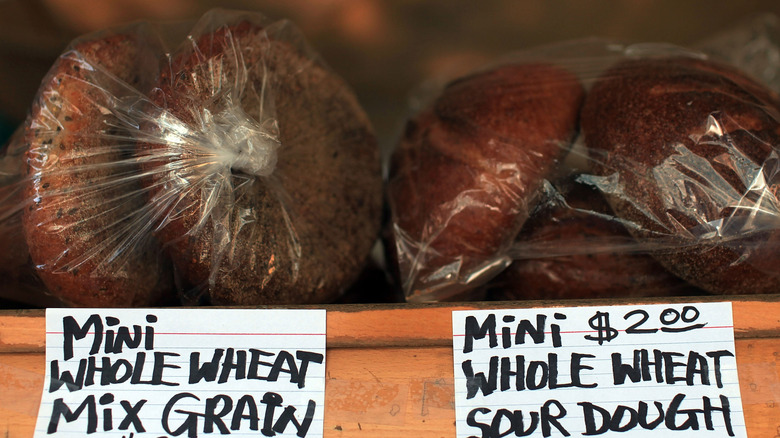
Traditional sourdough bread offers health benefits that non-sourdough loaves lack, and a slow fermentation process is key to unlocking them. Slow fermentation essentially aids in digestion thanks to the acids produced during the process, imparting sourdough with a lower glycemic index, sitting at 54 on the scale. This keeps your blood sugar steady for longer. Resistant starch is also formed during this process, which offers an increase of dietary fiber. This makes it more protein-digestible due to the breakdown during fermentation and produces nutrients such as prebiotics that support a healthy gut microbiome.
But most importantly, a slower sourdough fermentation reduces phytate, a compound that tucks vitamins and minerals away in different types of cereals, nuts, or seeds, by up to 56%, according to one 2024 study. This reduction makes the vitamins and minerals of sourdough more bioavailable and easier to absorb for maximum nutritional benefits. To make your bakes even more nutrient-dense, consider experimenting with other whole grains such as rye, spelt, blends, and locally and freshly milled flours, which may also enhance the flavor of your sourdough. For additional notes on the process, here are some facts you never knew about sourdough.