

Don't Toss Potato Peels — They're A Secret Weapon For Your Cookware
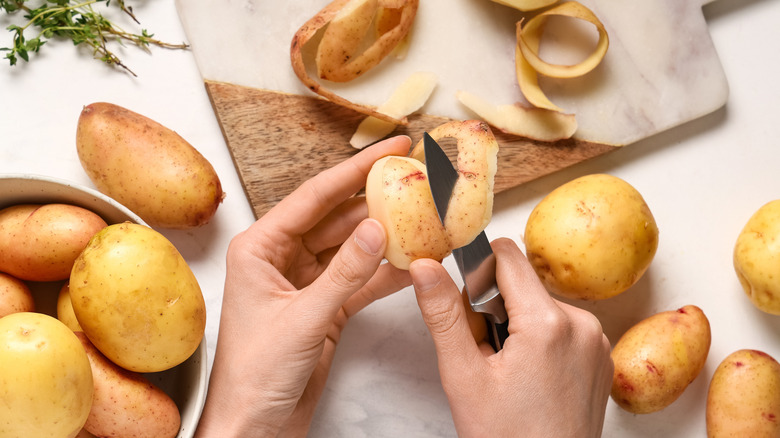
You might think that back in the day, potato peels went straight to the pigs, the compost, or the stockpot. But before disposable consumer culture flattened the art of maintenance, resourceful home cooks knew another use for this common kitchen detritus. They used them to polish their cookware! When rubbed against metal, the fine starches and trace oxalic acid in potato skin act like a gentle, natural scouring agent. The starch granules loosen cooked-on residue, and the oxalic acid lifts gunk and tarnish. Potato peels used like this are abrasive enough to revive a dull, workhorse carbon steel pan or a scorched pot, without the scratches that a Brillo pad might leave behind.
Like many kitchen tricks from leaner eras, it's a folksy life-hack that no one makes money off of. Potato skins are free if you're already making one of these 10 cheesy potato recipes. In the early and mid-20th century, housekeeping manuals were full of similar penny-pinching, no-waste ingenuity. Bread crusts were used to clean wallpaper, coffee grounds to scrub stubborn pan stains, vinegar and salt or baking soda to sparkle up brass. A day of polishing silver or darning socks in the evening was the routine of ordinary life. Now, things are made cheaply and can't be repaired. But if you have invested in beautiful, sturdy tools that are built to last (if properly cared for), such as high-quality copper, cast iron, or carbon steel, it's worth the elbow grease to maintain them.
The chemistry of care with potato peels
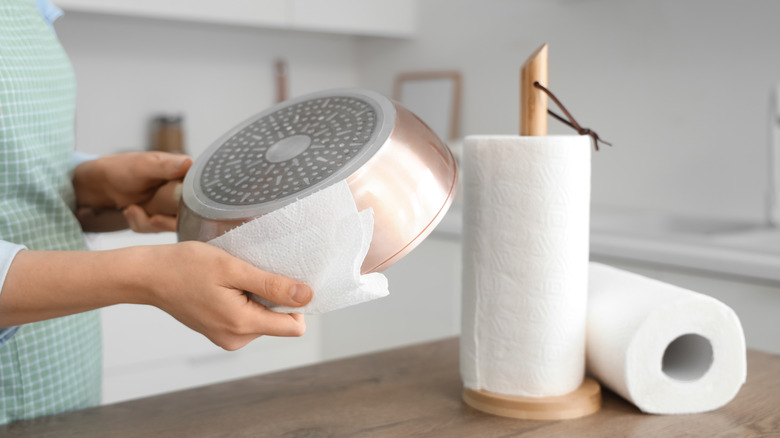
The oxalic acid in potato skins is the same compound found in many plants, like rhubarb and spinach. Plants produce it as a defense against predators, and if you eat too much of it, oxalic acid can build up and cause kidney stones. The compound is so formidable that it can dissolve mineral buildup and surface oxidation, which is exactly what happens when your leftover potato peels meet the pan. In addition to the oxalic acid, the peel's starch molecules swell when rubbed with water, a chemical process called starch gelatinization, which creates a fine, slippery paste that lifts residue, much like a gentle facial exfoliant cleanses dead skin.
The how-to is exceptionally straightforward. Use your fingers to press the peel firmly into the pan; you'll feel the starches grab the grime as you wiggle the peel over the surface. If you want a better grip and don't mind devoting a tuber to the task, cut one in half horizontally and hold it like a handle, pushing down firmly and rubbing in circles over the same area until you see the shine return. After scrubbing, rinse and dry thoroughly, then apply oil if you're reseasoning carbon steel or cast iron. It works best on durable surfaces, so skip anything nonstick, anodized aluminum, or enamel-coated, where even subtly scratchy abrasion can ruin the finish.
The real beauty of this method is that it doesn't cost any extra money, nor does it come in single-use plastic packaging or expose your household to harmful, caustic chemicals. Rinse, dry, and admire the sheen. Nothing bought, nothing wasted. Just an old trick that still works.