

The Origin Of Italy's Panna Cotta And How It Became A Global Favorite
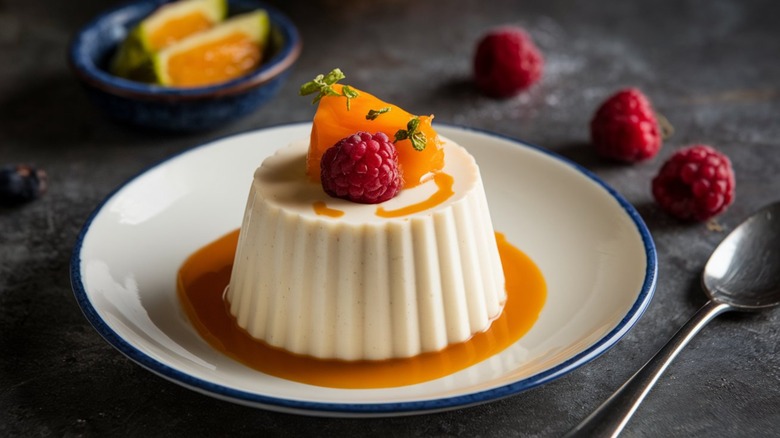
Panna cotta, in all its simplicity, might just be the perfect dessert. Smooth, silky, with just the right touch of sweetness, the creamy Italian favorite has long been a staple on European menus. As with most food origin stories, there's some debate about its history; the first mention of it in print can be traced all the way back to 1879, when a dictionary first referred to it as "latte inglese," or English milk. Though it wasn't originally called panna cotta, the recipe was the same: Cream, sugar, and gelatin.
There were similar dishes cooked in other parts of Europe, but the panna cotta we know and love is claimed by the Piedmont region of Northern Italy. One of the stories circulating about the dessert is that it was created by a Hungarian woman who lived in the Langhe area, though there's no clear proof of this. What most people agree on is that the dessert was first written on a menu by Chef Ettore Songia, who served it at his restaurant in Cuneo in 1966.
Back then, it was topped with caramel, but this simple recipe exists in many variations today – Strawberry panna cotta and lemon and lavender panna cotta are just a couple, and the options are endless. It's thought that fish broth was first used to thicken it, but simple gelatin sheets will do today. After cream and sugar are warmed together, the gelatin is added, and the mixture is cooled in molds.
Panna cotta is easy and cost-effective
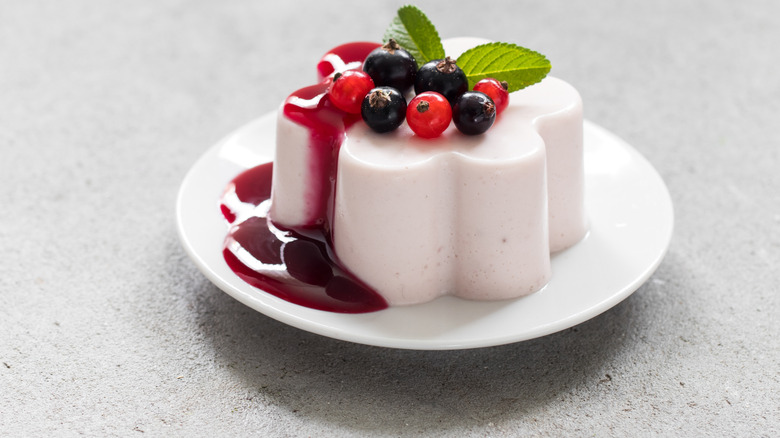
Caramel is still served with panna cotta in Italy, as are other warm sauces made with things like berries and cream. It's popular all over the country, but especially in Piedmont, which added the dessert to its list of traditional regional products in 2001. You can find delicious panna cottas in a lot of Italian restaurants in the U.S. too. It's become a global favorite over the years as more recipes have been shared, especially from esteemed chefs like Enrico Crippa.
People particularly love how easy the dish is to prepare. It can also be made in advance and stored for up to five days, which is a big bonus for restaurants. On top of all that, it's a very cost-effective dessert. A good quality cream is essential, and seasonal fruits will fare better in a sweet topping sauce, but panna cotta is still a lot cheaper than many other options out there.
Plus, you don't even need the cream. You can make panna cotta with other dairy options like buttermilk or coconut milk, and it's possible to make a vegan-friendly version too by utilizing agar. Another bonus is that panna cotta is naturally gluten-free, and it can be a great low-sugar option with some tweaking too. All you really need is a good mold and sauce, and its delicate texture and shape will shine through. That's if it sets properly every time, of course.