

How Many Cloves Equal A Teaspoon Of Minced Garlic?
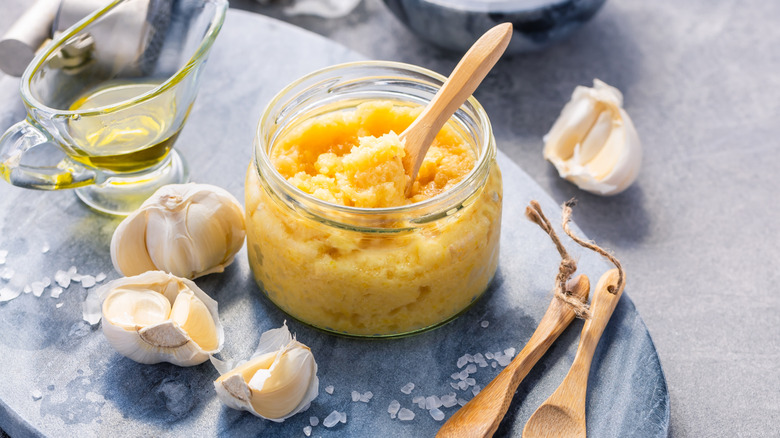
As an aromatic used in all kinds of cuisines, garlic is pretty much a kitchen essential. So even if you intend to keep a fresh supply on hand, it can help to have pre-minced garlic as a backup for emergencies.
So, how much jarred garlic do you need to use? The general rule of thumb is easy to remember: a teaspoon of minced garlic equals one clove. But what does that really mean?
When cooking with fresh garlic, you'll rarely use the same-sized cloves from day to day. And even rarer is that people stick to the amount of garlic in the recipe. But this equation gives you a general idea of what you're adding so that you don't overpower your dish.
You'll probably notice that the teaspoon of jarred garlic seems like more than what you'd get from mincing a fresh clove. Although garlic becomes more potent as you cut it open, thanks to the release of allicin compounds, the taste fades over time and as a reaction to the preservation process. As a result, pre-packed minced garlic has a milder kick than if you had chopped it yourself.
When to use fresh garlic vs minced garlic
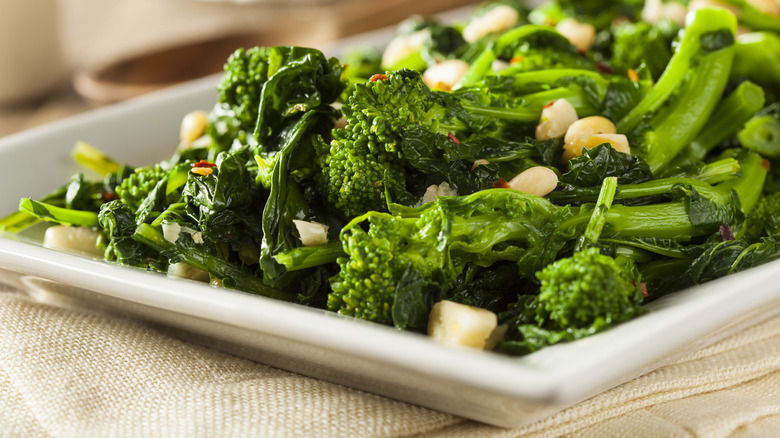
Jarred minced garlic can be a great substitute in a pinch, but don't be tempted to sacrifice flavor for convenience. There are some recipes where fresh garlic is a dealbreaker.
The strong punch of raw garlic is essential for adding to aioli and hummus or rubbing over toasty bruschetta. As well as being milder, jarred garlic can have a distinct tangy taste due to the citric acid used to make it shelf-stable. Dishes where garlic is the star of the show, such as Italy's aglio e olio or a sizzling plate of garlic butter shrimp, demand the real deal. Similarly, you're going to reach for fresh garlic if you need a size or texture other than finely chopped, like whole cloves to confit or slices for a stir fry.
Where the jarred stuff makes the best swap is in recipes where the garlic is cooked down into liquids with other strong flavors. A spoonful (or three) can help build the flavor of a slow-cooked Bolognese sauce, a classic chili, or a Thai chicken curry. The fine texture means it can burn easily in stir-fries or on grilled meats, but it can be added to no-cook sauces or dressings like this homemade Thousand Island dressing.