

How To Store Cut Bananas To Slow Down The Browning Process
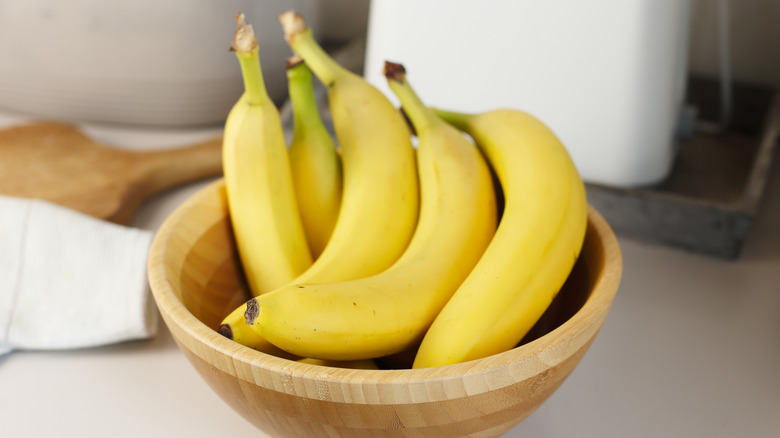
Unless they are destined for creamy smoothies, comforting loaves of bread, or the many other dessert banana recipes, peeled bananas often end up in the refrigerator. Unlike watermelon and berries, cut bananas quickly turn brown, usually within just a few minutes. All hope is not lost immediately, however. Storing cut bananas properly and promptly is the key to slowing down the browning process, and as it turns out, it is not very difficult.
The enzymatic browning of fruits occurs when the enzyme polyphenol oxidase in banana pulp comes into contact with oxygen, forming brown pigments that mar the white or yellow flesh. While unappetizing, it does not render the fruit toxic or unsafe to eat. Still, nobody likes browned bananas, and the solution to storing them starts with limiting the oxidation process.
This means keeping the peel on until the moment you need to use the bananas. Any part that has been cut open should be coated with an acidic solution like citrus juice or vinegar, although that will impact its flavor. In that case, consider keeping the fruit from browning while simultaneously boosting its taste with a sweetener. This could be room-temperature honey or a simple syrup mixed with lime or lemon juice. No matter what you do, make sure to keep the slices in an airtight container for good measure.
Can you refrigerate or freeze cut bananas?
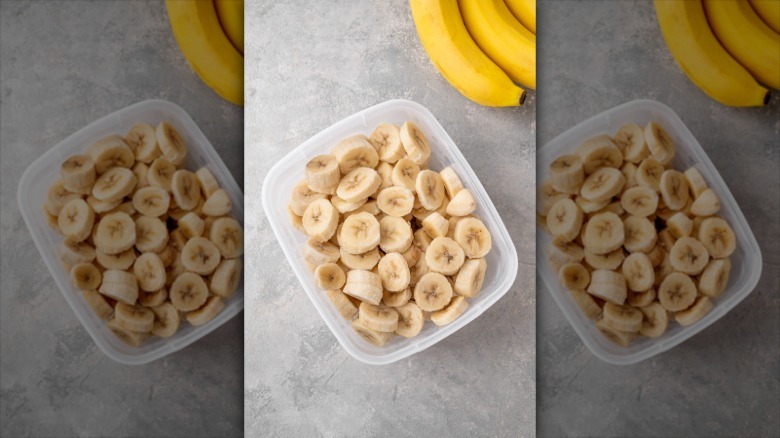
We can hardly discuss banana storage without addressing one of the most common questions: "What happens if you refrigerate bananas?" While the answer varies depending on the condition of the bananas when you refrigerate them, the fridge can usually be quite helpful. The cool, dry environment and low temperature help preserve the bananas for as long as possible. Properly packaged, sliced bananas should last for around four days in the fridge.
Storage for a longer period requires freezing. And yes, you can freeze cut bananas. Note that this will alter the texture once the fruit is thawed, most likely into a mushiness that's more suitable for baking and blending rather than eating fresh. The process is no different than freezing any other fruit. Start by flash-freezing the slices by spreading them onto a parchment-lined baking sheet and putting them in the freezer for an hour. Then, transfer them into airtight freezer-safe bags or containers, squeeze out the air, and they should be good for two to three months. To thaw, leave them refrigerated in a covered bowl overnight or three to four hours at room temperature.