

The Key To Soaking French Toast For Perfectly Fluffy Results
We may receive a commission on purchases made from links.
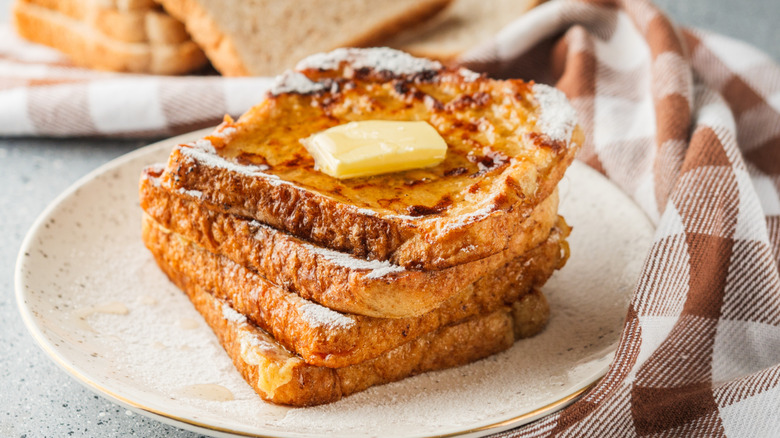
French toast is one of the most beloved and easiest breakfast dishes to make at home using common pantry staples. To achieve that fluffy French toast crumb, Tasting Table consulted recipe developer and author Maxine Sharf, whose debut cookbook, "Maxi's Kitchen: Easy Go-To Recipes to Make Again and Again", comes out in March 2026.
Chef Sharf says the fluffiest French toast depends on soaking times. "The key is soaking the bread in the custard for the right amount of time. You want it to be properly soaked through so it turns custardy inside, but not so long that it falls apart," she advised. "With a thick slice of bread, I usually soak it for about two minutes per side. That gives you a nice light, fluffy center without losing structure."
Depending on the type of bread you use and its thickness, you may need to adjust soaking times. A thinner piece of white sandwich bread may need only a minute per side, while dense, crusty bread might need extra time. Using dried bread is one of the best tips for making the absolute best French toast, as it maximizes its ability to soak up the batter. Stale or even lightly toasted slices fare well with soaking, maintaining their form and thoroughly absorbing the rich egg and milk custard. We recommend using your hands to place and flip the bread in the custard — that way, you'll have a tactile touch test to ensure each slice is soaked all the way through.
More French toast tips from chef Maxine Sharf
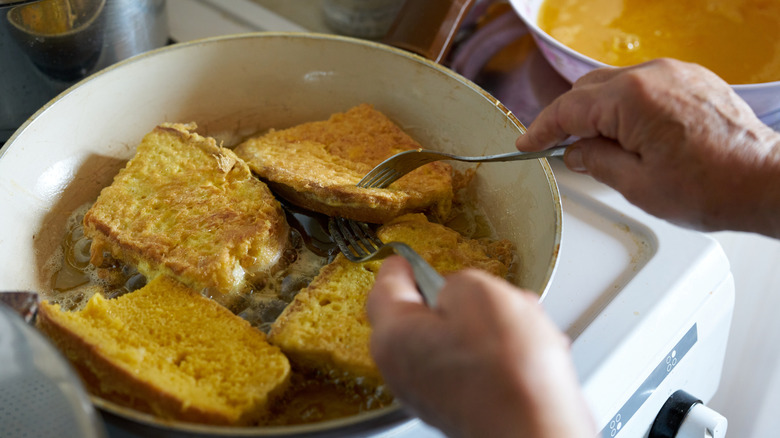
Not only are soaking times crucial for fluffy French toast, but soaking also ensures the most flavorful results. Chef Maxine Sharf told us, "I always use a mix of milk, eggs, vanilla extract, and cinnamon at minimum, but you can get creative. In my cookbook, I have a chai-spiced French toast that uses warming spices for a twist."
We've got plenty of creative French toast recipes to try. For a savory twist, we swap sweeteners for pecorino cheese, garlic, fresh cracked pepper, and olive oil in this recipe for savory caccio e pepe French toast with jammy tomatoes. We also give French toast a Christmasy spin by swapping the usual egg and milk custard for eggnog in this recipe for eggnog French toast casserole. You can even swap milk for a creamy, plant-based alternative like oat milk to blend with coconut oil for extra decadence.
We also asked Chef Sharf for her favorite type of bread to use in French toast. She sticks to the classics: "My favorite choice is challah cut into slices about three-quarters of an inch thick. It has just the right texture to absorb the custard without falling apart." Brioche is another challah-adjacent bread worth trying. Sharf says you can leave the experimentation to custard additives and toppings, which "can be simple such as butter and maple syrup or more creative with fruit, whipped cream, etc." For example, we top this coconut macadamia French toast with shredded coconut and pineapple.