

The Divisive Steak Dish You'll Rarely Find Ina Garten Eating

We may receive a commission on purchases made from links.
The image of the typical television chef is one that's not only well-versed in all the culinary classics but also up for eating anything. While Ina Garten has built her brand on timeless dishes like roast chicken and beef bourguignon, there's one old-school dish she avoids: steak tartare. In her 2012 bestseller "Barefoot Contessa Back to Basics," she explains, "I never eat steak tartare or raw eggs, unless I know they're from a safe place."
Her avoidance is not just about her own eating preferences, but for the sake of her guests. The chef's style of cooking emphasizes the joy of bringing people together, which would be easily interrupted by any food safety concerns.
She continues, "I'm not about to serve food to friends that requires me to explain its provenance." It's hard to imagine second-guessing a dish served up to you by Ina Garten, but that's probably even more reason for her to err on the side of caution.
The dangers of steak tartare
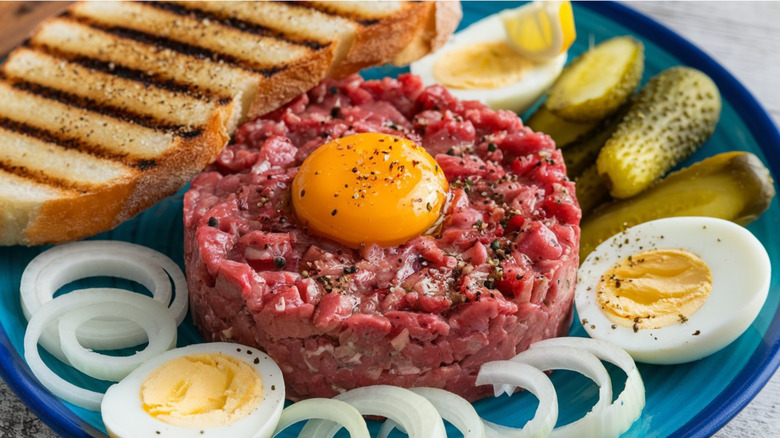
As a quintessential appetizer at high-end restaurants since the 1950s, steak tartare is demonstrably safe enough to eat, but any meat served raw is not without its risks. The concern with eating raw beef is the risk of food-borne illnesses from bacteria, including Salmonella and E. coli, which in other meat dishes would be killed off with the heat of the cooking process.
That's why the provenance of the meat used for steak tartare is so important, and why the dish is often expensive. Whether you're a restaurant owner or making steak tartare at home, you need to source beef from a reputable supplier and ensure you follow strict hygiene practices. Don't be tempted to take a shortcut by buying pre-ground beef, as this has a much higher chance of bacterial contamination. Start with a whole cut of beef and chop it finely (rather than mince) immediately before serving.
The traditional method of serving steak tartare topped with a raw egg yolk adds to the risks, as eggs are another carrier of Salmonella. To minimize your chances of food poisoning, buy refrigerated, pasteurized eggs and keep them in your refrigerator until serving.
If you're in the mood for beef but want to stick to a Contessa-approved dish, the chef has plenty of advice. Check out Ina Garten's top tips for cooking the perfect steak.