

Are Tic Tacs Sugar-Free? Here's Why The Nutrition Label Is Misleading

Tic Tacs are breath-saving candies with an undeniably sweet flavor, so why is there a debate over whether or not they're sugar-free? The confusion boils down to a quirky loophole in FDA regulations and some contradictory labeling. In the briefest possible explanation, a single Tic Tac contains about 94% sugar — making it the primary ingredient for these candies. However, the FDA only requires sugar to be listed when it exceeds a ½ gram, and a Tic Tac's total weight sits just under that. In other words, the actual amount of sugar in a container of Tic Tacs is so minuscule that the FDA classifies them as sugar-free.
That's not the only discrepancy fueling the Tic Tac confusion, however. Nutrition labels are based on a single serving size, rather than the precise ingredient measurements. Yet, checking the back of a Tic Tac box, the packaging states that a serving contains zero calories. That directly contradicts Tic Tacs' FAQs, which claim that a single Tic Tac contains two calories. But, that's because the FDA also considers anything with less than five calories per serving to be zero-calorie. Perhaps it's wiser to take these kinds of labels with a pinch of salt — or, in this case, sugar — as the fine print doesn't always measure up to the reality.
Are Tic Tacs unhealthy?
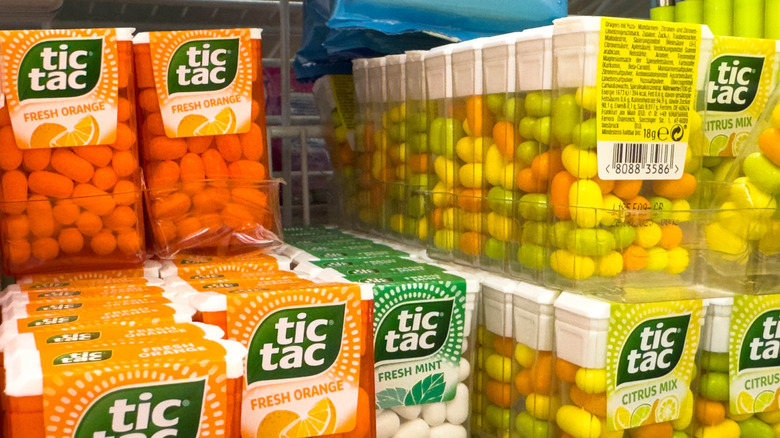
Given that controversial approach to labeling, it's normal to feel uneasy about these much-loved candies. However, while Tic Tacs aren't particularly healthy, they're not dangerous, either. The FDA recommends a maximum of 50 grams of added sugars per day, while a box of 100 Tic Tac Wintergreen Breath Mints contains 49 grams of sugar total. From this perspective, an entire pack of Tic Tacs would bring a consumer close to the daily maximum, but not over.
There is one important caveat: There's currently no guidance on how much total sugar – including added sugars and natural sugars – is safe to consume on a daily basis. Tic Tac claims that there's a "trivial" amount of added sugar in their candies, suggesting that the majority is natural. For the healthiest approach, though, it's better to play it safe by restricting ultra-processed foods like Tic Tacs and embracing naturally sweet, whole foods like fruit.
It's important to be mindful when swapping sugar, too; be wary of zero-calorie sweeteners and their ingredients. The WHO famously reinforced its warning about sugar substitutes in 2022, citing concerns that they encouraged consumers to adopt a less-nutritious diet.