

Avoid This Dairy Product To Minimize Microplastics In Your Diet
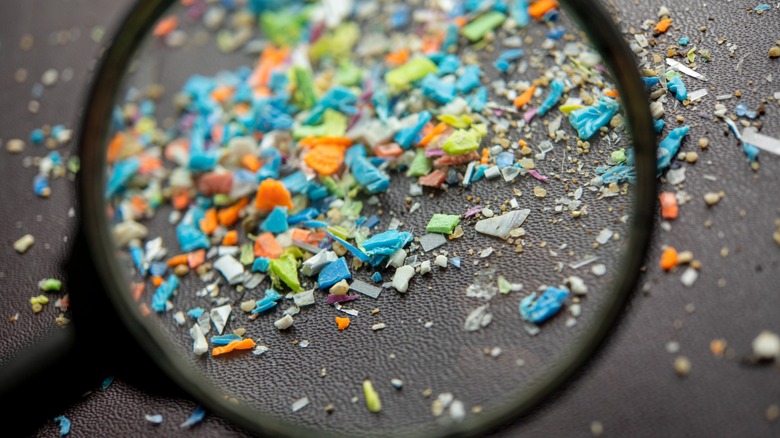
The general public is often the last to hear about concerns in the scientific community. Microplastics are a clear example of this. It wasn't until the 2010s that the term "microplastics" and its implications reached mainstream media. That's when we learned about concerning levels of microplastics in the water we drink. By 2024, studies showed that bottled water may contain 240,000 detectable plastic particles per liter, some small enough to pass through cell walls, according to Rutgers. Now we're also learning that many foods contain microplastics. In the dairy world, ripened cheese appears to be the most contaminated, with 1,857 microplastics per kilogram, according to a study in npj Science of Food.
Fresh cheese fared a little better than aged cheese, with 1,280 microplastics per kilogram, while milk contained only 350 microplastics per kilogram. If you're wondering how microplastics end up in your cheese and other dairy products, the list of sources and reasons is a long one. Microplastics are in just about everything in the world right now. They're in our water and our soil. Even fruits and vegetables that are still growing on the tree contain microplastics. Microplastics have been found in human cells. Remarkably, they have even been detected in unborn children. On a farm, microplastics can enter cows through their water or feed. Along the chain from milking to cheese processing, there are multiple opportunities for contamination, including contact with workers' clothing, protective gear, and even hairnets.
The extent of microplastics in our food and what we can do about it

Many previous microplastic studies focused primarily on aquatic environments, where most microplastics accumulate. It's natural that we then focused on drinking water and seafood. One study from Food Control found that canned fish contains 2.4 microplastics per gram, or 2,400 per kilogram, far more than the 1,857 per kilogram found in aged cheeses. The microplastics found in cheese are typically between 51 and 100 micrometers, while many of the microplastics in bottled water are even smaller and, thus, appear in far greater numbers. Whatever their size, the presence of microplastics is concerning because we do not yet fully understand their health risks.
According to Nature, human bodies are already riddled with microplastics. They're in your organs and your brain. If you eat that cheese, there is no clear way to define exactly which microplastics you have consumed and how they will affect you. Besides varying in size, microplastics can vary in chemical composition, and we can't yet say definitively how each type affects human health.
If you're concerned, you could try eliminating ripened cheese from your diet. Unfortunately, it looks like pretty much everything you can eat is going to contain some microplastics. That said, choose less processed foods when possible, wash your produce, and avoid plastic packaging when you can.