

Is It Safe To Eat Tomato Seeds?
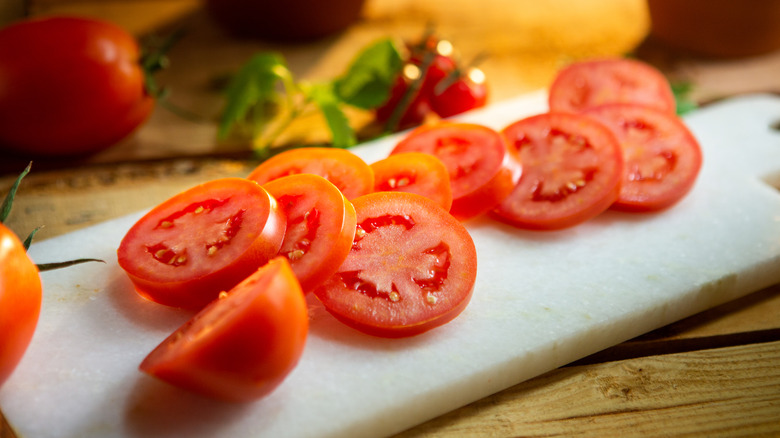
Like any beloved ingredient, tomatoes have collected their fair share of myths over the years. Some misconceptions are harmless — like the eternal debate over whether tomatoes are vegetables (they're botanically fruits, but eaten as vegetables) — but others are more concerning. One persistent myth claims that tomato seeds are toxic and must be removed, else they'd cause stomach problems ranging from sticking to your intestines to appendicitis and kidney stones. The myth is so popular that many people have become habitual tomato seed pickers. So, what's the real story?
Despite what you might have heard, tomato seeds are perfectly digestible. While their outer coating is tough, your stomach acid breaks it down easily, allowing your body to access the nutrients tucked inside. In a 2022 study published in Horticulturae, scientists found that tomato seeds were loaded with everything from proteins to minerals and vitamins, such that they were advocated for use as a "functional food ingredient." Needless to say, there wouldn't be such glowing recommendations if the seeds were toxic to eat.
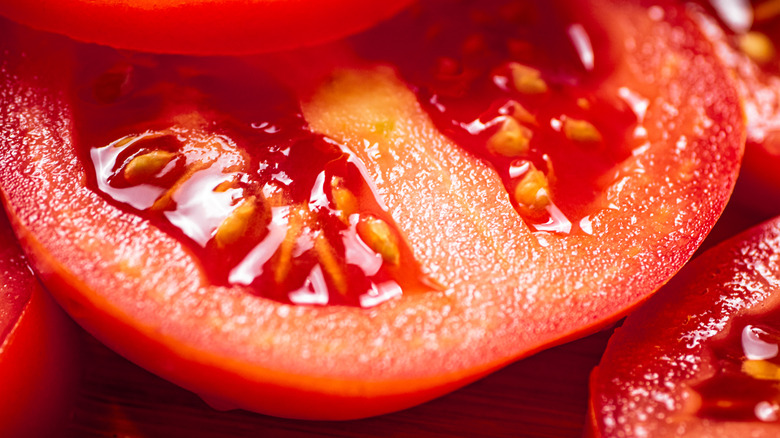
There's really no record of when and how exactly this myth came to be. It's likely an offshoot of the popular myth in which if you were to swallow a fruit seed, it'd grow into a tree in your stomach. But whatever the case, feel free to keep these teeny seeds in the next time you make an heirloom tomato salad. They even add charm to the dish, lined up like tiny pearls in each slice!
The parts of the tomato that are actually unsafe to eat
If you know your tomato history, however, you wouldn't be surprised that people are wary of this harmless-looking fruit and its seeds. Tomatoes were once thought to be deadly because people kept getting poisoned when they ate them (as it turns out, eating something acidic on lead-infused plates wasn't the safest dining habit). However, there are parts of the actual fruit and plant that aren't safe to eat — as in, they contain actual toxins.
The tomato plants carry two toxins: solanine, which can be found in unripe tomato fruits, and tomatine in the leaves and stems. Both compounds are natural pesticides produced by the plant to protect itself. This is the reason why it's best to leave green, raw tomatoes as they are in your garden or countertop until they're cherry red. Once the tomato ripens, the concentration of solanine lowers, and it becomes harmless. No worries, though — you need to eat a lot of green tomatoes (around 1.5 pounds) before effects set in, and solanine itself is extremely bitter, so it's unlikely you'd make it that far in the first place. However, children are often more susceptible, so it's best to be cautious with them.
The same thing applies to the leaves and stems of the tomato plant. An adult needs to eat nearly a pound of tomato leaves and stems to be poisoned. It's to the point where some people actually brewed teas out of tomato stems and salads out of tomato leaves. That said, it's best to leave the stems and leaves alone and just enjoy the fruit — and their seedy insides.