

Why You Should Never Buy Dairy Products Without Checking For This
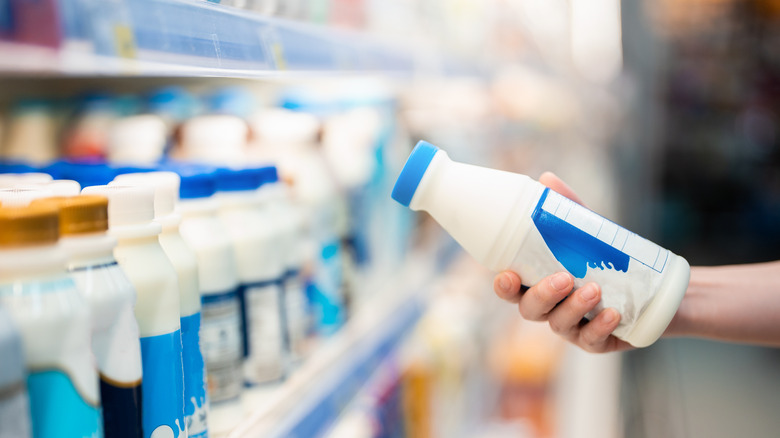
Dairy has always been fragile, and keeping it safe is a dilemma that has dogged humanity since we first began consuming it. Long before modern refrigeration, people invented yogurt and cheese as ways to preserve milk before it spoiled. Today the stakes are still high, because the bacteria that sour milk are the same types that can cause illness if products aren't kept cold enough. So, if the carton of 2% you reach for in the grocery store isn't cold to the touch, put it down, because that's a sign it hasn't been safely stored.
Milk and other dairy should be stored at 40 degrees Fahrenheit or below. At that temperature, bacterial growth slows dramatically, elongating shelf life. But when that standard slips, you're in the danger zone, and the countdown accelerates. Open-air cases in supermarkets can be especially risky. They keep food cool by pushing chilled air into an open environment, essentially air-conditioning the entire store. When the ambient temperature rises, however, those systems strain to keep up. A case with an old motor or a case that's situated in a hot and crowded market can easily warm above safe levels, even if the cartons look fine.
That's why a simple touch test is imperative. The milk, cream, or cheese in your hand should feel truly cold to ensure its safety. Reaching to the back (or bottom) of the row is also a smart strategy, since those containers are least exposed to warm air and constant handling. Buying dairy without checking that it's cold can mean shaving days off its lifespan, or worse, bringing home something that was already on the verge of spoiling.
Unsalvageably sour cream
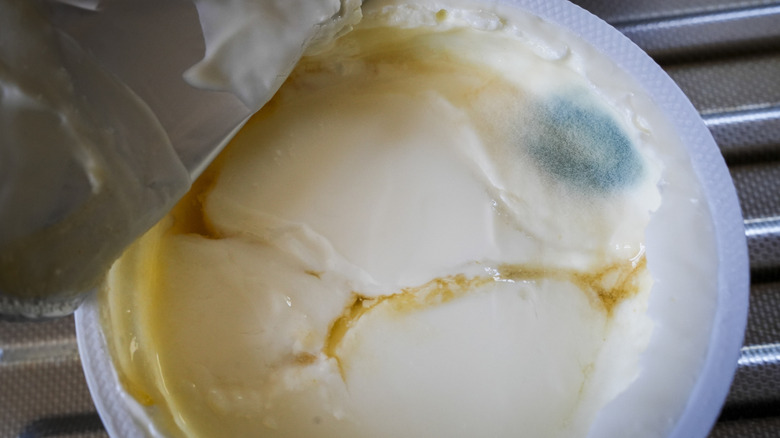
Dairy travels through what's known as the "cold chain," which is a tightly controlled sequence of refrigerated trucks, storage rooms, and display cases. Any failure along that route can shorten its shelf life or, in the worst cases, lead to dangerous contamination. When refrigeration falters, this can become a vehicle for serious disease. Public health investigations have traced outbreaks of salmonella, listeria, and E. coli back to milk or soft cheeses that were incorrectly stored or transported at unsafe temperatures. And because dairy is nutrient-rich and high in moisture, it's the perfect breeding ground for bacteria once it warms slightly. Spoilage alone is unpleasant, but the consequences can be worse than a ruined latte.
For consumers, the risks and responsibilities continue after checkout. Dairy warms quickly in a shopping cart, in the car, and even sitting on your countertop once you're unpacking groceries. Food safety specialists recommend making dairy the very last stop in your shopping trip and moving it into your refrigerator as soon as possible. It's also a good idea to bring an insulated cooler bag with you, or at least pack all the colder items together so they can help each other stay chillier for longer. At home, keep dairy stored in the main body of the fridge rather than the door, where the temperature fluctuates each time it's opened. The responsibility falls on both producers and consumers to handle dairy carefully to ensure that something nourishing and delicious doesn't become hazardous and disgusting.