

The Only Pan You Should Be Frying Chicken In
We may receive a commission on purchases made from links.
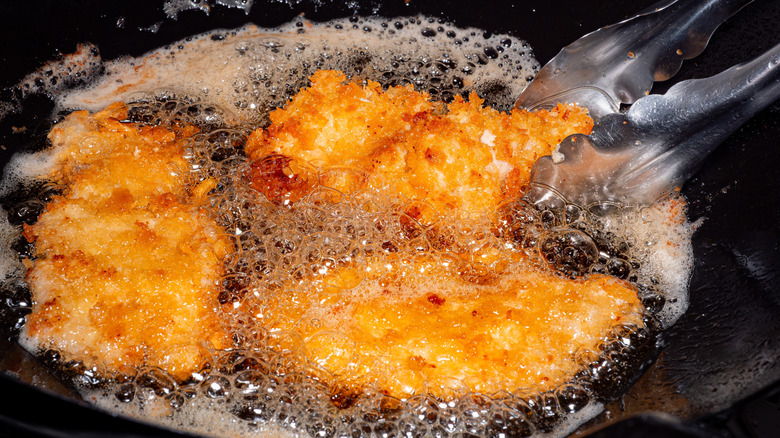
If you think about what separates a great piece of fried chicken from a disappointing one, it has to be the crunch. A crispy, non-greasy coating is what every chicken restaurant prides itself on, and what is perhaps hardest to replicate at home. If you're struggling to get that perfect texture, make sure you're using a cast iron pan.
The secret to frying chicken — or any food — is to keep the oil at a steady temperature. If there's too much heat, the exterior will burn before the meat is cooked, and if there's not enough, the coating will absorb more oil. A dense cast iron pan is slow to heat up or cool down, and that's a good thing. This means the temperature won't fluctuate wildly when you add the chicken or with changes in temperature from your heat source.
There's a bonus to frying chicken in cast iron: It helps to season your pan. Seasoning or maintaining the surface of cast iron usually requires adding a layer of oil then putting it in the oven. But when you deep fry your chicken you're adding the heat and the oil at the same time, and getting a tasty meal in the process.
More tips for the crispiest fried chicken
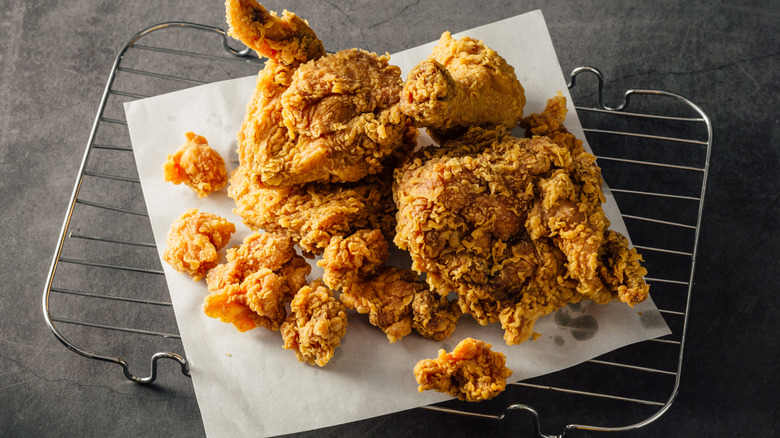
Choosing a cast iron pan will go a long way to getting a crispy exterior, but there are plenty of things you can do (and a few mistakes you should avoid) when cooking fried chicken at home. Perhaps not surprisingly, a lot of this advice has to do with temperature.
The first is to let the chicken come to room temperature before you start cooking. This will help the chicken cook more evenly. The best time to do this is after dredging, as this rest time will also help the coating adhere. Before you get too worried about food safety, this step only requires 15-25 minutes — well below the two-hour maximum advised by the USDA.
Using the right oil is not so much about the flavor, but about the oil's smoke point. The best temperature for frying chicken is between 300 and 350 degrees Fahrenheit, so you need an oil that can stand the heat. Peanut oil, canola oil, and even lard are good choices.
A good thermometer, like this Alpha Grillers meat thermometer, is an essential tool for deep frying. It will show you when your oil has reached the right temperature for cooking and how much the temperature drops after adding the chicken. Perhaps most importantly, it will tell you when the chicken has been cooked through and is safe to eat — you'll need an internal reading of 165 degrees Fahrenheit.