

9 Popular German Candies, Ranked Worst To Best
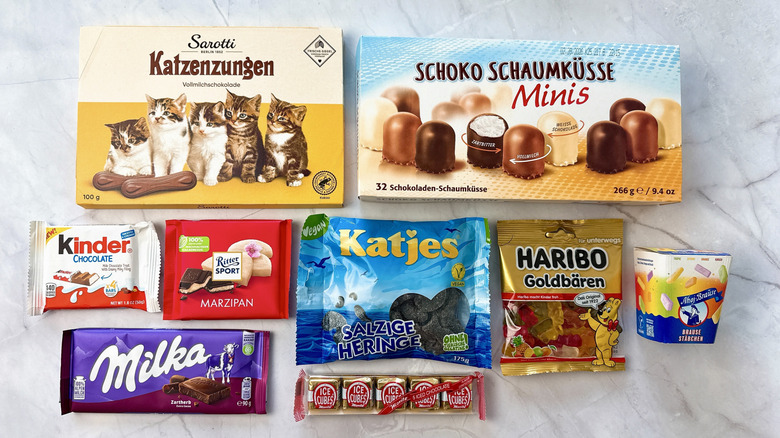
If you have a sweet tooth, there's no doubt you've stumbled upon some of Germany's finest confections. Whether it's colorful, chewy, and gummy in texture, or creamy, rich, and chocolatey, there's no shortage of delights in the German candy realm. And thanks to specialty stores and online retailers, it's easy to get your hands on a wide variety of delicious sweets. In fact, the selection is almost overwhelming, so how is one to choose?
I've been a food writer for almost 30 years, and in that time, I've traveled to Germany on several occasions. I also have a wicked sweet tooth; I don't think there's a single candy store in Munich I haven't visited. I wholly appreciate German confections because they're made with premium quality ingredients under the strictest of standards. And you can tell, from the minute you peel back the wrapping. So, there's that. But the best news is that Germany is the largest exporter of sweets, so you don't need a passport to enjoy their impeccable candy.
To help you navigate Germany's sweetest of treats, I purchased nine popular candies and ranked them from worst to best. Seems silly to say "worst" since it's candy and they were all fabulous, but I ranked them nonetheless. In the list below, you'll find some recognizable global brands like Ritter Sport, Haribo, and Kinder, but I've also included some (perhaps) lesser-known brands that should be on your radar. Without sugarcoating anything, here's my honest ranking.
9. Brause Stäbchen
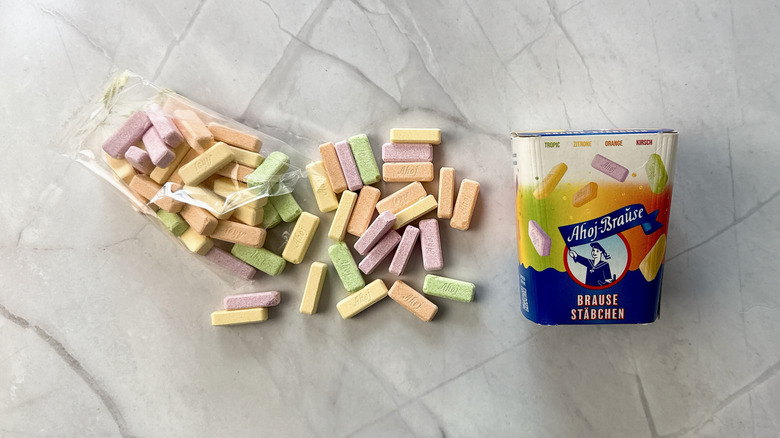
When I first opened the box of Ahoj Brause Stäbchen, I was pleased to find cute little candy sticks in a variety of colors. I thought they smelled slightly medicinal at first, but that's likely because there's nothing artificial about them. No fake aromas wafting from the package. The hard candy comes in a variety of flavors, including cherry, lemon, orange, and tropic. But there's more — there's a bit of effervescence to these candies, so they come alive in your mouth.
I tried all the flavors, and orange was my favorite, by far. It was sweet but not too sweet, and perfectly citrusy. Plus, the candy surprised me with its fizziness when it started to dissolve. This candy isn't overly bubbly or effervescent; there's just enough tingle to add excitement to each piece.
I actually felt bad ranking this candy ninth because it's delightful. There's no doubt I will be buying it again. It's ranked last because I found more joy in the flavors and textures of the other German candies. If you haven't tried Ahoj Brause Stäbchen, grab a box and let the excitement begin.
8. Ritter Sport
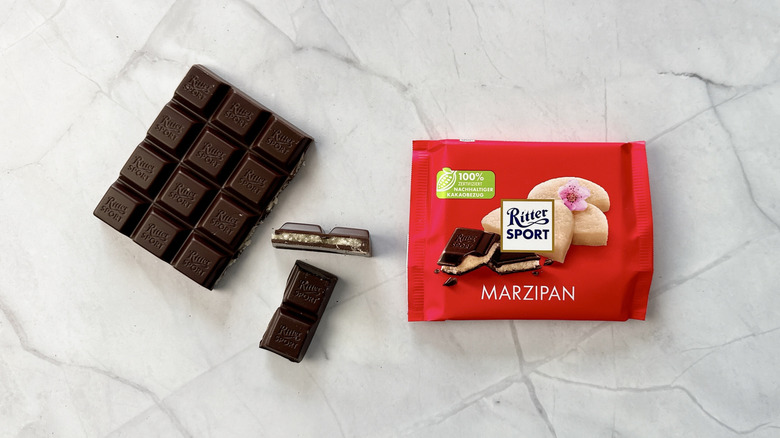
I'm a big fan of Ritter Sport confections, so I was excited to try this dark chocolate with marzipan. In fact, I had a hard time selecting a product; the Ritter Sport section of the German specialty store took up almost as much real estate as Haribo. I decided to ask the store manager for advice, and he suggested the marzipan-filled candy, stating, "All the Germans buy this one." I can see why — the dark chocolate is rich and flavorful, and there's a decent amount of chocolate in the 3.5-ounce bar. The chocolate was both crisp and melty, which I enjoyed.
The marzipan filling is classically German; in fact, the marriage of ground almonds and sugar has been a cherished German staple since the 16th century. I loved the combination of dark chocolate and marzipan, and I appreciated that there were no artificial ingredients, so it was hard to rank this candy second to last. This candy ranked where it did because I didn't find myself wanting to go back for more like I did with the other brands. That said, if you're a fan of Ritter Sport (and who isn't?) and you haven't tried the one with marzipan filling, I highly encourage you to do so.
7. Kinder
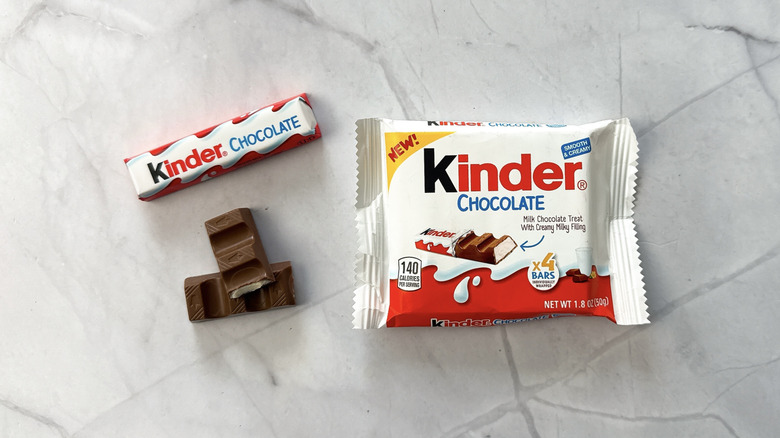
Translated from German, "kinder" means children, and clearly this candy has warmed the hearts of many kiddos around the world. Introduced in Italy and Germany in 1968, Kinder confections are widely available globally, including at your local grocery store. There are many Kinder options, so for this ranking, I asked the German store owner which variety a German kid would buy. He suggested the iconic Kinder chocolate bar which features creamy milk chocolate with a milk filling.
I really liked this chocolate bar. The outside milk chocolate was creamy and smooth and had great chocolate flavor. The filling was milky and sweet, and a nice complement to the cocoa. I appreciated that the candy is made without artificial colors or preservatives, and the finger-sized bars were the perfect size for a little sweet treat. Plus, the four bars were individually wrapped, which makes them suitable for sharing (if you're inclined to share). I ranked Kinder seventh because, while it was delightfully chocolatey and milky, I enjoyed the rich chocolate flavors of the other chocolate candies more. I also enjoyed the licorice and gummies a bit more as well. That said, grab this Kinder bar, and it will surely bring out the kid in you.
6. Haribo
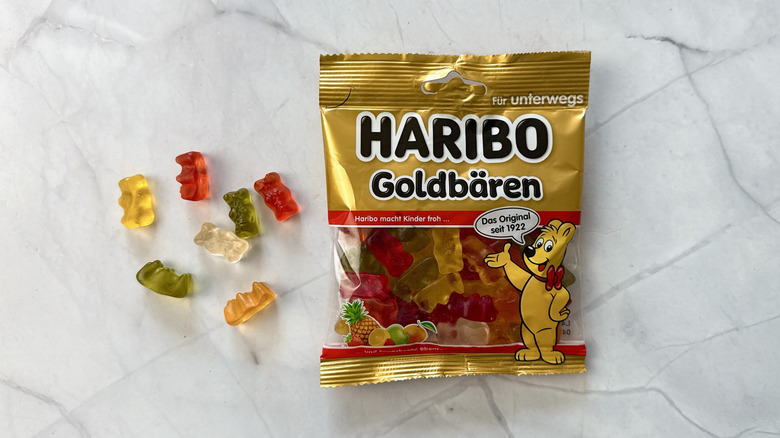
It doesn't matter if you're 6 or 66; there's something comforting about Haribo gummy bears. Invented in 1922, Haribo Goldbären (gold bars) are colorful, chewy, sweet, and the perfect size to pop in your mouth. There are several varieties of Haribo gummies, so for this ranking, I purchased the original flavor. The package featured bear-shaped gummy candy in apple, strawberry, pineapple, lemon, raspberry, and orange flavors. The bears are small, and the package is compact, so they're perfect for stuffing in your bag or back pocket. The flavor of these gummies was perfectly fruity, reminiscent of the actual fruit juices they're made with, meaning no artificial flavors. Plus, the German gummies contain apple-flavored bears, a flavor not found in American-made gummies.
As I was purchasing these German gummies, I noticed the American-made version on a rack close by. I grabbed the bag and put the two varieties side-by-side — I was shocked by the difference in color. The American gummy bears were almost fluorescent-looking compared to the German-made gummies. You can thank artificial food coloring for that, including red #5, blue #40, and yellow #1. If you're trying to avoid artificial dyes in food, buy German gummies. I ranked this candy sixth because, while I love gummy candy, the other brands had more desirable flavor and textural components.
5. Katjes
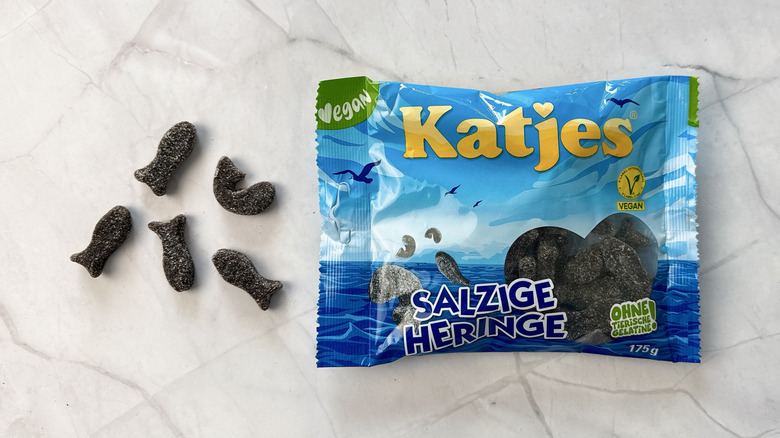
If you're a fan of licorice, Katjes salzige heringe is for you. When translated from German, "salzige heringe" means salted herring, so of course I chuckled when I looked it up. The pieces do look like fish, but thankfully this candy is chewy and sweet, not fishy or oily like actual herring. I absolutely loved the licorice flavor. And there are clear notes of salt, but it's not an overpowering experience. In fact, the sprinkling of salt not only complements the sweetness of the sugar, but it also elevates the nuances of the black licorice.
Wildly popular in Germany (and much of the world), salty licorice is truly unique. It's almost in a category of its own because it's sweet like candy, but has savory, salty undertones. And for some, it can take some getting used to. I adored this candy and had a hard time relinquishing the bag to my son when he wanted some. I ranked this candy fifth simply because the flavor might not be for everyone. But it's definitely for me.
4. Grabower Schoko Schaumküsse
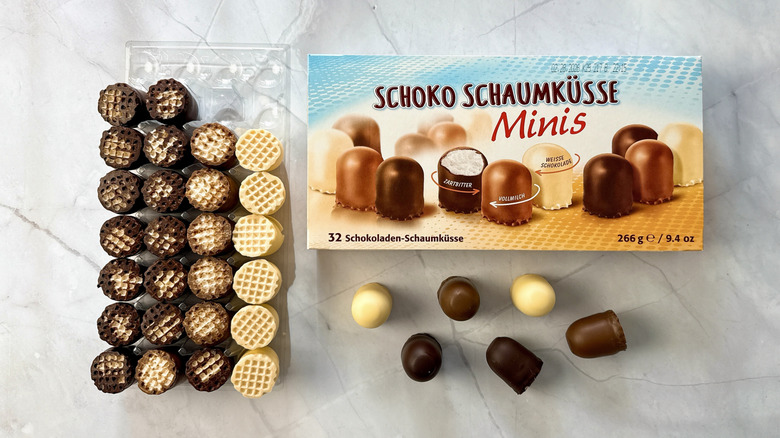
Just wow; that was my first impression of Grabower Schoko Schaumküsse Minis. Known as the marshmallow kiss, or chocolate kiss, these dome-shaped candies feature a wafer base, marshmallow-esque filling, and crisp chocolate shell. The three elements are magical when enjoyed together. The wafer base is reminiscent of a toasted waffle, the soft egg white-based center is sweet and fluffy (not firm like store-bought marshmallows), and the chocolate shell is made with white, dark, and milk chocolates. My mouth is watering as I write this; the marriage of creamy and crisp was delectable.
When shopping at the German specialty store, the store manager insisted I add these to my ranking, citing that they are a German candy staple. In fact, Germans consume an average of one billion Schaumküsse annually, and the average kid consumes about 100. After one bite, I can totally see why. The store manager also mentioned that Germans often squish the candies between two slices of bread — similar to a marshmallow fluff sandwich. Yum.
The only reason this candy didn't rank higher is because while the waffle base and soft center were outstanding, the chocolate shell was a little too thin and crisp for me; the crackly coating wasn't as creamy as the winners in the category. That said, if you haven't tried Schaumküsse, I suggest you race out and get them right now.
3. Sarotti Katzenzungen
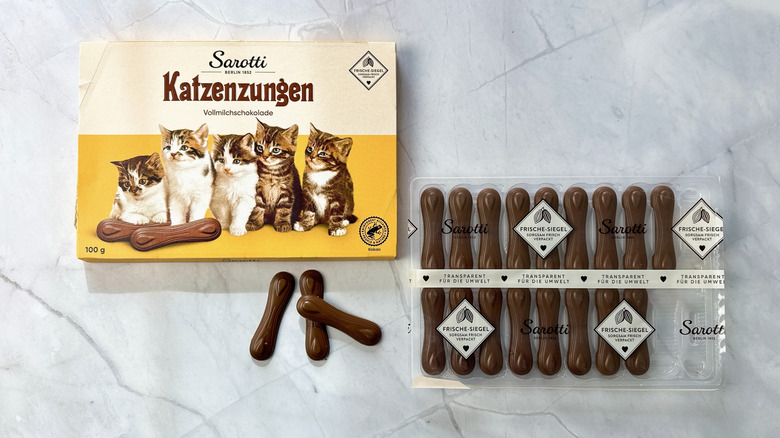
As soon as I picked up this box of Sarroti Katzenzungen and realized what it was, I started laughing. I mean, c'mon, cat tongues? Seems the tongue-shaped chocolate was quite popular in Berlin and Paris at the end of the 19th century, and the feline-inspired, dreamy milk chocolate has been a fan favorite ever since.
Not just fun to eat, these perfectly sized chocolate tongues literally melt on your own tongue. Made with cocoa, cocoa butter, and milk, they provide a dreamy milk chocolate experience that's rich, smooth, and creamy. Not as robust as dark chocolate, but if you're a milk chocolate connoisseur, you will adore these cat tongues.
I also appreciated the packaging; each piece of chocolate was nestled in its own little pocket, so there was no risk of breaking. Let's be honest, if you want the full cat tongue experience, the tongue can't be broken. There was a tight plastic seal as well, which I assume ensures that the chocolate stays fresh-tasting. And it was deliciously fresh and flavorful. I feel confident giving this candy the bronze — it was yummy and fun, it just couldn't compete with my favorites in the category. But for all you chocolate-loving cat fans, buy this candy immediately.
2. Moritz Ice Cubes
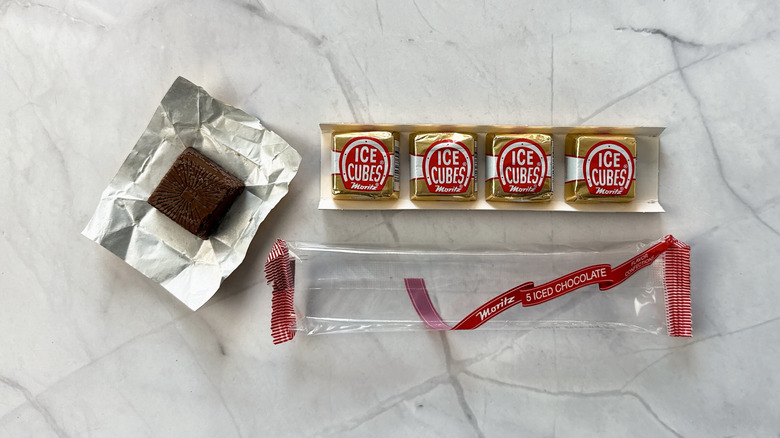
I almost didn't purchase Moritz Ice Cubes because I didn't realize they were made in Germany. It was the German store owner who said, "You can't forget these!" as he popped them in my hand cart. To be honest, when I first opened the wrapper, I thought the candy looked dry. Especially when compared to the other chocolates I tested. I truly expected this candy to fall short in the ranking, simply based on my first impression. But then I took a bite. I expected the exterior to be crisp, but my teeth sank into the square like it was softened butter. And the filling was exceptionally soft and flavorful. Ice Cubes are named for both their resemblance to a cube of ice and the way they deliver a cooling sensation on the palate.
That was exactly my experience; the chocolate was soft, cooling, melty, and undeniably memorable. Since the candy is made with coconut oil (which instantly melts in your mouth), I assume that explains the unrivaled, buttery mouthfeel. This candy got the silver medal for a reason: it's damn delicious. The only reason it's not in first place is because I enjoyed the winner the most.
1. Milka
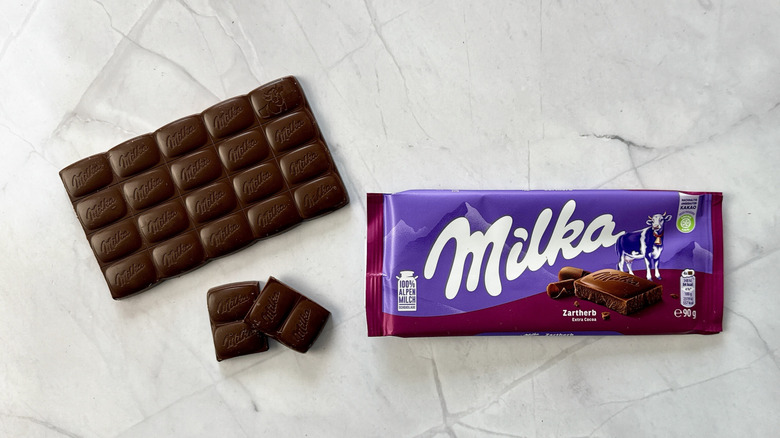
"Milka" is a combination of "milch" (milk) and "kakao" (cocoa), and the lilac-wrapped candy bars are aptly named because the chocolate is rich, creamy, and definitively chocolatey. I purchased Milka Zartherb, which means extra cocoa, or dark chocolate. Made with 100% Alpine milk, the chocolate was melt-in-your-mouth delicious. And the bar seemed heavy for its size — it was 90 grams/3 ounces, but it felt heavier. This candy bar delivered a solid marriage of cocoa, cocoa butter, clarified butter, and hazelnut paste. I couldn't really detect the hazelnuts; they simply added depth to the candy bar.
I also appreciated that the ingredient list was short and featured recognizable ingredients (once translated). Oh, and the wrapper? It's resealable packaging and seals together with ease once you remove a piece or two, likely because you're not supposed to eat the entire thing in one sitting. One thing I've learned is that when you enjoy a high-quality, fine piece of chocolate, you don't need to eat the whole bar. It's easy to be content with a square or two.
When shopping, the store owner said he (and most Germans) adores the deep chocolate flavor of Milka brand candy bars. And I wholeheartedly agree. Milka came in first in this ranking because, for me, it was superior in flavor and texture, and a little goes a long way.
Methodolgy
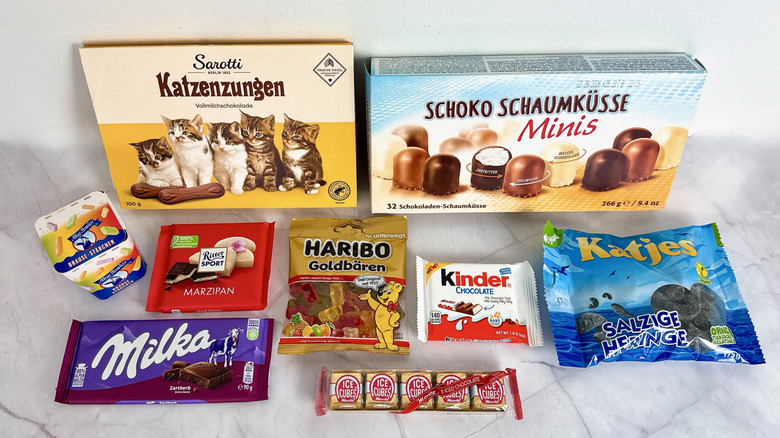
I'll be honest, this was a fun ranking. Especially because I adore candy of all types, from the candies that stick to your teeth to the ones that melt in your mouth. For this ranking, I chose nine popular German candies that are available nationally, whether from a German specialty store or an online retailer. In order to choose the best from a large selection, I went to a specialty store and asked the German owner and store manager for recommendations. I had help choosing each item on this list (they suggested many more, but I had to cap it somewhere).
I judged each candy based on overall flavor and texture. It didn't matter if the candy was chocolate or gummy-based; I judged them equally based on how flavorful and texturally enjoyable they were overall. If the chocolate candy was rich, creamy, and flavorful, I ranked it higher. If the texture of the chocolate was hearty and not crackly, I ranked it accordingly. For the non-chocolate candy, if it had sensational flavor — whether it was fruit or anise — it ranked higher. Since my friends and family also love candy, I recruited them to help. They were more than happy to oblige.
I loved all these candies, so it was hard to choose a winner (and subsequent loser). Truth is, some days you might want something fruity and gummy, while other days you might be craving rich dark chocolate. So, with that in mind, know that you can't go wrong with any of these options. As for me, I'll be heading back to that German store for the candies I left behind.