

Why So Many Restaurants End Up Going Bankrupt
Last year saw a wave of big bankruptcies in the restaurant industry, which has a lot of customers wondering: What's going on? When just one or two places go bankrupt, people understand that's just the cost of doing business. Places go into debt (or make mistakes) and pay the price. But when dozens of big name chain restaurants go bankrupt after being successful for years — and, all at the same time — diners understand something bigger is going on. It's not just chains that are struggling, either. Many major cities are also seeing waves of closures when it come to local eateries, with restaurants declaring bankruptcy 50% more in 2024. It turns out that even in a famously difficult industry, the wide range of rising costs and uncertain economy of the last few years have made running a restaurant even more volatile.
No one, single thing sinks a restaurant. But, over the last five years, the industry has been facing heat from all angles. The biggest issue is one customers have also noticed the most: inflation. The cost of food and labor are the two biggest expenses for a restaurant, representing an average of about 66% of total business costs. Since 2020, supply chain disruptions have increased the cost of food by about 24%, meanwhile a shortage of labor has driven up wages for workers by a similar amount. These are both brutal jumps in restaurants' most important areas, but they are just the beginning.
Rapidly rising costs are driving restaurant prices higher than many want to pay

Although labor and food are the biggest expenses, lots of other costs are skyrocketing. Rent is a major part of restaurant pricing, yet rising costs for rent across the country have left many independent restaurants struggling. When you combine all those cost increases over the last five years, menu pricing has had to jump 30% for many businesses to simply break even.
However, inflation-weary customers don't want to spend more money. In fact, many have changed their spending habits since the pandemic. While the restaurant business recovered rapidly after the pandemic, traffic slowed in 2024, and has continued to be unsteady in 2025. Interestingly, restaurants' overall sales have actually risen over the last several years as people who do eat out tend to spend more money, but even that positive point regrets to highlight up a big change in where exactly people are choosing to dine.
From 2019 to 2025, there has been a shift away from full-service restaurants towards fast food and takeout. The percentage of people actually dining at eateries has fallen from 35% to 27%. As can be seen by TGI Friday's and Red Lobster, restaurants geared towards dining-in have taken the biggest hits, while many takeout-oriented concepts like Wingstop and fast food spots like Chipotle have been thriving. Evidently, rapid changes in consumer behavior mean that some businesses just won't be able to adapt quick enough.
Restaurants are low-margin businesses that are tough to keep open in the best of times
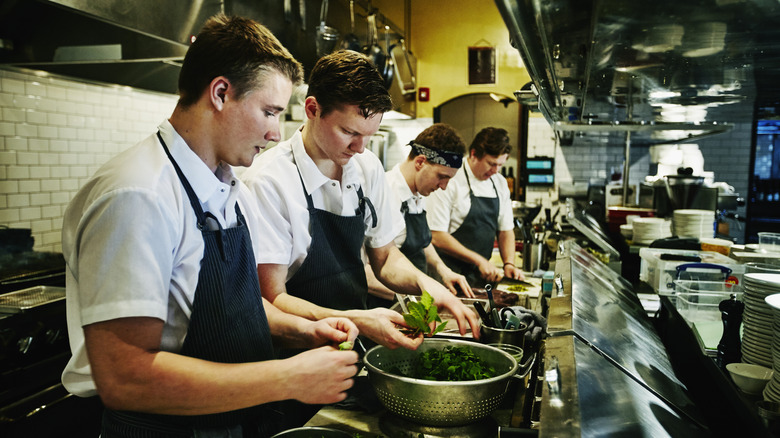
Despite that the last five years have been a historically difficult time for restaurants, the math of the business has never been easy. Full-service restaurants typically have profit margins of around 5%, which means only five cents of every dollar a customer spends is profit. Fast food comes in a little higher, but still only averages between 6% and 9%. Given these low margins, almost every cost increase that an eatery experiences will result in having to hike prices, which might yield fewer customers. Not to mention that these margins only account for ideal conditions. Rent, labor, equipment costs, credit card processing and even third-party delivery service fees don't disappear when business slows. With such low margins, even minor disruptions can be fatal.
Ultimately, the COVID-19 pandemic meant huge changes for restaurants. Even for restaurants that survived it, the damage has lingered. Many restaurants went into debt to stay afloat, further eroding those small margins with rising interest rates. Part of the closures we've been seeing in the last few years are from these added costs, on top of everything else. Nobody likes paying higher prices for food, but competition in the industry is brutal, which means the prices you're paying aren't just restaurants gouging you. The reality is that there are dozens of things can go wrong in the food service industry, and (unfortunately) many have gone wrong all at once as of recently.