

The Value Of Your Family's Food Waste Likely Totals Hundreds Of Dollars Each Month
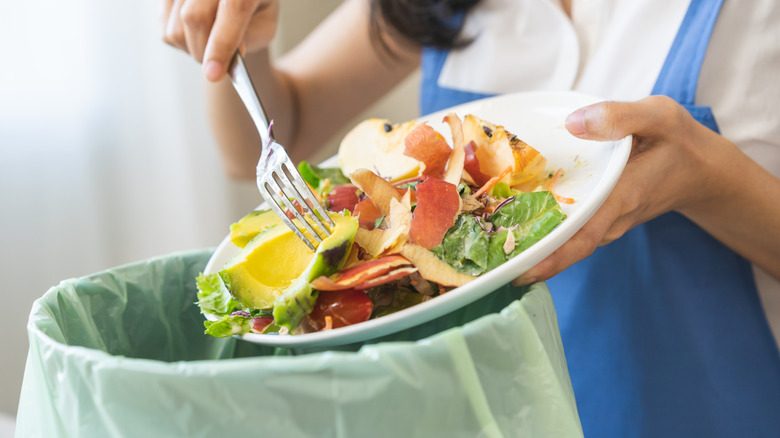
Although grocery shoppers like to get their money's worth in store, economical habits don't always follow them home. According to the Environmental Protection Agency (EPA), by throwing away less food, a family of four could save $56 worth of food a week, or $224 a month. That totals up to almost $3,000 a year of money going straight into the trash.
Throwing away leftover food that you no longer want to eat may be the most obvious form of food waste, but there are other practices that have a negative impact. Tossing inedible or uncommonly eaten items like banana and citrus peels, broccoli stems, potato and onion skins, or watermelon rinds, rather than repurposing them, is a practice that many shoppers are guilty of. Not using up easily perishable foods, such as dairy, bread, or potatoes, is another common habit, although not as easily avoided.
With all these kinds of food waste, the EPA estimates that each American spends $728 on unused food each year, although tracking your spending and food waste habits or using a calculator like the Kerry Food Waste Estimator could reveal that the cost is much more. Unfortunately, food waste doesn't just have a financial impact. Uneaten food in landfills creates greenhouse gas that results in climate change, which isn't pretty considering that the water and energy spent growing that food can power over 50 million homes, according to the USDA.
Reduce your food waste with these simple steps
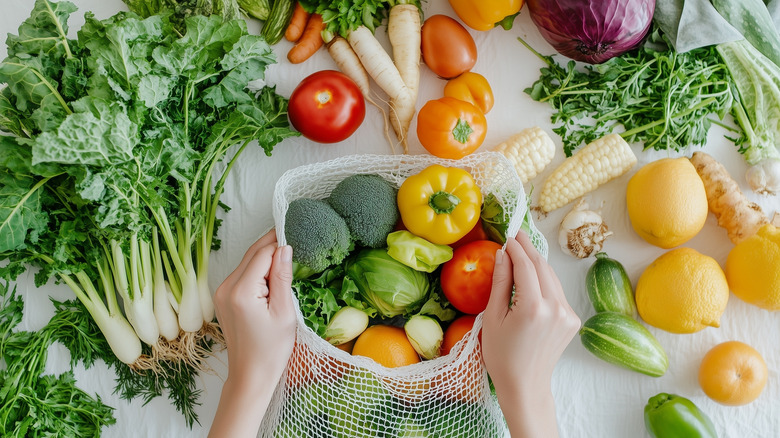
Ensuring that you eat all your leftovers is an easy way to reduce food waste in the kitchen; though it seems simple, 30-40% of food is thrown away, so doing so can make a big difference. From freezing cooked food to eat at a later date to turning it into an entirely new recipe, there are ways to make your dishes taste new while ensuring you get your money's worth. If you're into food prepping, cooking several grains at the start of the week to use in different recipes helps to provide variety while ensuring nothing gets thrown away.
For the items that aren't meant to be eaten, like vegetable scraps or fruit skins, composting at home is always a good idea. The scraps and leaves from veggies, and even the bones or shells from meat and seafood, can also be given new life by being turned into broth. The flavorful liquid can serve as a base for soups and stews, used to steam rice and vegetables, and so much more. Best of all, you can freeze it in an ice cube tray, allowing you to use only what you need.
Speaking of freezing, opting for frozen fruits and veggies when shopping is the best way to avoid tossing molded produce. Produce from the freezer aisle is frozen when it's perfectly ripe, so you still get the same quality as fresh produce, along with the benefit of saving money.