

The Wall Trick For Checking If Chickpeas Are Done Cooking For Hummus
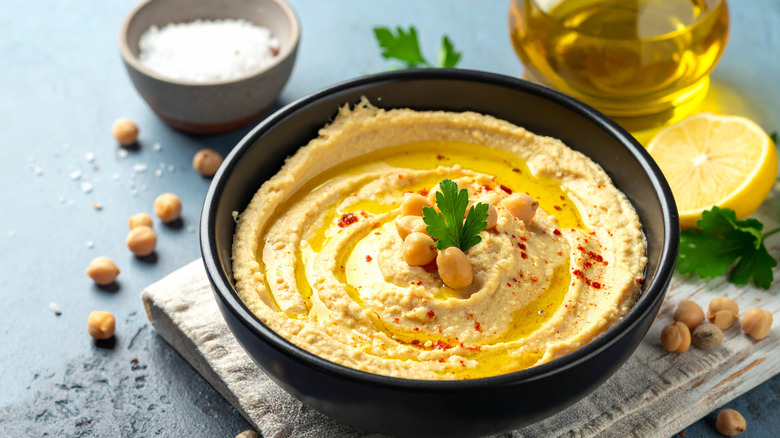
If you've always opted for store-bought hummus, trust us that it's worth the extra time to make a batch at home. You'll get a more velvety texture and tastier product than anything you can buy off the shelf. But anyone who has ever tried to make hummus will tell you, knowing exactly when the chickpeas are perfectly cooked can be quite tricky.
Cook them too little and you'll end up with a grainy, chalky mess. Let them go too long and they turn to mush. It's especially frustrating when this is the step that can make or break your creamy hummus. That's why we decided to ring Wissam Baki, executive chef at Amal, for help. He let us know of an old-school trick that can completely take the guesswork out of the process. "There is an old way to check: Throw the chickpeas at a wall. If they smash and stick, that means they are ready for the next step," Baki says.
It's the kind of kitchen wisdom that sounds almost too simple (or too bizarre) to actually work — but it does. Raw chickpeas will have a very tough, rock-like texture. After it's been cooked through, the legume will mellow out. There's no better way to do this than literally throwing it at the wall to see if it sticks.
Baki shares how to make restaurant-grade hummus
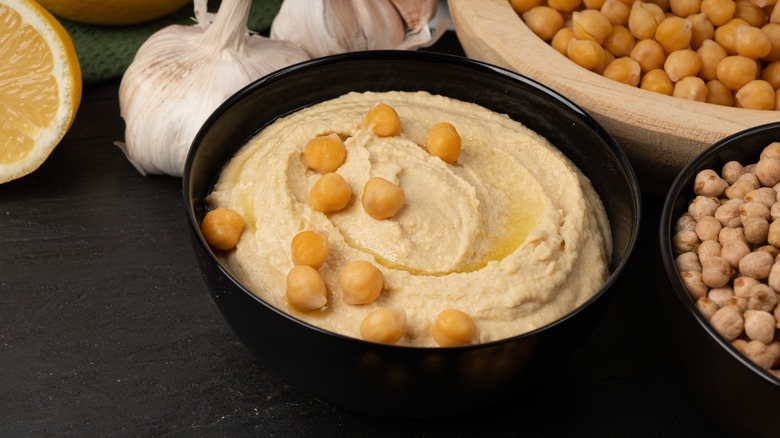
Beyond the wall trick, Baki also walked us through his complete hummus-making process, and there are cool tricks that may help you get a better batch next time. The first step is to choose the right chickpeas. "There are many types of chickpeas, larger and smaller, but I prefer the medium, dried chickpeas. They are lighter and have a better taste," Baki says.
The key is then to prep them carefully before they go on the stove. "Soak chickpeas overnight for 12 hours," Baki advises. His formula is simple: For every cup of dried chickpeas, use half a tablespoon of baking soda and five cups of water. During cooking, he adds another step: "I recommend adding ¼ teaspoon baking soda while cooking the chickpeas as this will soften chickpeas and get the creamy texture."
Once cooked to wall-sticking texture, Baki's got a parting pro move: "Take the pot of chickpeas and rinse with cold water. We use a big spoon to flip the chickpeas at the bottom of the pot. Doing this, all the skins flow up the pot and we take out as much of the chickpea skins as we can." It's an extra step, but it'll keep any fibrous bits from floating in your dip.
All that's left to do is whiz your chickpeas at high speed in a food processor — this is how you get that "creamy, light and bright color" that defines classic Lebanese hummus, according to Baki.