

Plant Your Rosemary Next To This Aromatic Herb And Thank Us Later
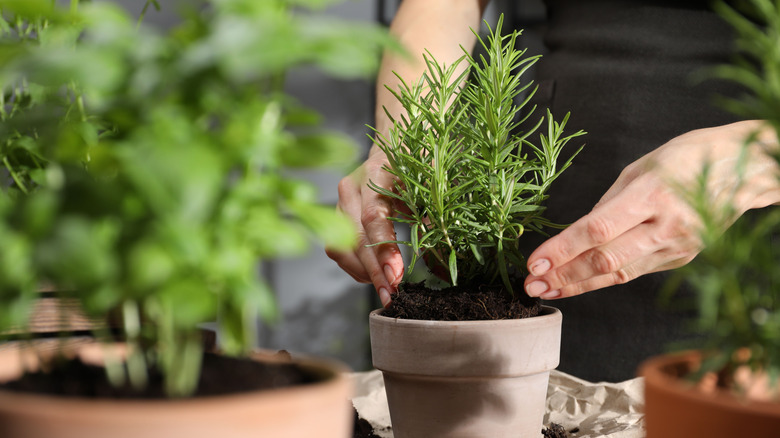
Growing your own herbs can be a game changer to elevate your cooking, giving you reliable access to fresh aromatics and garnishes without the waste of store-bought bunches. Rosemary is one of the best plants to add to your outdoor or indoor herb garden. Not only is rosemary useful in cooking, but it's a fairly low maintenance plant that's easy to grow. When you're adding rosemary to your herb collection, try planting it alongside thyme, particularly if you are growing herbs in garden beds, or want to double up plants in the same pot.
Rosemary and thyme plants have the same growing requirements: plenty of sun and sandy, well-drained soil. They are also both good at repelling insects or even larger pests, including mosquitoes, cabbage moths, and snails. The way these two herbs grow is also complementary, with the ground-hugging thyme creating a protective cover around the base of the more upright rosemary plant.
This is what's referred to as companion planting — pairing up herbs or other plants with similar needs that can be beneficial to each other. Rosemary also works well as a companion plant to other sun-loving herbs, including sage, marjoram, and oregano. On the other hand, you should avoid planting rosemary with basil, which needs moist soil to survive.
Other herb pairings (and those that don't pair well)
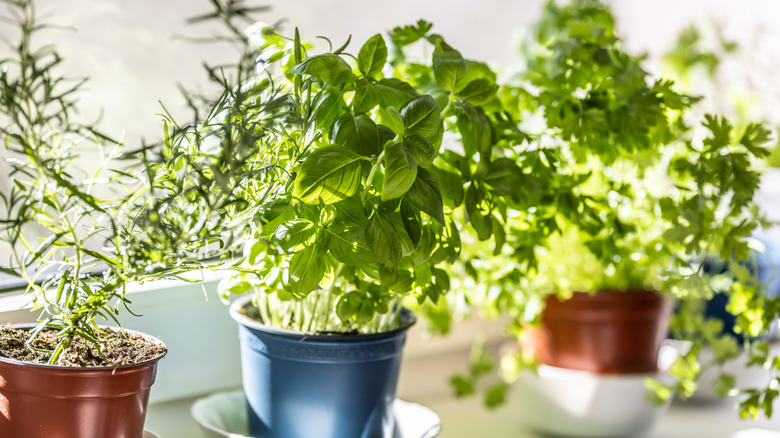
Knowing which plants pair well together will help ensure the success of your herb garden, particularly if you're short on space. Plants sharing the same pot or garden bed will need to share all the same growing requirements, including the type of soil, the amount of sun they need, and how often they should be watered. Good examples of this include cilantro and dill, which prefer cooler conditions, and basil and parsley, which like sun but also plenty of water.
Types of herbs with complementary characteristics can also end up being good companions. The short root system of chive plants make them a good match for parsley, which has longer roots, as the two don't compete for resources.
Some plants just don't play well with others and should always be grown separately. Fennel releases chemical compounds that can hinder the development of other plants, and mint has a tendency to take over any patch of soil it's planted in, so it's best suited to its own pot.