

Never Fight Sticky Plastic Wrap Again With One Simple Prep Step
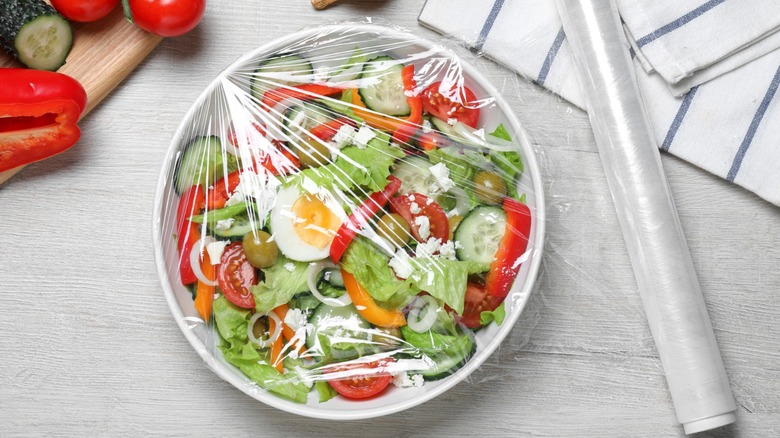
Plastic wrap, cling wrap, or saran wrap, no matter what you call it, this sticky plastic film can be a nightmare to deal with. Despite its usefulness in the kitchen it doesn't always cling to what you want it to. At times, it can feel a bit like Hercules fighting the Hydra: One side doesn't quite seal, so you push, pull, smooth, or stretch it down but then another spot lifts its ugly head. It continues like this until the film gets stuck to itself and you're back at square one. Luckily, there's a way to best the beast. The team from Glad dropped this platinum tidbit in their exclusive plastic wrap tips interview, "... wraps work best when used on clean, dry surfaces."
Turns out, this hack works great on bowls, plates, casserole dishes, and storage containers, just be sure to dry the surface with a clean cloth or paper towel before wrapping it. Make sure there are no damp smudges of food on the sides of the container you're trying to wrap. There is one exception to the rule, though — flat surfaces require a different approach.
How to get cling wrap to fully cooperate
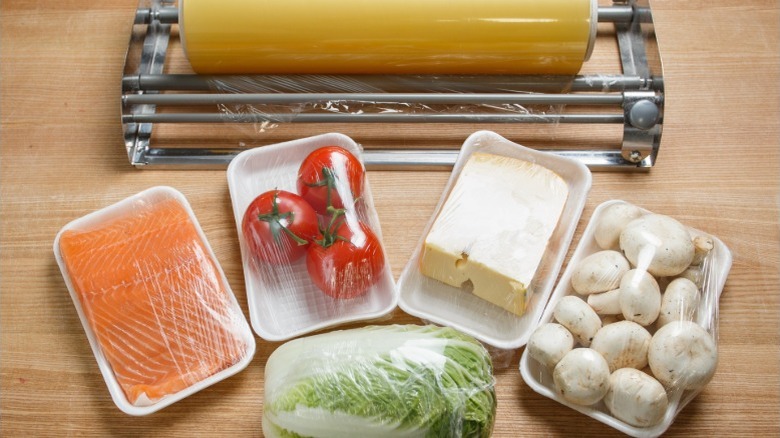
When you need the cling wrap to lay flat, such as on a cutting board or counter, the opposite of the aforementioned hack is true — dryness then becomes the enemy. As celebrity chef Gordon Ramsay explains in a video from his MasterClass, posted to Facebook, a little wetness can aid in getting things smoothed out with this unwieldy plastic wrap, making it cooperate. Ramsay instructs that it's best to rub a damp (not soaked) cloth over the surface, just before laying down your cling wrap. Go over it with a dry end of the cloth afterward to smooth away any wrinkles. This will help the cling wrap not to curl or bubble up while you're working with it.
Of course, each brand of plastic wrap is a little different, so you should always read any instructions on the box to get the most out of this longstanding kitchen tool. As a general rule, plastic wrap works better on ceramic and glass than wood or metal. Another common mistake novices make with cling wrap is not using enough. And if you're storing food in the fridge, you should wrap the container all the way around — even double wrapping it. Not only will this tip have you finally mastering the art of using plastic wrap, allowing you to keep your food super fresh, but it also makes the wrapping process even easier, because as we all know cling wrap sticks best to itself.
And once you've got basic wrapping down, the kitchen staple can be used for more than just keeping food fresh. Use it for Alton Brown's trick for coating bundt pans, or, when you're baking, line measuring cups with it to prevent a sticky mess. This trick harks back to when the product was first discovered by a lab worker at The Dow Chemical Company in 1933. Ralph Wiley was tasked with cleaning beakers used to create a dry cleaning product and stumbled upon the beginnings of what would become saran wrap in 1949.