

Where The Leftover Food From MasterChef Actually Goes

"MasterChef" has 15 successful seasons under its belt. That amounts to about 295 total episodes in which food has been prepared, tasted, and judged — but those final stages tend to involve just a couple of bites. Where does the rest of that food go? One of the lessons we've learned from watching "MasterChef" is that sustainability must be kept front and center when making a show that revolves around preparing so much and tasting so little. In an exclusive interview with finalist Nick DiGiovanni, we also learned that the contestants care, too.
So, what do the sustainability efforts look like on set for "MasterChef?" Or, more specifically, how does it reduce food waste? According to BBC One, where the original United Kingdom version of "MasterChef" started, contestants are encouraged to freeze or refrigerate any ingredients that can be used again. More perishable items or those that might not be reused are donated to nearby food charities and food banks.
This approach is mirrored in the United States. For both the U.S. and UK shows, cooked dishes are given to the production crew. Younger crew members may also get raw ingredients to help the lower earners with groceries. For both unused ingredients and uneaten meals, the U.S. "MasterChef" donates to Los Angeles charity Meet Each Need with Dignity or to Feeding America. All organic waste that cannot be reused or donated is composted as part of what BBC One calls an "extensive waste management system."
MasterChef's overall approach to sustainability
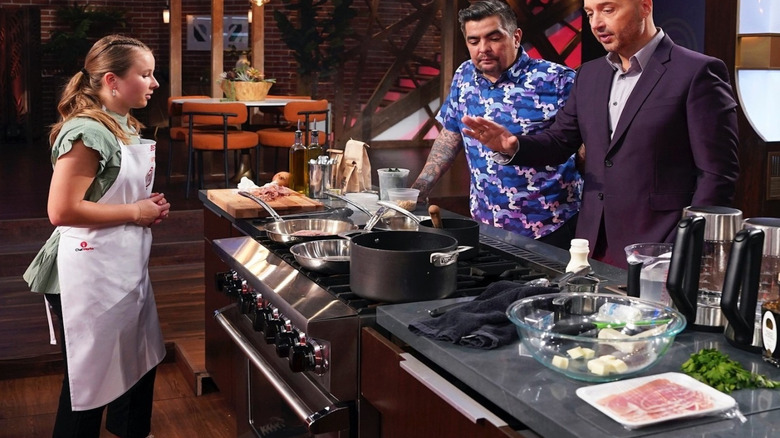
While "MasterChef" has a set plan for allocating food waste — from reusing to donating and from composting to repurposing kitchen scraps — its system actually begins earlier in the process by attempting to avoid as much waste to begin with. It provides contestants with sourcing guidelines and reminds them to plan dishes and ingredient lists with sustainability in mind.
BBC One maintains it is "very strict" about the ingredients and amounts it buys. Specifically, contestants in the UK, for example, can only cook with RSPCA-assured British rose veal because it's a by-product of dairy production. In the U.S., "MasterChef" follows the UK show's lead with specific best practices regarding certain ingredients. Meat in general should come from butchers with proven track records of sustainable practices. As for seafood, the cooks must refer to the most recent guidelines on marine conservation and sourcing. Things that are cooked live, like crabs or lobsters, are not allowed. It's a lot for an amateur cook to take into consideration when they're trying to wow the likes of Gordon Ramsay, but these standards are necessary and impactful for reducing the footprint the a show.