

The Best Technique For Removing Shrimp Tails Without A Knife
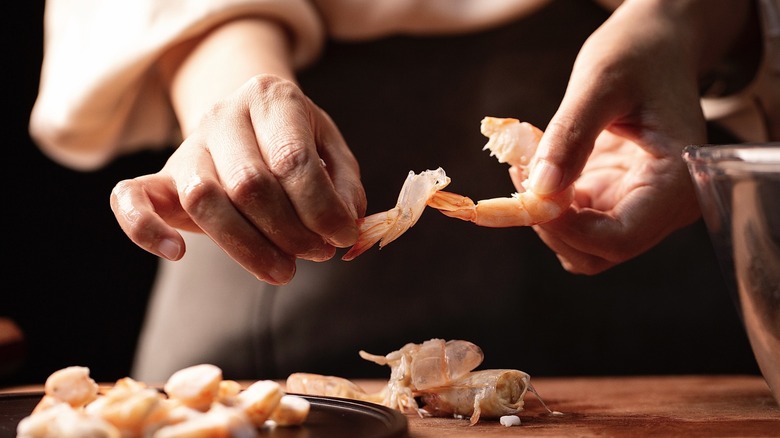
Shrimp can be delicious in pasta, rice, grilled on the barbecue, deep fried, or dipped in some cocktail sauce. They're versatile and tasty, which is why they've been adapted so well to countless kinds of cuisine. But preparing them yourself can be a hassle. One of the most frustrating parts, and the messiest, is dealing with the tail. That's why they're left on so often. But there is a simple way to remove the tail, and you don't even need a knife.
We asked Steven Hubbell, Executive Chef of Bar Lumière in Brooklyn, New York, whether there's an easy way to get the tails off shrimp without damaging the meat, and what tool works best. "No special tools are required to cut off shrimp tails — all you need are your hands," he says. So if you don't mind getting your hands a little dirty, and, of course, you can wear gloves, there's a pretty simple technique to follow.
If the shrimp has not been peeled, you need to start there. "First, peel the shrimp with your fingers down to the tail," Hubbell advises. "Second, from the backside push both your thumbs inside the end of the tail, bending it back until you hear it break. Last, gently wiggle the tail shell from both sides until it slips off, revealing the flesh inside."
Mastering the tail removal technique
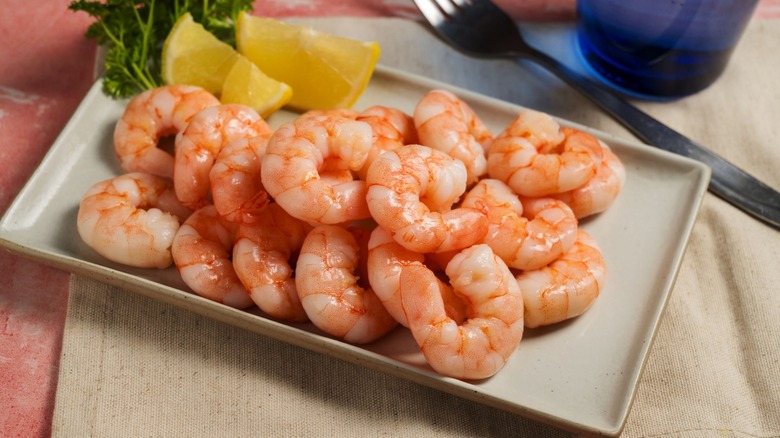
Keeping tails on is a good way to serve shrimp if guests will be eating them by hand. The tail makes for a convenient little handle to dip into cocktail sauce. But when incorporating them into a shrimp pasta recipe, or when using utensils to eat them, removing the tails is much more practical. No one wants to accidentally try to eat a shrimp tail.
If you can't quite picture what Hubbell means, there are videos that demonstrate the technique. His method, which avoids both knives and twisting, ensures you keep as much shrimp meat as possible. Using a knife may seem faster, but it's not as clean, and you will lose some of the meat in the process.
If you find that the tail is not giving as easily as it should, follow Hubbell's second step again. It's possible that the tail joint didn't break the first time. If that's the case, pulling the tail off will be much more difficult. If it gives you too much resistance, repeat the step and try once more.
Make sure you have paper towels on hand to pat the shrimp dry before you start removing the tails. Shrimp can be slippery when they're still wet, which slows your progress. It's also good to have a bowl for the tails to cut down on the mess. If you don't need them, throw the tails out when you're done, but remember that shrimp shells can be used to create a flavorful stock if you plan on making soup soon. Follow Hubbell's advice and you'll be peeling shrimp like a pro in no time.