

The Important Advice When Using Mollusks In Your Seafood Boil
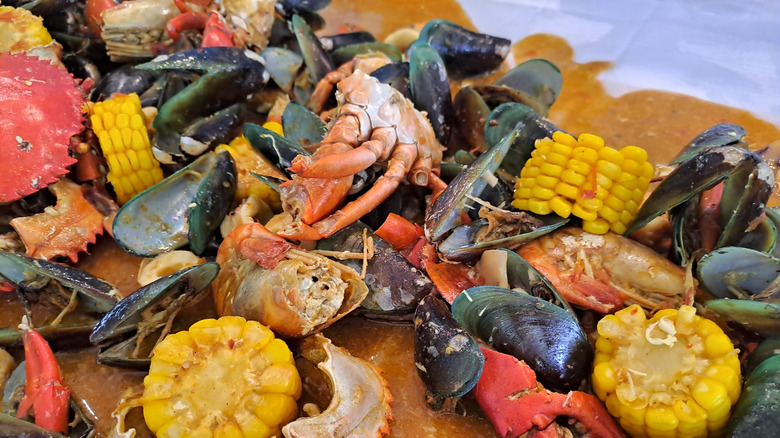
We hate to break it to seafoodies, but if your boils have been skipping the mollusks, you've been missing out. Beyond just dimensionality, there's a unique advantage in adding mollusks to a flavorful seafood boil — and its name is "clam liquor." Enter: a pleasant touch of oceanic funk. This insight comes from food blogger Allie Hagerty of recipe sites Seasoned and Salted and One Bowl Bakery. "Clams and mussels release briny liquor that turns your boil into a savory broth," Hagerty tells Tasting Table, in an exclusive interview. "Everything else in the pot gets seasoned by it!" To preserve the maximum amount of that robust liquor, it can be helpful to shuck fresh clams over a bowl.
However, when adding mollusks into the mix, there are a few special cooking considerations that need to be kept in mind. Before cooking, Hagerty recommends soaking them in "lightly-salted cold water for 20–30 minutes" before scrubbing shells and debearding mussels. "Clams and mussels need just 5–8 minutes to cook so pull them as soon as they open," says Hagerty. "Discard any that stay closed — do not eat them!" Clam shells naturally open once fully cooked, a visual indicator that helps people avoid accidentally overcooking their bivalves to the point of rubbery toughness. However, when a shell fails to open, this signifies that the animal died before it was cooked (fresh ones should be cooked alive). Those could be unsafe to eat due to the potential for toxins and bacteria to accumulate.
Make sure to scrub, monitor, and avoid overcooking clams and mussels in the stock pot
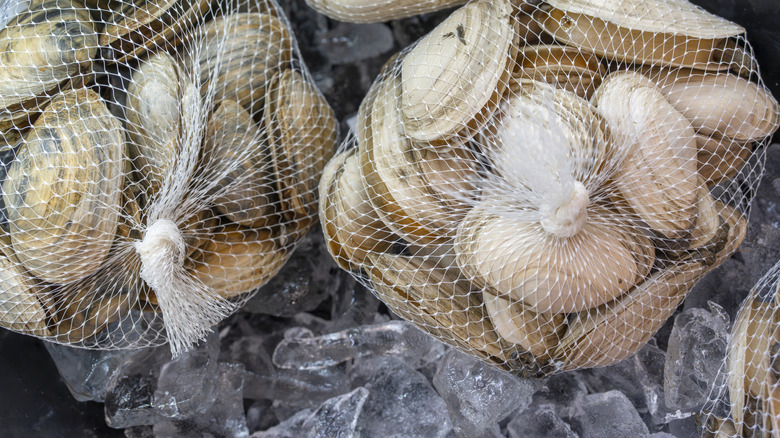
Regarding execution, Allie Hagerty's main tip is to avoid overdoing it in the cooking department. "Steam, don't drown the clams," she explains. "Target a rolling steam around the shells and a basket insert helps prevent overcooking. Serve hot because they toughen as they sit." Seafood boils are typically a one-pot meal, with all of the elements cooked together in the same large stockpot. Longstanding seafood authority Fulton Fish Market advises adding those delicate bivalves into the pot as the very last step, cooking for just four to five minutes and only after all of the other ingredients (crab legs, potatoes, corn, et al.) have fully cooked.
While we prize large, toothy quahog clams for making chowder, smaller varieties perform better when it comes to seafood boils. "Littleneck clams are sweet," Hagerty recommends. Plus, littlenecks provide a naturally bite-sized amount of meat in each shell. "Mussels are savory and pair well with garlic and herbs." Both types of mollusks offer unique contributions to a boil's overall flavor profile.
For the freshest, most-alive clams and mollusks, purchase them on boil day, and keep them in a wide, open bowl on ice until you're ready to cook. Bring 'em home in a breathable mesh sack rather than a sealed airtight bag. As far as the other elements in the stockpot go, there's an ideal ingredient ratio to remember for nailing a crowd-pleasing seafood boil, FYI.