

How To Store Cut Pears So They Stay Fresh
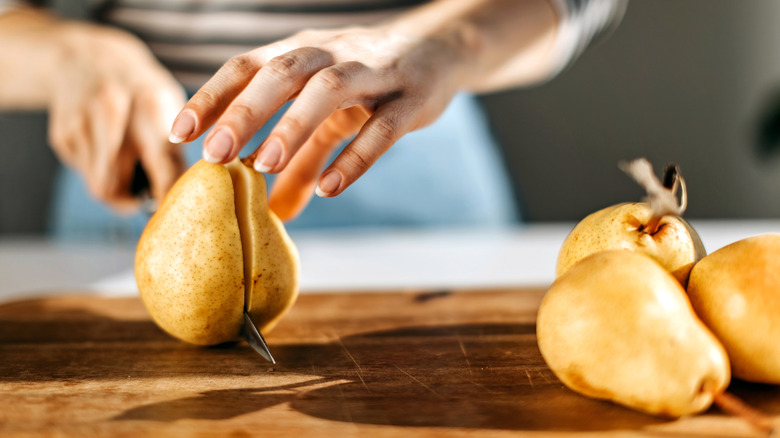
Crisp, juicy, sweet pears are such a treat, but they quickly lose their appeal when their flesh starts to brown. And unfortunately, that can happen pretty quickly, which seems to make prepping ahead for recipes or simple snack times a challenge. Luckily, there's hope: With a little know-how, you can slice and dice your favorite pears and keep those pieces in irresistible condition. It's as simple as a quick soak and proper storage.
First, it helps to understand why exactly fruit slices turn brown. When you cut the pear, oxygen gets into its plant tissue. This causes a chemical reaction between the fruit's enzymes and proteins or amino acids, and the brown color is a byproduct of this. Sugar and the citric acid from the juice of citrus fruits are both effective in slowing the entire process, so both are useful in soaks to keep pear slices from browning. For a foolproof approach, soak your cut pears in cold lemon water.
You may have heard that squeezing lemon juice right onto an apple or pear is good for preventing browning. This soak achieves the same results but flavors the pear less. About one spoonful of lemon juice per one cup of water should do the trick. You can also use pineapple juice or a teaspoon of citric acid powder. Once you strain them well, place the pear slices in a zip-lock bag with the air squeezed out. They can last for up to a week without browning.
A quick soak with pantry staples keeps browning away
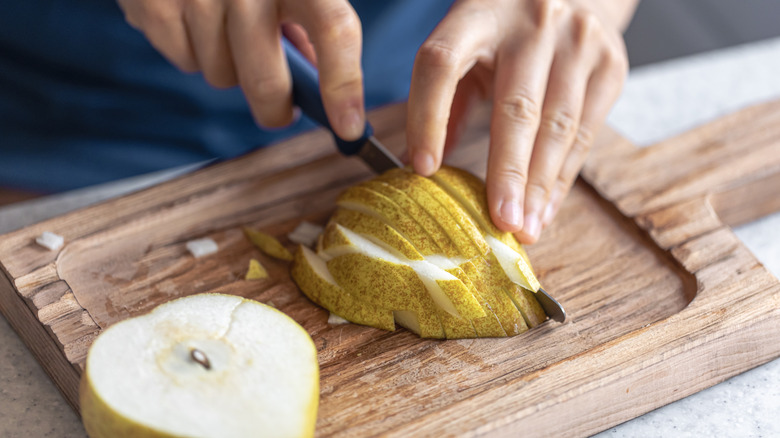
Keeping pear slices as fresh as the moment you sliced them should be quick, easy, and free. Plenty of pantry staples work well to soak pears and prevent browning. If you don't have lemon or pineapple juice or citric acid powder, you can even use a vitamin C tablet from your medicine cabinet, or pull out some lemon-lime soda.
Or, you can turn to that other oxidation obstacle, sugar. You can use honey to keep fruit from browning, at about two tablespoons per cup of water. This has the benefit of subtly flavoring your pears with that warm sweetness. Or, you can cut straight to the chase with a simple solution of one tablespoon of plain sugar per eight ounces of water.
Whether you go with citric acid or sugar in any of their forms, you can get just a hint of bright or sweet flavor — though not enough to mitigate that fresh pear flavor. Salt is another reliably effective tool to slow oxidation, so cold salt water is a good soaking solution if salt is all you have and you want to ensure browning-free pears for as long as possible. But this won't flavor the pears as pleasantly as citric acid or sugar. You can, however, help dial down the saltiness by rinsing the slices before eating them.