

Why It's A Mistake To Assume Plant-Based Burgers Are More Nutritious Than Beef

When choosing the perfect burger, you might make your decision based on the environmental impact, nutritional content, or above all else, taste. According to UC Davis, the number one cause of greenhouse gases in agriculture is cattle. So when brands like Impossible and Beyond enter the arena of plant-based meat, it makes sense. But do the overall taste and nutritional content align?
Many may assume that plant-based burgers are healthier than the average beef burger. And, in some instances, it's true. But it's important to understand the full picture. Researchers at Harvard University uncovered that meatless burgers designed to mimic beef — as opposed to plant-based burgers made of whole foods, like beans — are highly processed and contain a higher amount of saturated fat than a beef burger.
For context, a burger made from 85% lean ground beef clocks in at 17g fat (6g saturated), about 80mg sodium, and 21g protein. Beef-less burger brands take this into consideration when creating their imitations to taste, look, and feel like a burger. Impossible Burgers are made from soy protein, coconut oil, and potato starch, and comes in at 13g fat (6g saturated), 370mg of sodium, and 19g protein. Beyond Burgers — made from pea protein, avocado oil, potato starch, and more — come in with 14g fat (2g saturated), 310mg of sodium, and 21g protein. At the end of the day, it comes down to the ingredients in the burger.
What are the pros and cons of plant-based protein?
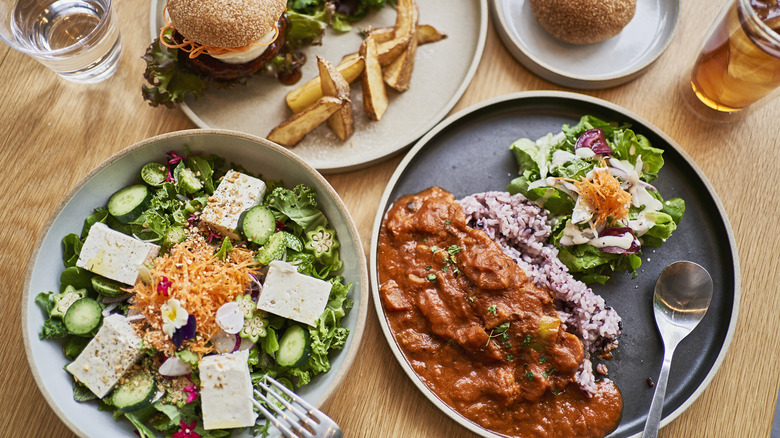
We know that the 2025 dietary guidelines scientific report shows a reduction in various diseases — such as diabetes, certain cancers, and cardiovascular disease — coincides with a plant-based diet. But what are the real benefits and pitfalls of consuming plant-based proteins?
Over the years, there has been a slow but steady increase in plant-based diets, which in turn have given us a plethora of plant-based options, such as the Impossible Burger and Beyond. Plant-based, whole-food options such as legumes provide more fiber, more micronutrients, and even have a positive effect on the environment.
Brands like Upside Food and Just Eggs are also working on lab-grown options of your meat-forward favorite food, but it's a very long-term goal. While these products help us eat more plants, they often miss out on key nutrients that unprocessed meats provide, such as Vitamin B12, iron, omega-3 fatty acids, and calcium. Luckily, most plant-based processed foods or imitations are often fortified with these ingredients, although they might not be in the best form of bioavailable absorption.
A vegan diet may pose challenges based on cultural or underlying health concerns, so incorporating more plant-based foods may be a better option.That being said, consuming a diet focused on plants, with meat on occasion, such as those in the Mediterranean diet, suggests a balanced way to enjoy both types of protein.