

Why Smoking Ribs Bone-Side Down Will Get You The Perfect Bark
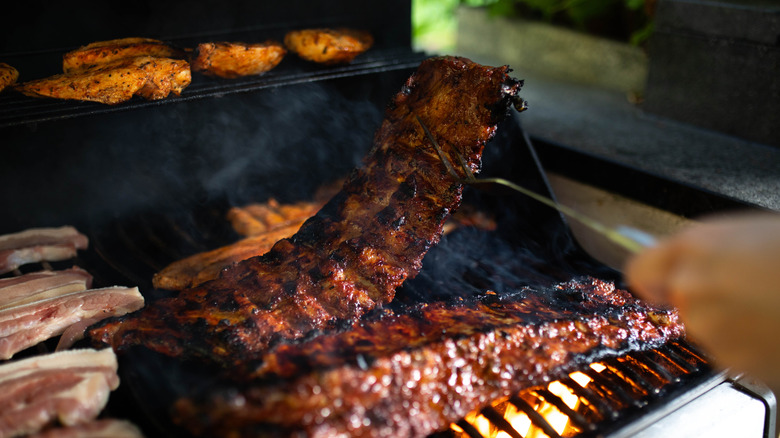
If you watch any pitmaster worth their salt place ribs onto a smoker, you'll notice a consistent placement orientation. Most often, the bones are down, and the meat is up. We spoke with Scott Thomas of The Grillin' Fools, who explains exactly why this is the best method when smoking. "The reason to put the bones down is because [of] the shape of the bones," he notes. "The bones being curved will keep the ribs elevated off the cutting board/grill grates."
Elevation prevents the delicate, seasoned meat from sticking to hot grates, keeping the rib rack stable through hours of smoking. Thomas adds that putting the meat side down risks stripping it bare. "If the ribs are placed meat side down, all that seasoning running down the middle on that side will stick to the cutting board/grill grates," he notes. What sounds like a small positioning maneuver actually sets up the whole cook.
Misplaced ribs result in bare patches with no crust and no flavor. As Thomas says, "If a bunch of the seasoning is stuck to the cutting board or grill grates, the bark will not be great right there." By keeping ribs slightly lifted, you protect the seasoning while smoke and steady heat begin their work from all sides. The payoff is that the bark (the dark, flavorful crust on smoked meat) develops evenly because nothing is lost to the grate.
The bark (and bite) of ribs
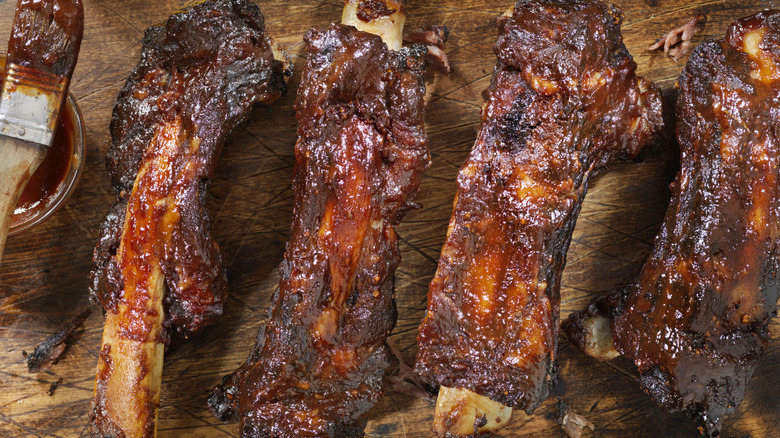
Bark is the holy grail of barbecue. That crackling, spice-blackened crust that makes every bite feel layered with texture and flavor. When speaking of its importance, Thomas puts it plainly: "The bark is formed by the combination of the heat, fat extruded during the cooking process, BBQ rub/seasoning, and smoke to form the tastiest part of barbecue." This is why choosing the right barbecue seasoning is paramount to your meat's success.
Scientifically, it's the Maillard reaction meeting barbecue physics. As heat penetrates the ribs, proteins and sugars in the rub caramelize and brown. Meanwhile, fat slowly renders, basting the surface and helping spices fuse into a shell. Add in wood smoke compounds binding to the hot surface, and you get the deep mahogany color and the rich, smoke-forward taste prized in barbecue.
If the ribs go meat-side down, much of that spice blend stays on the grate or falls through it rather than bonding to the meat. It's the difference between a rack with a continuous, seasoned crust and one with bland gaps. Protecting bark locks in both flavor and texture, giving ribs that perfect balance of crunchy-chewy on the outside and melty-tender on the inside.
Grate expectations
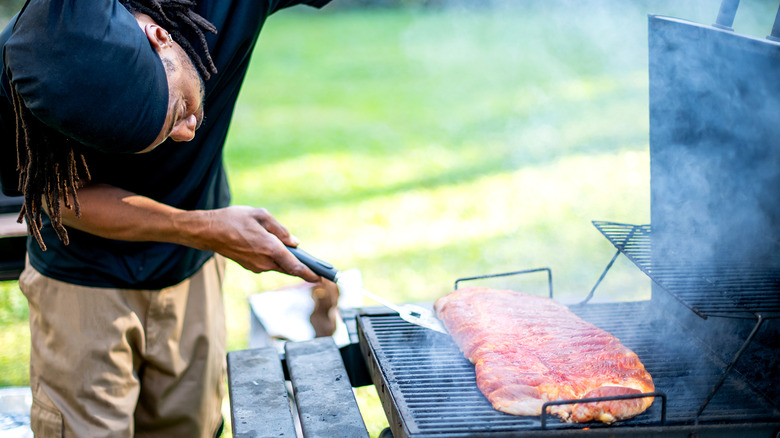
For backyard barbecuers, starting bone-side down is an easy technique to incorporate. It doesn't require extra gear or special skills, just attention during setup. Place the ribs curved-side down and let the smoker's low heat and steady airflow work gradually. Avoid flipping too often, because every turn risks tearing bark before it sets. Good bark takes patience. Low temperatures, consistent smoke, and a balanced rub give the process time to work. Some pitmasters spritz with apple juice or vinegar once the bark sets, adding moisture that helps smoke cling without washing off seasoning. The key is restraint. Once that crust starts forming, the magic is happening, so leave it alone.
The bones do double duty, too. They shield the underside of the meat from direct heat, slowing the cook and preventing the bottom from drying out. That means even if you're smoking on a backyard kettle grill instead of a commercial pit, the technique still holds. Bone-side down helps maximize yield, flavor, and presentation. By the time the ribs are ready, you'll see why pitmasters obsess over bark: it's the signature of smoked meat done right. One glance at the darkened ribs, lifted neatly by their curved bones, and you'll know you set them up for success.