

The Unexpected Sign Your Fish Has Gone Bad That You Shouldn't Ignore
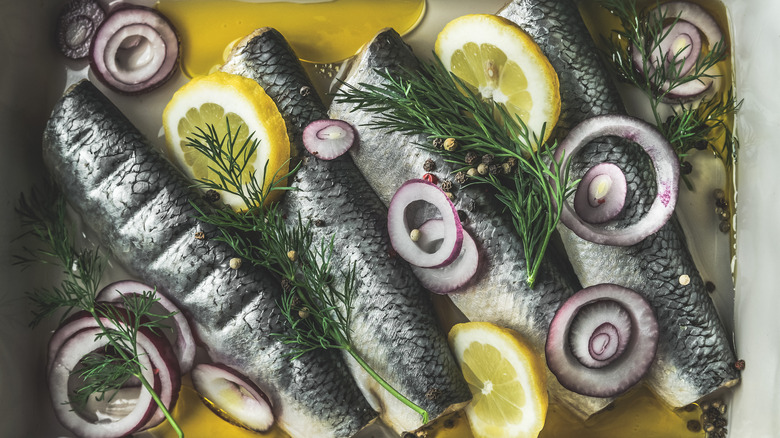
Did you know that over three billion people in the world eat seafood? Whether that's a tuna salad, a Filet-O-Fish sandwich, or a whole Branzino for dinner, there are plenty of people out there enjoying fish regularly. One of the things that holds some people back from eating fish is that they are not confident in their ability to tell how fresh it is. Luckily, there are signs that your fish has gone bad and shouldn't be eaten. If the smell or appearance does not clearly indicate freshness, check the bones.
In fish that is still fresh, the bones should be firmly affixed to the meat. If you can pull the spine away easily, that's a warning sign. The spine in fresh fish should be firm and break if you try to pull it out. As fish ages, the surrounding flesh dries out and loses elasticity, allowing the bones to pull away with little effort. Likewise, when you try to remove those thin rib or pin bones, there should be some resistance. If the meat is no longer clinging to the bones and they pull away easily, that's a bad sign.
These signs can also be combined with other indicators to show that a fish has spoiled and it's probably not safe to eat any longer. As a general rule, fresh fish will not last as long as many other kinds of meat, even in the refrigerator. You only have one or two days to use refrigerated, fresh fish before it starts spoiling.
How to identify spoiled fish
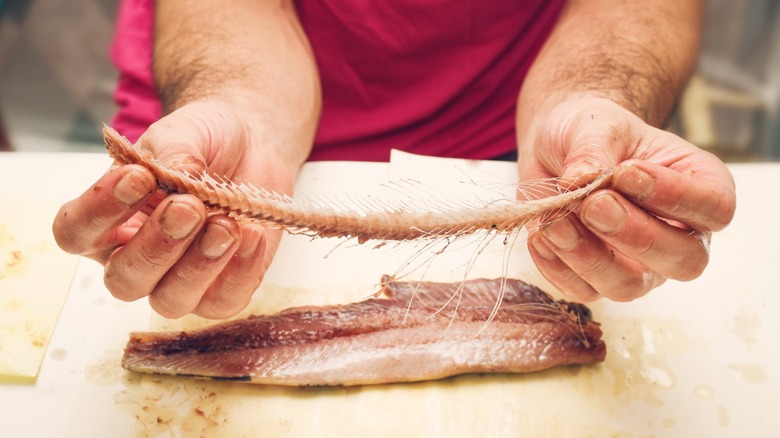
According to Seafood Source, as few as 26% of American shoppers are confident that they can judge the freshness or quality of seafood. If you eat fish regularly, this may seem surprising, but for those unfamiliar with fish, judging the freshness can be difficult. The smell and appearance may not clearly indicate freshness to someone unfamiliar with how fish should look and smell.
In addition to the way the bones pull away from the meat, you can also check the flesh along the spine to help determine the freshness of your fish. There should be very little discoloration in the freshest fish. As it ages and degrades, the flesh will develop a pink hue that darkens to red. (Some fish, however, have naturally occurring red flesh, so use this method with a grain of salt.)
Combining these signs with other indicators that it has gone bad, such as opaque or slimy flesh, can help identify spoiled fish. If it still has its head, check the fish's eyes to see if they are milky with a gray pupil. Also, check for an overly strong fishy smell, which fresh fish should not have. These are all signs that your fish is spoiled and you definitely shouldn't eat it. If you are ever in doubt about the freshness of fish, it is best to err on the side of caution. If you are not sure how long the fish has been out or notice anything unusual about its color, smell, or texture, prioritize your health. Do not eat the fish.