

What To Look For On The Label If You Want Healthier Deli Meat
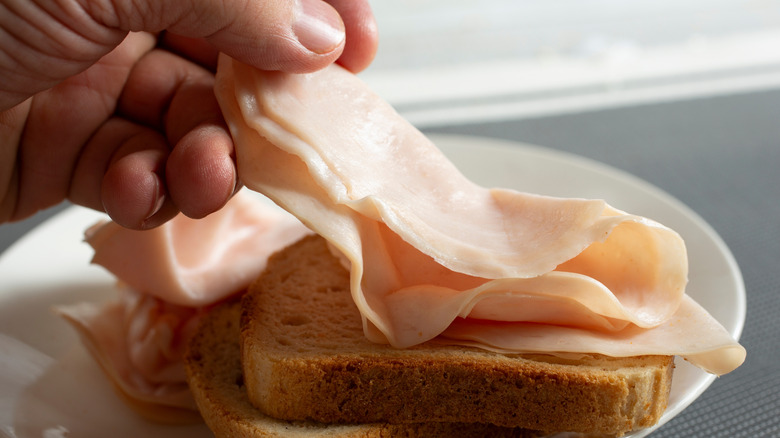
Are you a fan of the convenience of deli meats, but want to make sure you're eating healthier cuts? All you have to do is flip the package around and scan its label. But don't let all of the bits of information overwhelm you. Instead, focus on two factors to make sure you're going with a quality brand: the sodium content and the length of the ingredient list.
Although your ideal salt intake may vary based on your own nutritional needs, the Food and Drug Administration (FDA) recommends a daily sodium intake of 2,300 milligrams or less per person. The FDA also states that 5% of your daily value (DV) or less of sodium per serving is a low-sodium portion. On the other end, 20% DV or more of sodium per serving is categorized as high. This means that if your deli meat contains 115 milligrams of salt, it's technically considered low-sodium. Meanwhile, anything with 460 milligrams or more exceeds the 20% DV and is on the high side — which means that you should probably find a less salty alternative.
It's no secret that deli meat labels can oftentimes be overwhelming, with opaque terms that look like they came straight from your high school chemistry textbook. However, you don't need to know what every term means to know whether or not what you're eating is healthy. In fact, the easiest way to do that is to follow a simple rule of thumb: the shorter the ingredient list, the less processed the deli meat. By a short list, we suggest around five ingredients or fewer. Additionally, another great option for healthier cuts is to have your deli meat hand-sliced at the counter, since pre-packaged cuts often contain more preservatives.
Other factors to consider when choosing the healthiest cuts
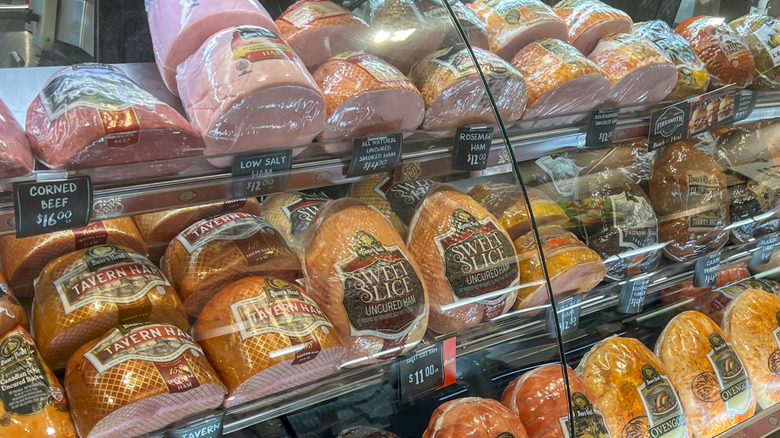
Checking for a short ingredient list and laying low on the salt are two easy ways to move toward healthier options, but there are plenty of other tips and tricks depending on your specific diet. For example, if you're seeking low-fat options, it's worth remembering that cuts like salami, pepperoni, and bologna are high in saturated fats. Instead, you'll want to opt for lean ham, roast beef, or even packaged deli turkey slices.
Additionally, if you're in the low-carb camp, or adhere to the keto diet, you may be surprised to hear that there's actually a good amount of added sugar in certain prepackaged meats. Sometimes it will be obvious — for example, in the case of certain ham brands that add brown sugar to enhance flavors. However, sugars can be harder to catch when they're labeled as dextrose or maltodextrin, and you may even see corn syrup and honey listed, too. Rather than decoding each ingredient, you'll simply want to purchase deli meats labeled sugar-free or with no added sugar.
Finally, another boost to your sandwich's health benefits is to go with higher quality options sourced from organic, grass-fed, or pasture-raised animals. When you choose these over low-quality deli meats, you'll get a more nutritious product overall, since the animal had a more nutrient-rich diet than if it were fed grains. In fact, according to Nutrition Journal, grass-fed meats have increased levels of omega-3s, antioxidants, and precursors that help to activate vitamins A and E. At the end of the day, with these tips in mind, you'll be able to choose the healthier option at a glance.