

11 Vintage Appliance Ads That Show How Much Kitchens Have Changed
We may receive a commission on purchases made from links.
We've seen some dramatic changes in the kitchen over centuries of home cooking. Technology has obviously played a part by introducing digital air fryers, touch screen toasters, and an excess of other smart kitchen appliances, but they started changing well before the digital age. Kitchen appliances have never stopped evolving, but a quick look at advertisements from the early 1900s to the beginning of the '70s shows just how much things have changed.
The 20th century saw so many new inventions that it's hard to keep track of them all, but the evolution of kitchen appliances is preserved in decades of retro advertisements. Early adverts featured far more details, as folks were just learning how many of these household machines worked. Today, we hardly think twice about the science behind the microwave or oven timers, but when experts were still fine-tuning the mechanics, a lot of variations were introduced. These 11 vintage appliance ads chronicle the fundamental shift in how Americans conceived domestic life.
1903 Kalamazoo Stoves and Ranges
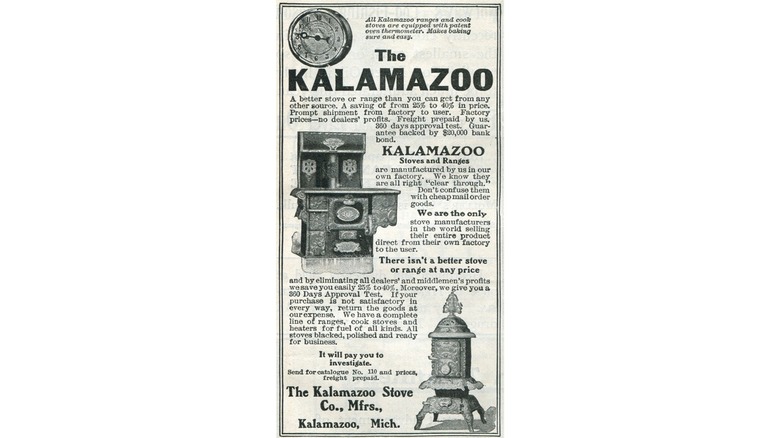
These antique cast-iron stoves are coveted now for their immaculate details, but they were once the kitchen standard. Aside from the drastically different design, this Kalamazoo advertisement reminds us of the days of ordering appliances from catalogs. The thought of a mail-order stove seems unusual, but in 1903, it was the standard. According to the advertisement, Kalamazoo Stove Co. was the world's only direct-to-consumer stove manufacturer at the time, so business must have been booming.
1910 Simplex Electric Toaster
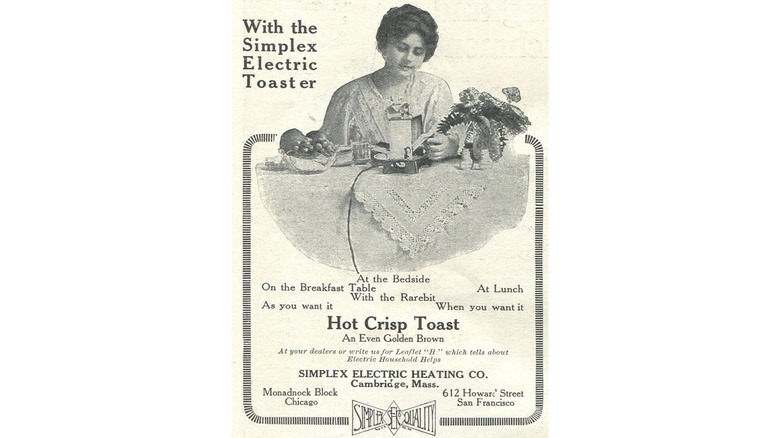
Back in the early 1900s, making "hot crisp toast" was an extensive endeavor. The introduction of the toaster meant breakfast could be enjoyed anywhere, at least that's how Simplex positioned it with this turn-of-the-century print advertisement. "As you want it. When you want it," the 1910 advertisement reads. However, customers had to head to a real store (gasp!) or reach out to Simplex via snail mail to purchase one of these innovative new toasters. We can see from the black and white advertisement that the electric toaster has an open heat source, unlike the much safer enclosed toasters we have today.
1920 Westinghouse Automatic Cook Electric Range
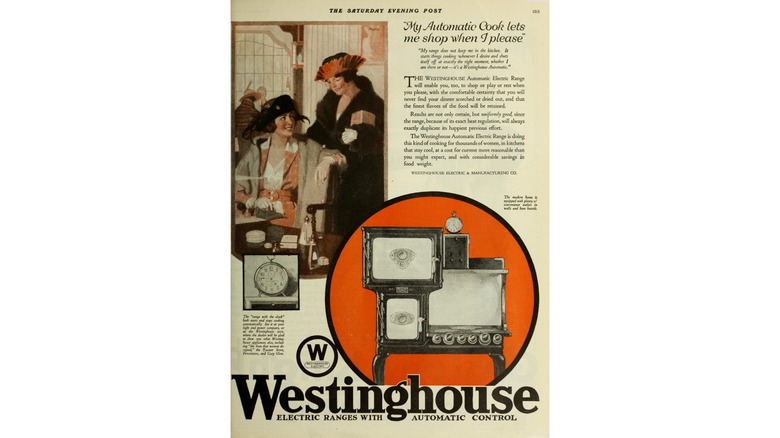
Two decades after the Kalamazoo Stove Co. went into business, Westinghouse introduced another line of stunning cast-iron ranges, but this time, electric. This 1920s advertisement appealed to the tired home cooks who were sick of spending hours sweating over the stove. "It starts things cooking whenever I desire and shuts itself off at exactly the right moment," the advertisement for Westinghouse Automatic Electric Ranges reads. For the first time, housewives weren't confined to the kitchen, and a sense of freedom was being sold along with the oven. Those gender stereotypes have persisted, but thankfully, marketing trends have come a long way.
1946 Hotpoint Refrigerator (with butter conditioner)
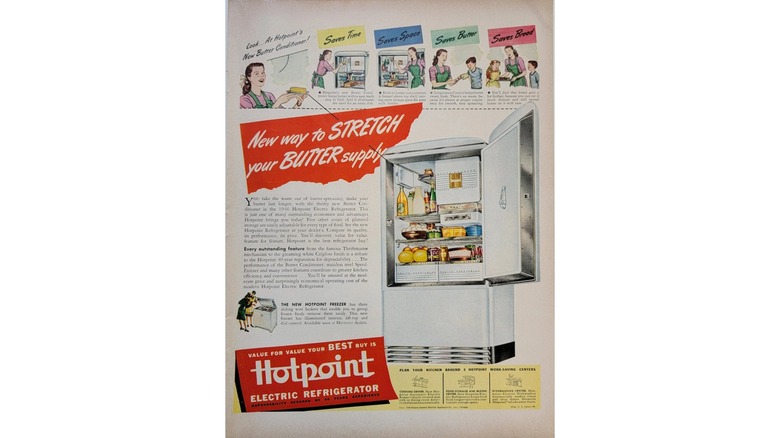
This 1946 Hotpoint refrigerator is a perfect example of the era's newfound fascination with food storage and specialized compartments. Every nook and cranny seemed to serve a purpose, and waste was not an option. Butter was rationed in the early 1940s, so households were willing to do anything to help preserve the coveted ingredient. This Hotpoint advertisement announced a "new way to stretch your butter supply" with a butter conditioner. Today, we hardly think twice about the temperature of our fridge, as they're all set to auto-regulate, but when the experts were still fine-tuning the freezing and chilling process, a lot of variations were introduced.
1951 Crosley Shelvador Refrigerator
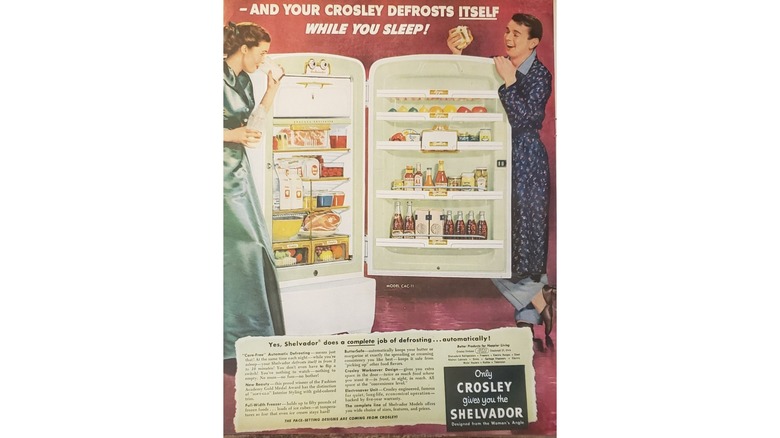
Today's modern fridges feature TV screens and restaurant-grade ice machines, but back in the 1950s, households were easier to please. The introduction of Crosley's Shelvador refrigerator in 1951 changed home cooking in more ways than one. Aside from the new shelving structure, this Crosley popularized automatic defrosting. This was the era of housewives taking complete ownership of the kitchen, so Crosley played into that with the tagline "Designed from the Woman's Angle."
1951 Amana Food Freezer
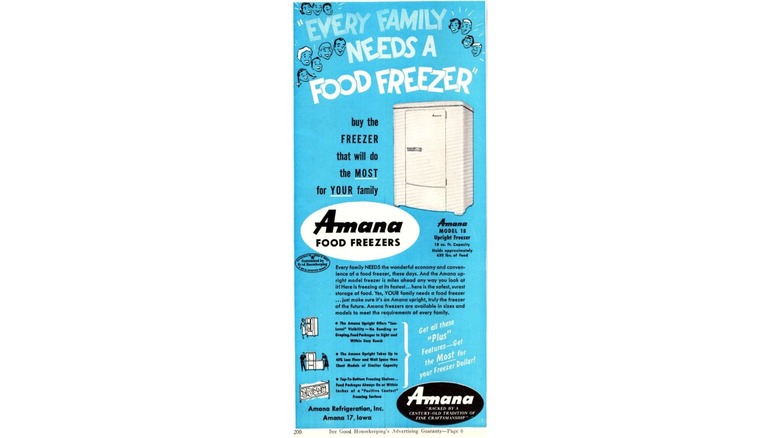
The 1950s also prompted an enthusiasm for convenience and food preservation, and freezing was the way to do it. As Amana states in this 1951 advertisement, "Every Family Needs a Food Freezer." Previously, they were considered a commercial luxury, but Amana made them accessible to the average household. This freezer in particular was revolutionary, as it was upright as opposed to the standing freezers consumers were used to. This meant more room in the kitchen, which was (and still is) always a bonus.
1953 American Kitchens Roto-Tray Dishwasher
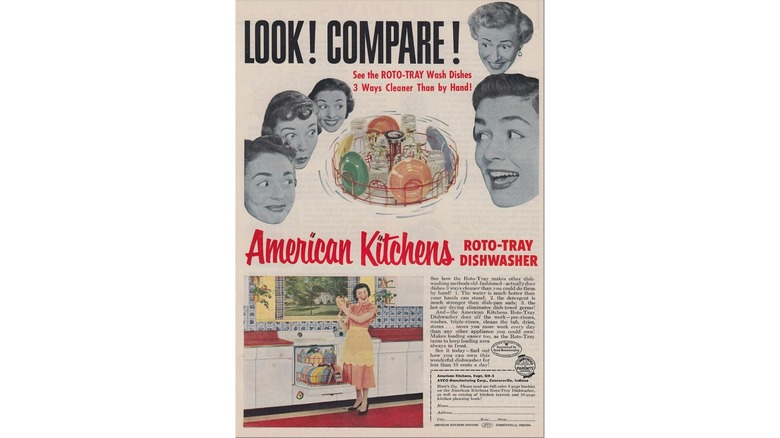
The first dishwasher was patented all the way back in 1850, but they've had a lot of different looks over the past hundred years or so. Most folks would consider dishwashers a necessary kitchen appliance now, but back in the '50s, plenty of households were still washing dishes by hand. After ages of scrubbing plates and hand-washing glassware until it glistened, people were hesitant to rely on a machine. Brands had to persuade consumers, and American Kitchens did so with its flashy 1953 advertisement proclaiming that the Roto-Tray provided "3 Ways Cleaner Than by Hand!" for less than a dime a day.
1955 Hamilton Beach Liqui-Blender
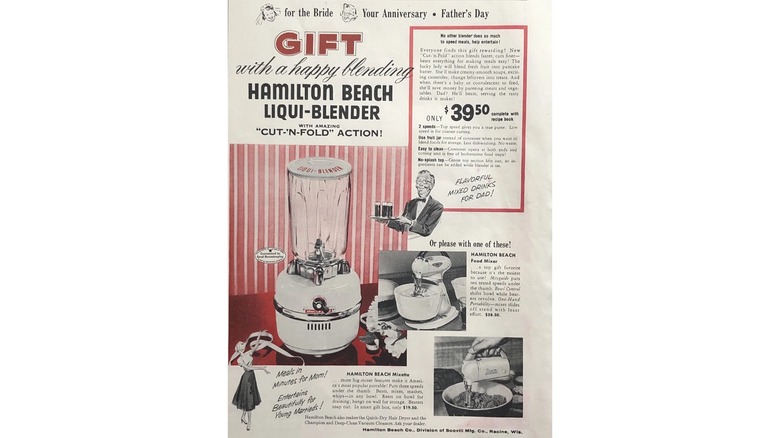
Hamilton Beach has been manufacturing kitchen appliances since 1910, and this 1955 Liqui-Blender was a big deal for not just the brand but the entire industry. The first blender was created in 1922, but it didn't become a common household gadget until decades later. They were gaining traction throughout the '50s, but it was more of a luxury purchase than a standard one. The Liqui-Blender was sold for $39.50, which is $476.13 in 2025 with inflation — certainly not a casual purchase. Today, you can snag Hamilton Beach blenders for under $50, so we've made great progress.
1957 Frigidaire Sheer Look Beauty Refrigerator
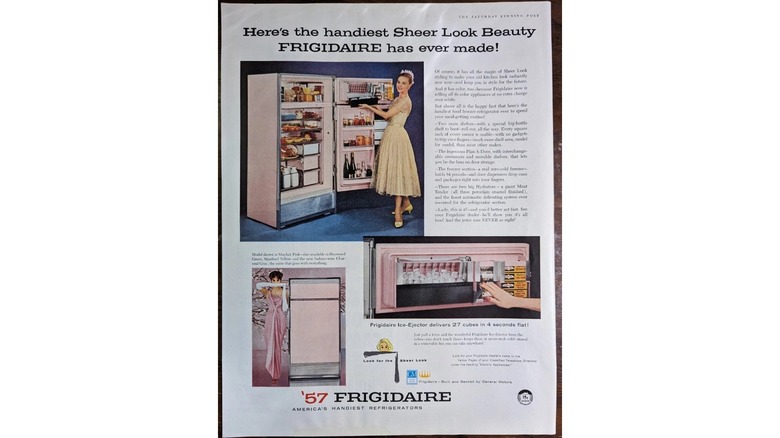
In the late 1950s, the focus shifted to aesthetics over functionality. This Frigidaire ad for the "Sheer Look Beauty" line of pastel refrigerators announced that the fun, colored appliances would no longer cost more than boring ol' white fridges, inspiring kitchen remodels galore. Everyone wanted a color-coordinated kitchen, but this line of fridges had other exciting features aside from being visually striking. The 1957 advertisement praises the new automatic ice ejector, which spits out "27 cubes in 4 seconds flat."
1959 General Electric Oven Range
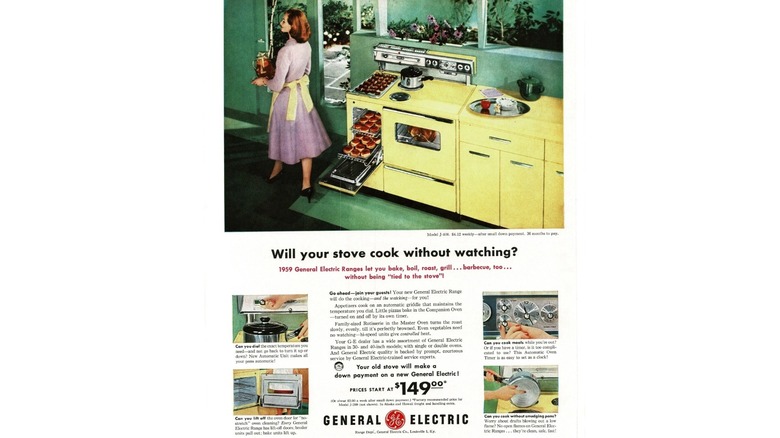
General Electric's 1959 range was a colorful addition to the market. The cheery yellow in this advertisement was one of the era's favorites, attracting anyone who wanted to stay on trend with their home decor. The ad also promises housewives they can "cook without watching." Thanks to this electric range, they were free to socialize and mingle around the house while dinner baked, roasted, grilled, or boiled without any supervision. The highlighted features, like removable doors for easy cleaning and automatic timers, are run-of-the-mill in today's kitchens, but they were very exciting in 1959.
1969 Amana Radarange Microwave
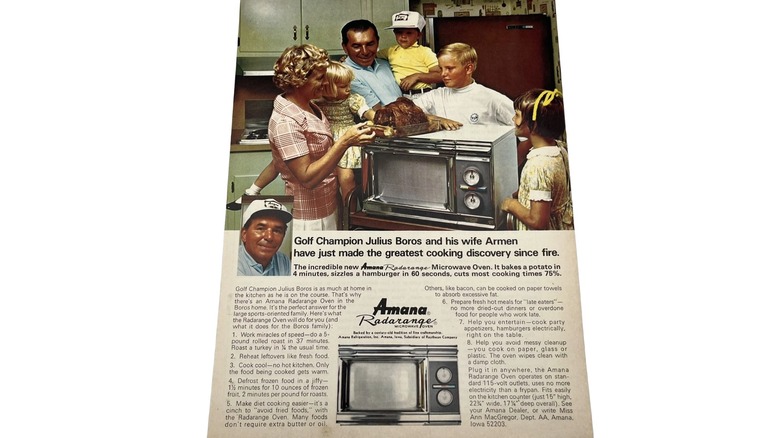
We are spoiled with kitchen contraptions today that are all about speed, but in the '60s, the idea of baking a potato in four minutes was dumbfounding. Amana was the first to introduce microwaves to the general public in 1967, so the idea was still very novel when this model came out just two years later. The celebrity endorsement here, golf pro Julius Boros, was another marketing fad of the era. The paragraphs of fine print detailing microwave benefits show how foreign the concept was to everyone.