

You Don't Have To Refrigerate Sriracha, But Here's Why You Should
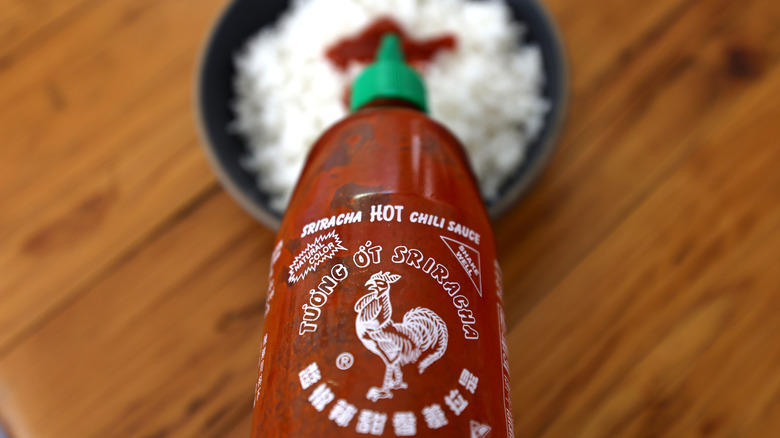
Some condiments don't need to be refrigerated, and sriracha is one of them. There's a reason why your favorite pho restaurant keeps a perennial bottle on the table — and we don't just mean because of the sauce's spicy, tangy flavor and accessible heat level. The condiment's popularity is rivaled only by its versatility (we've even rounded up 16 creative ways to put that vibrant red sriracha to good use in the kitchen), which is to say, there's probably a good chance that you've got a bottle at home right now. If it's in the pantry, we invite you to shift it over to the fridge.
Sriracha is made from a mixture of chili peppers (typically red jalapeño), acidic distilled vinegar, umami garlic, sugar, and salt. Like most chili-pepper-based hot sauces, sriracha is hardy and durable, but not immune to quality degradation over time due to prolonged light and air exposure. Still, dark red tones (even to the point of bordering on dark red-brown) aren't necessarily signs that your sriracha has turned. Chili peppers naturally darken over time, a non-threatening effect that bears no significant impact on the sriracha's flavor and isn't dangerous to consume. While oxidation doesn't dramatically alter sriracha's tasting profile, it does penetrate the oxygen-permeable plastic bottles, creating a visibly darker discoloration in the sauce over time. To retain that signature scarlet sriracha vibrancy, keep the bottle in the fridge. It's the optimal storage location to ensure a fresh taste and bright red hue.
Refrigeration keeps sriracha in optimal condition
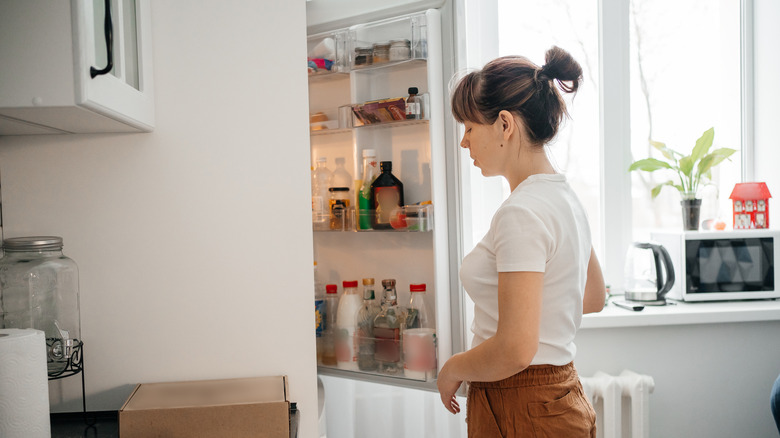
Thanks to the natural preservative qualities of chili peppers, vinegar, and salt, three of the condiment's main base ingredients, sriracha is naturally resistant to bacterial growth. Some brands, like sriracha giant Huy Fong Foods, also include elements like potassium sorbate and sodium bisulfite, which further protect the sauce from flavor changes at room temperature. Homemade sriracha, which relies only on the natural preservative qualities of the vinegar, salt, and peppers, should be stored in the fridge for the best longevity.
Stored at room temperature, opened bottles of sriracha typically retain their quality for about six months (that is, if you don't use it all up by then). Sealed, unopened bottles of sriracha can last for a full year or two if stored in a cool, dark, dry place, often exceeding whatever "best by" date is printed on the bottle by multiple months. Pro tip: Since it doesn't need to be kept chilled for preservation reasons, sriracha makes a prime candidate for storing in the refrigerator door. Temperatures tend to be warmer here than at the back of the fridge. Here, an open bottle of sriracha can last for well over a year. However, darkened hue notwithstanding, if you notice an "off" taste, weird smell, a thinned or separated texture, or visible mold growth, that sriracha has likely spoiled and needs to be thrown out.