

You're Probably Using The Wrong Charcoal For Your Grill
We may receive a commission on purchases made from links.
Everybody feels nervous the first time they handle a charcoal grill. Compared to gas grilling, there's so much more to learn and many common mistakes to watch out for. But beyond the obvious, like learning proper cooking techniques and timing, you also need to match the right type of charcoal to your grill. Pick wrong, and no matter how flawlessly you execute everything else, your food will almost always taste ashy.
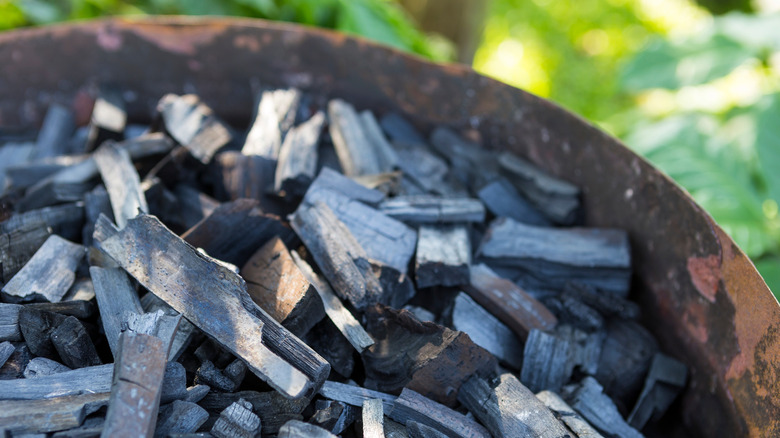
The basics first: charcoal comes in two main varieties — briquettes and lump charcoal. Briquettes are those uniform black squares you've seen countless times in the barbecue aisle, with Kingsford Original Charcoal Briquettes being the most recognizable brand. These pellets are made from compressed "wood byproducts" like sawdust and wood chips, held together with a binding agent. They're cheap and easy to use, plus they burn longer and more consistently than the other type — lump charcoal — which is basically carbonized natural hardwood. Lump charcoal is typically pricier, but it burns hotter with less ash, imparting no chemical flavor to your food, and depending on the wood type, can even add subtle smokiness.
As you can see, the two types have very different characteristics, so it came as no surprise that some grill designs take one type of fuel better than the other.
Briquettes are versatile, but won't work for a Kamado grill
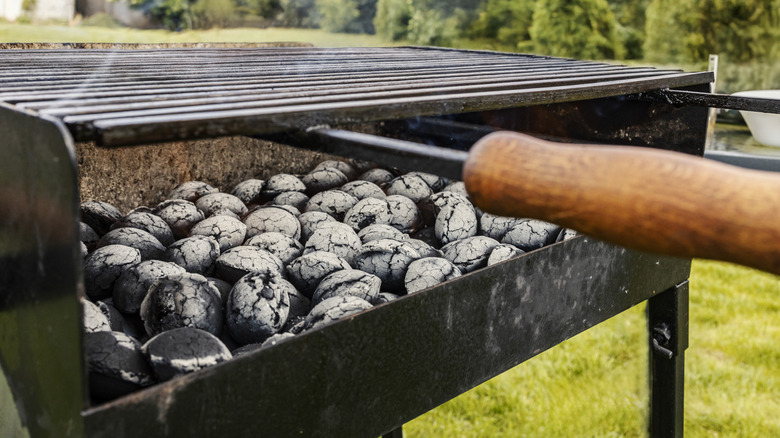
Despite often being considered the "inferior" choice since they aren't pure hardwood, briquettes are remarkably versatile. They'll work beautifully in a kettle grill (also known as a Weber-style grill) or a barrel grill.
However, if you own a Kamado-style grill like this Char-Griller® AKORN® Kamado Charcoal Grill and Smoker, briquettes may cause problems. The egg-shaped ceramic grill isn't built to handle the big plume of ash that briquettes produce. The ash can literally choke your grill by clogging the vent holes, making it nearly impossible to maintain a consistent temperature. The cleanup afterward is going to be a nightmare as well.
But there's an even bigger problem: Kamado grills are made from ceramic, which is a porous material. Many briquettes contain lighter fluid additives to make them easier to light (the so-called "instant briquettes"), which create chemical fumes that seep into the ceramic walls. Once that happens, everything you cook will smell and taste faintly of gasoline — not exactly what you want if you're aiming for the juiciest grilled chicken, which is precisely why, if you own a Kamado grill, lump charcoal is the way to go. Its cleaner burn and minimal ash keep your vents clear, your flavors pure, and your head, ache-free.
Don't use lump charcoal in portable grills
If you're a fan of picnics, you may own a portable grill, such as the Gas One – 14-inch Portable Barbecue Grill. But to make these grills smaller, manufacturers also have to miniaturize the fuel compartment... which is precisely where using lump charcoal can get you in trouble.
Lump charcoal comes in chunks of various sizes and shapes. That's the first issue: you may end up with pieces too large for your grill, and you may have to break up a few chunks to get them to fit. And if you're hoping to create a two-zone fire? Their irregular sizes can make carving out spaces in the compact cooking area extremely difficult. And, perhaps worse yet, since lump charcoal burns hotter and faster than briquettes, you'll find yourself feeding your tiny firebox just to maintain temperature on long cooking sessions. Unlike the situation between briquettes and Kamado grills, you can totally use lump charcoal in a portable grill if you want to (or are forced to). But why make grilling harder than it needs to be? Briquettes' uniform size and steady burn rate make them infinitely more practical for small-space cooking.
So, to recap, here's the simple rule to remember: lump for Kamados, briquettes for portables. If your grill doesn't fall into one of these two categories, feel free to use whatever you prefer. Pay attention to this little detail, and you'll be able to skip the frustration and get straight to great-tasting food!