

Don't Ruin Vintage Dishes – Here's How To Clean Them The Right Way
We may receive a commission on purchases made from links.
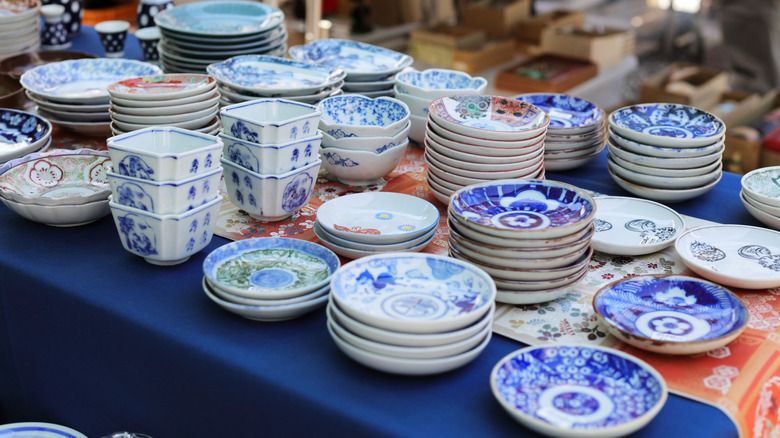
It's easy to see the appeal of collecting vintage dishes. There's the thrill of the find at flea markets and secondhand shops. There's realizing you've stumbled upon some of the vintage plates that are worth a fortune today. And there's the opportunity to truly personalize your kitchen with eclectic, artful flair. But there's a crucial step with vintage dishes, and that's proper care. It's worth the effort to have these treasures, but most vintage plates are a bit higher maintenance — or at least different in their maintenance needs — than your standard contemporary plates. Indeed, using your dishwasher here could be one of the biggest mistakes people tend to make with vintage kitchen items.
Most antique or thrifted dishware is made from finer, more delicate materials or has hand-painted patterns or gilded trims. All of these features could be ruined in the intense temperatures, soaps, and movements of a dishwasher. Instead, make a cushioned bath inside your kitchen sink. To do this, start by padding the bottom of the basin with a towel (both the sink and towel should be clean). Fill the sink partially with warm water and a mild soap. Wash each item individually with a microfiber cloth. Then rinse and let it dry on a fresh towel. If stains or visible cloudiness persist, try soaking the dishware in water with just a little vinegar for about an hour or applying a paste of baking soda and water for a few minutes before rinsing.
Further care tips for vintage dishware
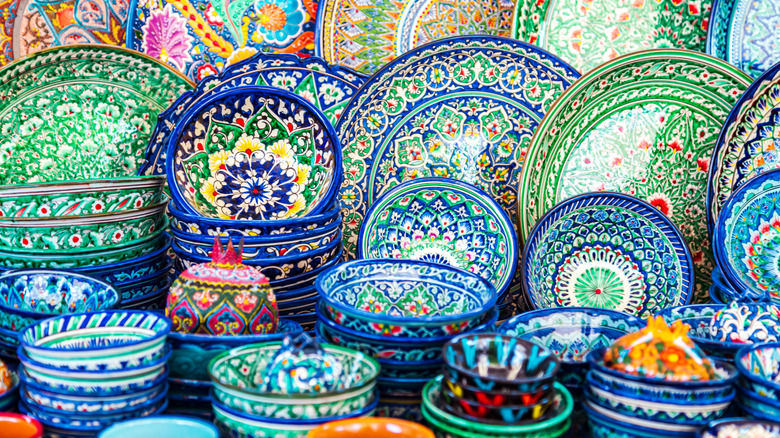
The better you maintain your vintage dishware, the easier it is to clean. This starts before you even buy it, so it helps to know the signs that you should leave vintage dishes at the store. For example, bright colors can indicate the presence of lead, while fading patterns will continue disappearing as you clean the dishes. Cracks will also worsen and can taint food with chemicals from glazing or lead if it's present.
Once you find dishware in good shape and purchase it, keep it safe. Vintage plates don't require much in the way of a specific environment. You can store them in a cabinet or display them on open shelving. But it's a good idea to use soft dividers like these Feltectors felt plate discs or a rack like this Innerneed bamboo wooden dish rack to keep plates from hitting each other and getting damaged. Periodically, dust the dishes with a microfiber cloth to avoid build-up.
It helps to know the exact material of the dishware so you can tailor cleaning accordingly, and this is often printed on the back of plates. While soap and water remain the best course of action with porcelain and ceramic, you could employ an all-purpose cleaner that's mild and only slightly caustic for truly tough stains. The cleaner's label should say if it's okay to use on ceramic. Don't let it sit on the dishes, rinse immediately. A little care goes a long way for vintage treasures.