

18 Classic Funeral Foods, Explained
Around the world, different cultures and religions each have their own set of traditions when it comes to mourning the dead, with friends and family coming together to honor their loved ones through a diverse array of rituals and ceremonies. But, no matter where you come from, one thing that most funerals include is the sharing of food. After all, food brings people together, and the shared preparation and enjoyment of sweet bakes and savory dishes is the perfect way to celebrate the lives of those who have passed.
In some cultures, specific foods hold a lot of symbolism or form a vital part of religious rituals. In others, dishes that bring comfort, such as stews and pies, are the preference, while easy-to-prep, shareable options are also a common feature. So, let's take a look at some of the most popular funeral foods worldwide to learn how they're prepared and why they become so deeply rooted in tradition.
Funeral potatoes
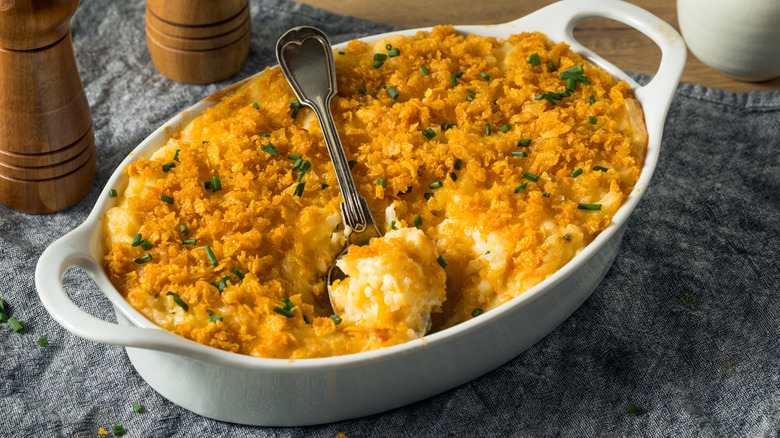
A versatile staple that's closely associated with Mormon culture, this indulgent dish is well-suited to feeding a crowd. The exact origins of funeral potatoes are unclear, but this dish has long been prepared by members of the Church of Latter Day Saints, particularly in the state of Utah, to bring comfort to grieving funeral-goers. This dish takes pride of place on the table at all kinds of gatherings and celebrations across the U.S., and not necessarily just funerals. However, the name "funeral potatoes" has stuck.
The dish begins with a simple mixture of sour cream, canned chicken soup, melted butter, and savory seasonings. To this, frozen hash browns and grated cheese are added, before everything is spread into a baking dish. Then, there's usually a crispy topping, in the form of buttery crushed corn flakes or potato chips. Once baked, everything becomes wonderfully gooey underneath and crunchy on top, forming the perfect cheesy side dish for serving with other meats and veggies.
Halva
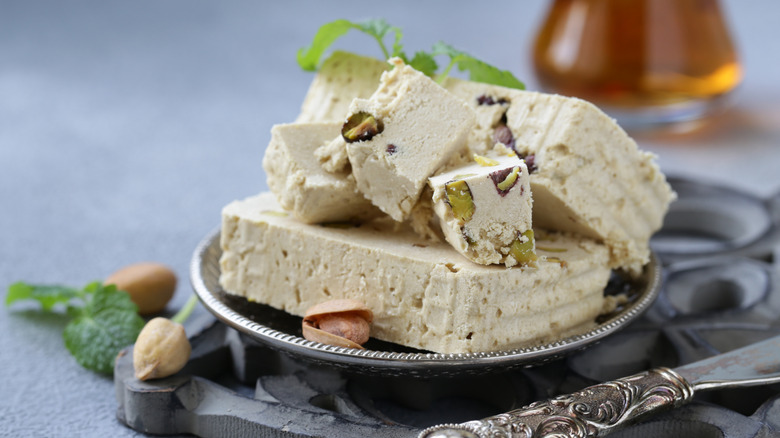
Halva is a sweet treat with a thick, paste-like consistency that's popular in Middle Eastern and Mediterranean cuisine. It's often made with a base of tahini, flour, or semolina, which is flavored with warming spices and shaped into a loaf, round, or bite-sized pieces. Halva is commonly found amongst funeral food spreads, with its moreish taste bringing a glimmer of joy to an otherwise mournful occasion.
The exact halva-making method can vary drastically from country to country. In Greece, for example, the most common approach is heating semolina with oil or ghee, sugar or honey, and spices like cloves, cinnamon, and cardamom. The Iranian version tends to feature wheat flour in place of semolina, with rosewater being a common add-in. In other parts of the Middle East, nutty tahini also serves as a flavorful base, which works especially well when combined with ingredients like pistachios, chocolate, or caramel.
Borsok
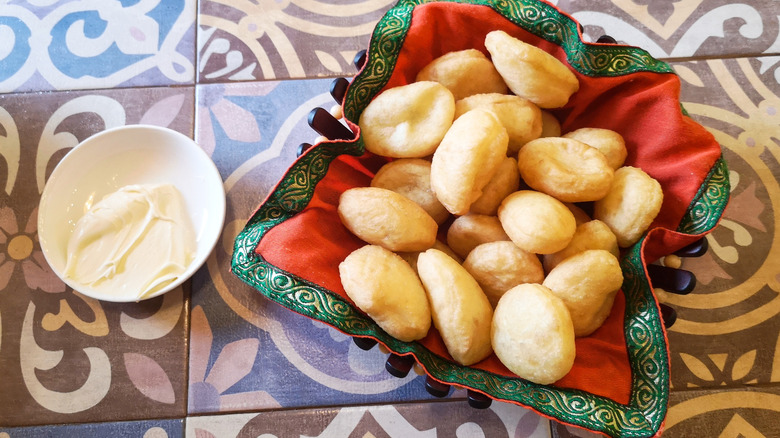
Kyrgyzstan's funeral food staple is borsok, a type of yeasted fried bread that can be enjoyed with cream cheese, honey, or jam. This bread is lovingly prepared not just for the funeral itself, but is traditionally made every Thursday throughout the year following a family member's passing, and on the 40th day after death. Borsok is typically consumed after group prayer and religious readings centered around honoring ancestors, and it's believed that the fragrant aroma of the bread's cooking oil helps to float these prayers up to the dead.
Borsok dough generally consists of flour, yeast, sugar, salt, egg, milk, and water. Once mixed up and shaped into a ball, the dough is left somewhere warm to rise for around two hours, then cut into bite-sized pieces. These are deep-fried in hot oil until gloriously puffed up and golden brown, yielding a batch of light, fluffy-crisp bites that make a satisfying addition to any memorial feast.
Amish funeral pie
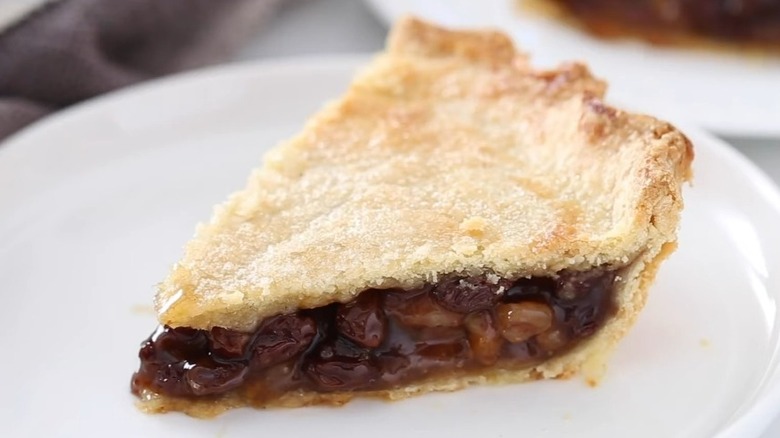
Baking is a fundamental aspect of Amish life, and there's a specific homemade pie that's strongly tied to funeral ceremonies in this culture. When remembering those who have passed, it's common for the women of the community to bake a pie filled with raisins, and sometimes custard too, which is aptly referred to as "funeral pie". The popularity of this pie allegedly stems from its portability. Amish funeral ceremonies are often large-scale affairs, with hundreds of people traveling from far and wide, and multiple guests contributing to the food offerings. Therefore, a sturdy, pastry-enclosed bake was ideal for transporting over long distances.
Some versions of funeral pie are double-crusted, while others are topped with fluffy meringue (which arguably feels far less travel-friendly!). The filling can be a sticky, sweetened raisin mixture, often enhanced with cinnamon and lemon zest, or a thick custard mixture that has raisins folded through.
Funeral cake
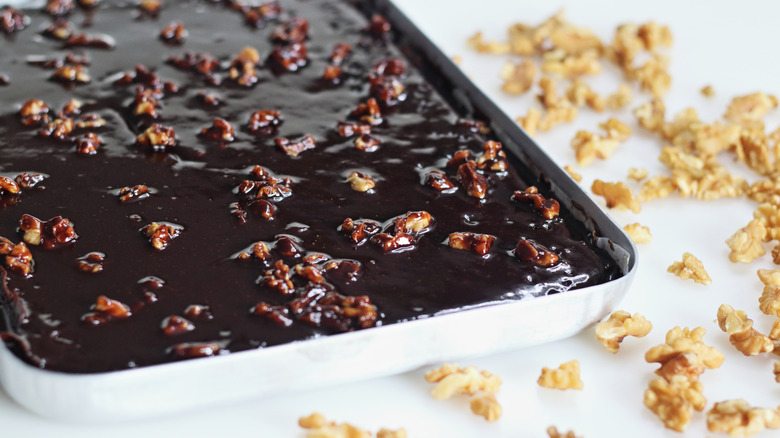
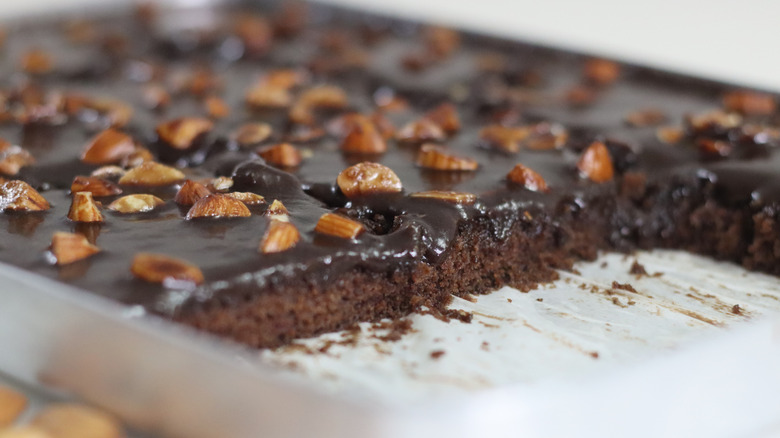
This decadent, chocolatey sheet cake is the perfect treat to share with loved ones, with its tender chocolate sponge base, sweet glaze, and crunchy nut topping. Funeral cake, aka Texas sheet cake, has its origins in the American South, where it likely dates back to the 1930s, and is prized for its fuss-free approach and multi-generational appeal. Throughout the 20th century, it became a prominent feature at funerals across the Southern states, and for many, a funeral potluck would simply feel incomplete without this humble sheet cake.
The key to the funeral cake's moist, tender texture is the inclusion of buttermilk in the batter, which is combined with cocoa powder and other classic ingredients like eggs, flour, and sugar. The mixture is baked in a rectangular sheet pan before it's topped with a sticky glaze of butter, cocoa powder, milk, and powdered sugar. And, the signature finishing touch is a scattering of toasted pecans.
Irish wake cake
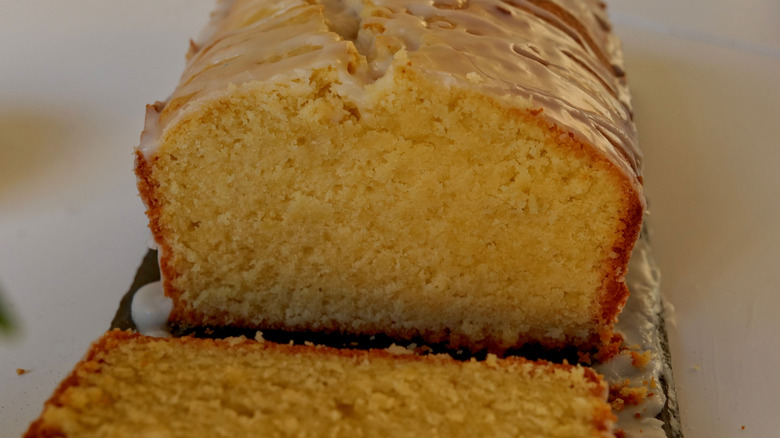
The Irish wake is a ceremony steeped in tradition, and its often joyous and celebratory nature might seem unconventional to many. While the death of a young person might be honored in a more somber way, wakes that commemorate those who lived long, happy lives are often highly sociable affairs, filled with music, alcohol, and shared stories about the lost loved one. Of course, there's food too, and a common offering at such events is a particular, cream cheese-infused bake.
The Irish wake cake is baked in a loaf pan and is similar to pound cake, but with a slightly richer taste and texture. This is thanks to the inclusion of both cream cheese and buttermilk in the vanilla-flavored batter, which adds heaps of moisture and tenderness to the crumb. The cake is topped with a simple powdered sugar-lemon glaze for an extra hit of sweetness. And, when leftovers are stored in the fridge, they take on an irresistible cheesecake-like consistency.
Koliva
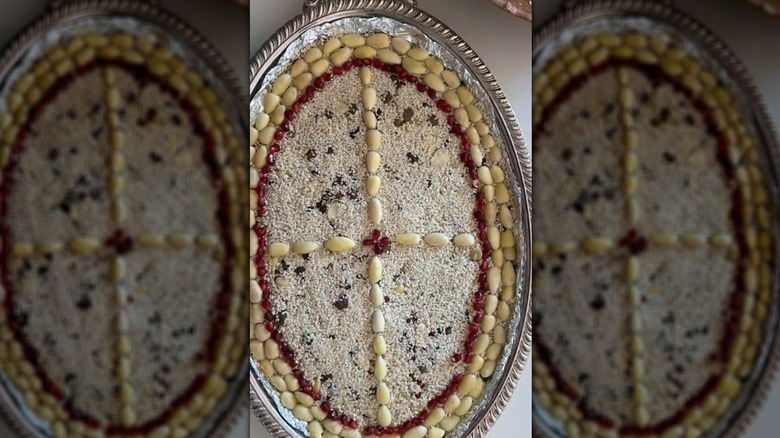
In the Orthodox Christian faith, koliva is an important part of memorial services. This wheat berry-based dish has ancient Greek origins, and its creation symbolizes eternal life. Koliva is prepared both for funerals (often at the 40th day) and anniversaries of death, and is often finished with cross-shaped decorations or topped with lit candles before serving. Specific ingredients in the recipe represent different aspects of life and death. For example, the wheat berries are seen as the body of the lost loved one, while warming spices like cinnamon and cloves signify a full, happy life, and sugar is a nod to the sweet welcome of heaven.
You'll typically find ingredients like pomegranate seeds, nuts, raisins, and sesame seeds mixed with the spiced wheat berry base. Once everything has been thoroughly combined, the mixture can be spread into a large serving dish and decorated as desired — often with a generous dusting of powdered sugar, and blanched almonds forming the cross shape.
Zuckerkuchen
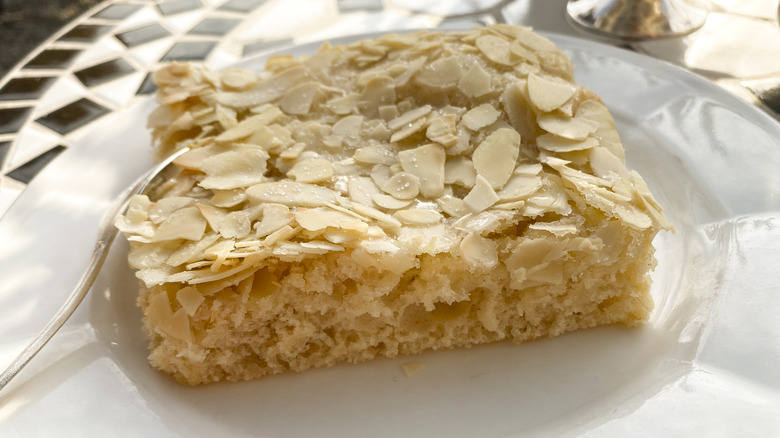
Germany's funeral traditions include baking zuckerkuchen, a fluffy, almond-topped treat with a name that translates to "sugar cake" in English. It's especially popular in the Northern towns of Bremen, Hannover, and Hamburg, with different areas having their own unique versions of the recipe, which likely dates back to the 18th century. Because this cake features heavily at both weddings and funerals, it's often referred to as "joy and sorrow cake". Either way, savoring its sweet, buttery taste is sure to bring comfort.
The foundation of zuckerkuchen is not a runny cake batter as you might expect, but rather a yeasted dough. This undergoes two rounds of proving to give it that signature fluffy texture. Before baking, indents are poked into the top of the cake and filled with butter. Then, it's finished off with a layer of sugar and slivered almonds, to create a delightfully rich, toasty topping.
Funeral biscuits
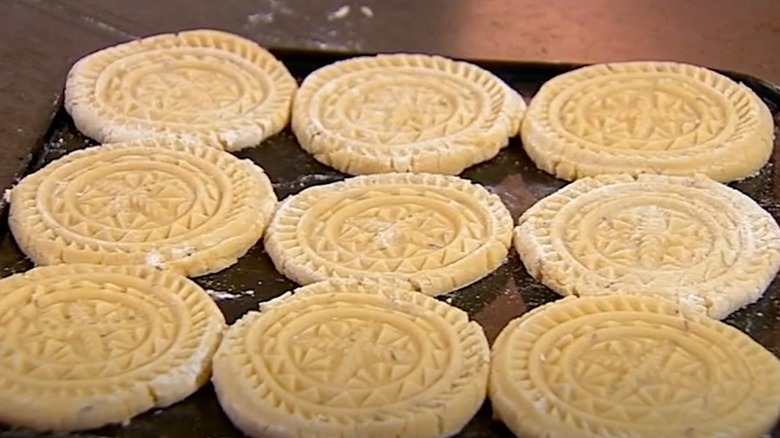
The 19th-century England saw many a lavish funeral, with Victorian ceremonies often including horse-drawn carriages and elaborate monuments. The food offerings were also a key way for grieving families to display their wealth, and that's where funeral biscuits came in. Typically prepared by a local confectioner, these biscuits were round, shortbread-like cookies, which were stamped with an ornate pattern. Neatly wrapped in paper, which was sealed with wax, the biscuits were often hand-delivered to prospective funeral guests as a form of invitation. However, they could also be eaten on the day of the ceremony, or sent to those who couldn't attend after the event had taken place.
Funeral biscuits had a particularly rich texture and flavor because the dough contained a significantly higher proportion of butter than many modern-day shortbread recipes. Caraway seeds were also added to the dough. These brought a subtle hint of anise flavor and were thought to have symbolized rebirth.
Funeral sandwiches
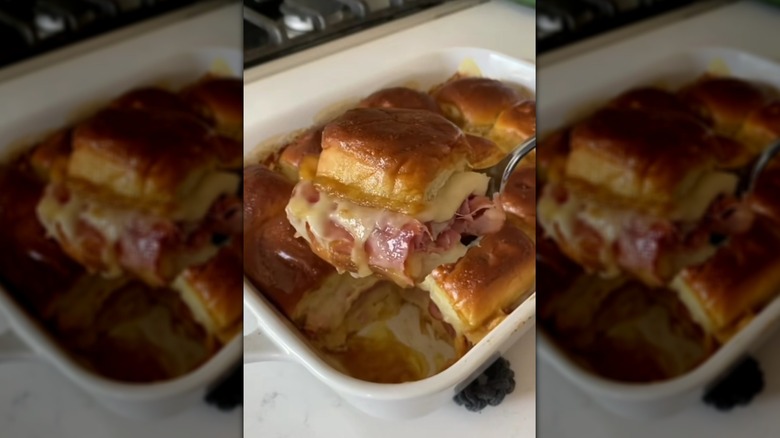
The inclusion of sandwiches in funeral feasts dates back as far as the 1700s, and it's no surprise that the format of this staple has evolved over the centuries. One of the most popular modern-day takes on the funeral sandwich is a slider-style creation that's filled with ham and cheese. As well as being a popular funeral food, this classic Southern dish is found at all kinds of gatherings, celebrations, and church events, and serves as a simple, tear-and-share option that can easily feed a crowd.
Soft Hawaiian rolls are used to make these melty, meaty bites. Just cut them open, layer the bottom halves with sliced ham and cheese (such as Swiss or cheddar), and pop the tops back on. The filled rolls can then be brushed with a savory butter mixture, which might include mustard, Worcestershire sauce, and minced onion, and baked until golden on top and gooey in the middle.
Mole chichilo
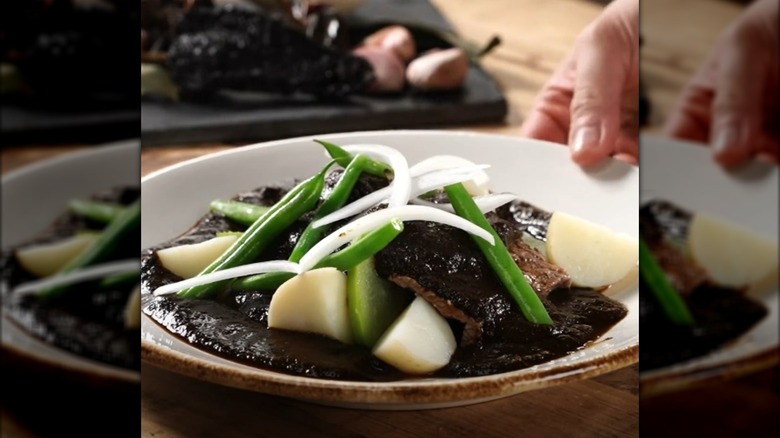
Mole chichilo has its roots in Oaxaca, Mexico. This thick, flavor-rich sauce is one of the city's seven ceremonial moles, of which each are associated with specific occasions. And, it's the chichilo variety that's most typically prepared for funerals. This mole sauce has a complex, slightly bitter taste, with the dark, charred notes coming from ingredients like blackened chili seeds and burnt tortillas. Some deem chichilo the "sad mole," since it lacks the tangy brightness of other sauces like mole coloradito and mole negro, hence its association with somber gatherings.
A medley of savory ingredients goes into this spicy mole, which might include onion, garlic, sesame seeds, dried chilhuacle chiles, oregano, avocado leaf, and masa harina. Many of these add-ins are first charred in a pan, before being blended up with chicken or beef broth. The sauce is then left to simmer, allowing the flavors to really develop. Chichilo is usually served with meat and vegetables, or chunks of cornbread.
Goat curry
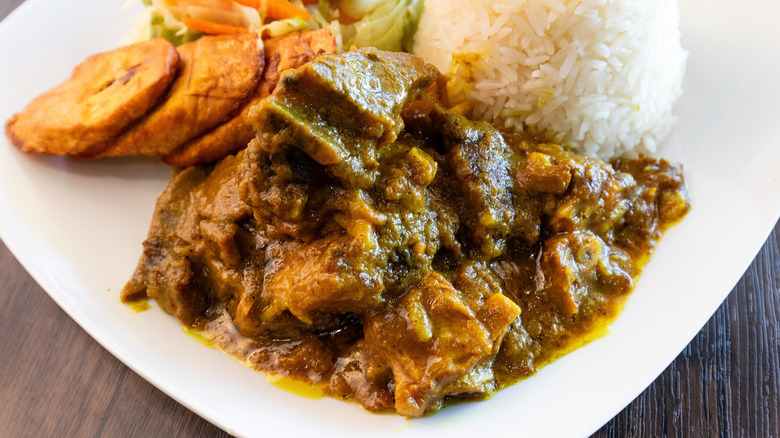
While goat curry is certainly not reserved for funerals only, in Jamaica, this wonderfully hearty dish is commonplace at wakes. However, you'll also find it at just about any kind of gathering. This comforting curry can be made in one pot, so it's ideal for sharing amongst a large group of people, being easy to self-serve, and versatile enough to fit in alongside various side dishes.
Before it's cooked, the goat meat, which is similar to lamb or beef but with a slightly gamier flavor, gets seasoned with an array of vibrant spices. Jamaican curry powder is a key ingredient here, known for its warm, aromatic taste. The meat, along with onions, herbs, and fiery scotch bonnet chiles, is first browned in the pot. Then, everything is slow-simmered in broth until the meat is fall-apart tender. The curry is traditionally served with cabbage salad, rice and peas, or fried plantains.
Lau lau
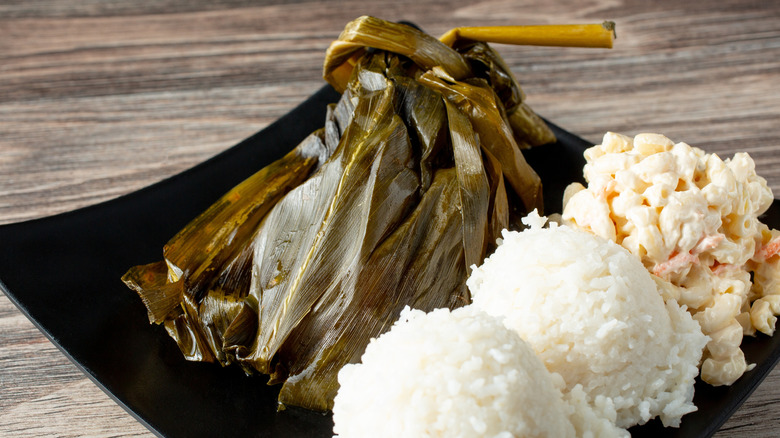
Hailing from Hawaii, lau lau is a dish that's been deeply ingrained in Polynesian culture for centuries. It consists of meat or fish and vegetables like purple sweet potato and carrots, which are wrapped in leaves and baked or steamed. Synonymous with various special occasions, including funerals, lau lau can be enjoyed alongside rice and other typical Hawaiian side dishes such as poi or lomi lomi salmon.
Two layers of leaves enclose lau lau's fillings. On the outside, there are ti leaves, which are long and thin, and not meant to be eaten. The inner layer consists of large, heart-shaped taro leaves, which are entirely edible. The taro plant is deemed sacred in Hawaiian culture and even features in the legendary creation story. This tells of taro sprouting from the body of the buried stillborn child of two gods called Wakea and Ho'ohokukukalani. As well as remaining a staple food source in the state today, taro is also often used for medicinal purposes.
Cabbage rolls
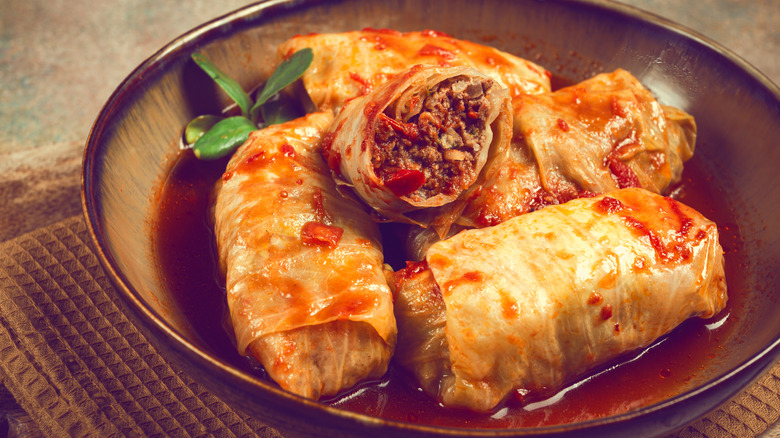
Cabbage rolls are a wholesome European delicacy that come in multiple different forms, and Estonians traditionally serve their take on this dish at post-funeral meals. This event takes place in the home of the deceased following the burial, forming part of the second feast of the day. The first, where friends and family share pastries and bread, is held at the cemetery, and any leftover food must be left behind, so as not to bring death into the home.
Boiled cabbage leaves form the outer layer of these rolls, which provide a sturdy enclosure for the fillings within. Inside, you'll typically find ground meat, such as pork, beef, or veal, and finely chopped or shredded vegetables like onion and carrot. Egg and breadcrumbs can also be added to make the mixture more cohesive. Once wrapped securely, the rolls are arranged in a casserole dish and baked until golden brown.
Yukgaejang
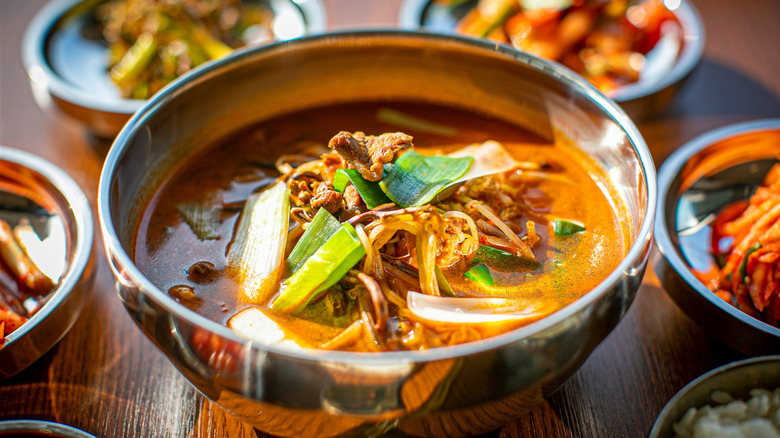
A dish you're likely to encounter at a Korean funeral is yukgaejang — a spicy, savory soup made with shredded beef and vegetables. It's commonly served as part of the traditional three-day-long occasion, in which attendees will often not sleep at all. In joining together to remember the deceased, friends and family will eat, drink, and play card games together, with yukgaejang serving as a nourishing pick-me-up. The soup can be enjoyed alongside jeon, a type of Korean vegetable pancake, as well as slices of boiled pork and fresh fruits.
The prep process of this hearty dish is rather lengthy, with everything simmered for around three and a half hours to yield the maximum depth of flavor. As well as tender shreds of beef brisket, the broth includes vegetables such as bean sprouts, green onions, and leeks. A fiery gochugaru, garlic, and sesame sauce spices things up, and the addition of noodles makes each bowlful all the more comforting.
Hard-boiled eggs
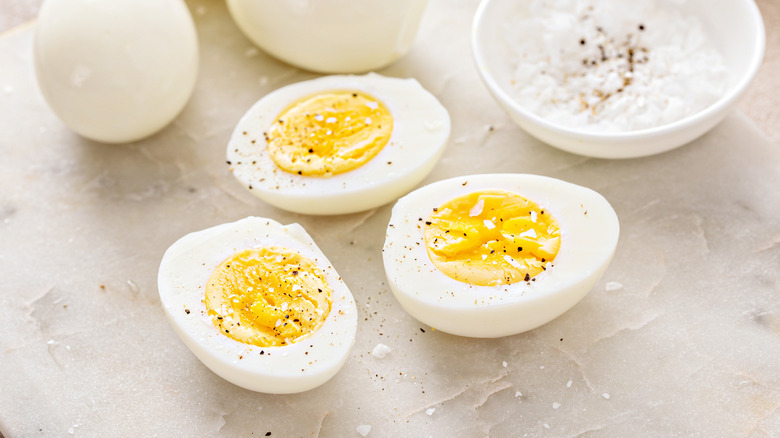
At a Jewish funeral, known as a Shiva, it's customary to eat hard-boiled eggs. This might seem like a simple food choice, but there's a deeper meaning behind it, with eggs symbolizing the cycle of life. A traditional Shiva is seven days of mourning, which typically takes place in the home of the deceased. The Shiva follows the burial at the cemetery, and begins with a meal called seudat havara'ah, which translates to "meal of comfort" in Hebrew.
Only close family members will attend the seudat havara'ah, but the food may be provided by a wider circle of friends and community members. The family will eat bread, a widely recognized symbol of spiritual nourishment, as well as the hard-boiled eggs, which represent hope and new life in a time of grief. Lentils are also popular, with their round shape making them another symbol of the life and death cycle.
Pap
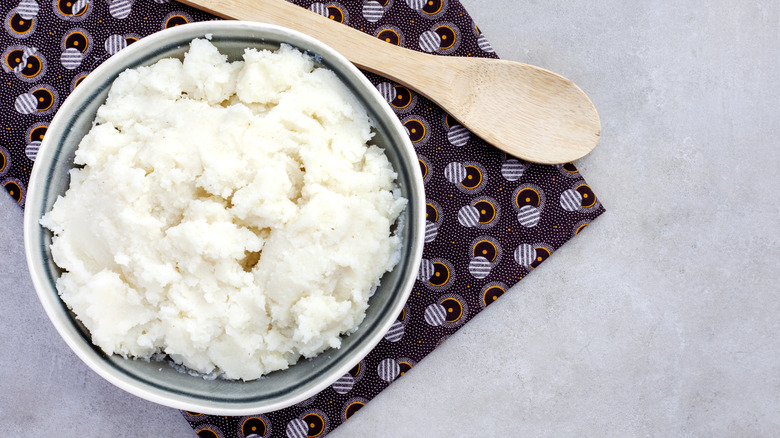
In South Africa, pap is a dish for everyday dining to large-scale special occasions. Made from maize meal, this immensely versatile food can be enjoyed sweet or savory, and enjoyed for breakfast, lunch, or dinner. You'll find it served at weddings, community gatherings, and braais (South African barbecues), as well as at funerals.
Pap is made by simmering the maize meal with water and salt, and the resulting dish has a texture similar to polenta or grits, though you can adjust the consistency depending on how much water you add. When enjoyed as part of a lunch or dinner, pap is commonly paired with meat stew. Or, to transform the dish into a porridge-like breakfast treat, you can add sugar and milk.
Along with pap and meat stew, other typical South African funeral dishes include rice with gravy, bread rolls and butter, and chicken pieces. As is the case in many other cultures, the theme is generally convenient comfort food, that's easy to prepare and well-suited to feeding a large number of people.
Bandeja paisa
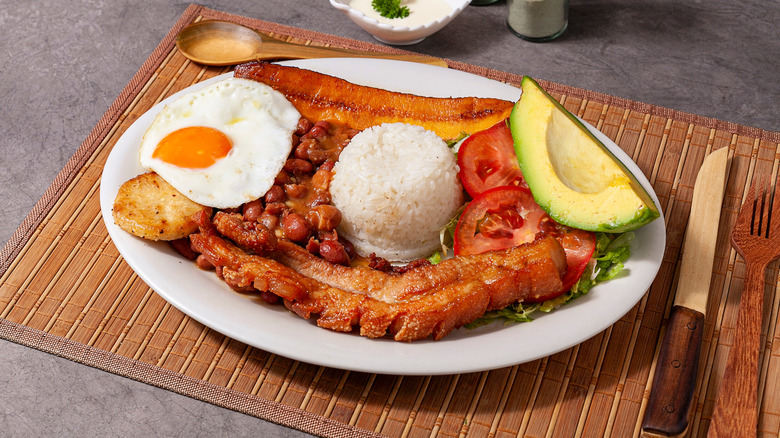
A comforting medley of filling, nutritious foods, bandeja paisa, or the paisa platter, is the national dish of Colombia. Therefore, it's no surprise that this hearty meal is often served to guests at Colombian funerals. A plate of bandeja paisa includes beans, rice, fried plantains, avocado, various meats, and a fried egg. Sausage, ground beef, and pork belly are all common additions, and the specific type of beans may vary, with black beans and red beans being popular choices.
In the Tolima region of Colombia, the paisa platter's usual plantains are sometimes substituted with French fries. Other versions feature arepas, which are flat, corn-based cakes that can be filled with savory ingredients such as cheese or vegetables. There's also the option to incorporate chicken or fish into the dish, or brighten the plate up with some fresh salad, such as sliced tomatoes and lettuce.