

Here's The Exact Temperature Sugar Starts To Caramelize
We may receive a commission on purchases made from links.
Even seasoned home cooks can be put off by the thought of anything involving caramelizing sugar. It might seem that it's something of an experiment, and one whose results can quickly go wrong. To safely caramelize sugar without burning it, you do need to learn a bit of science. The good news is that once you understand how it works (and arm yourself with a good candy thermometer) the process is actually quite predictable.
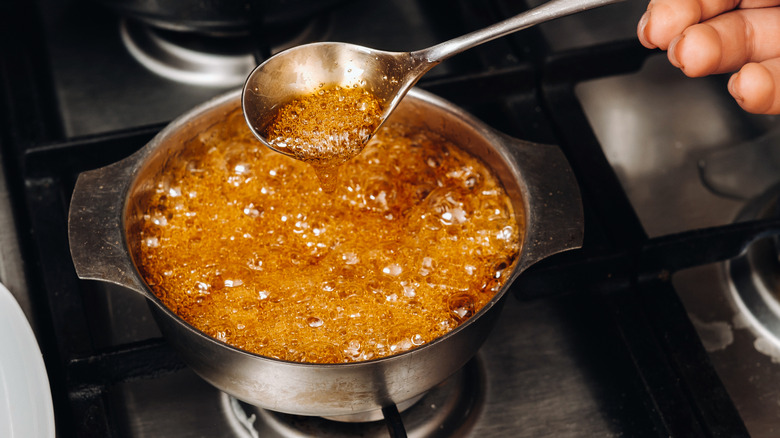
Caramelization is the point at which solid sugar starts to melt,ultimately altering both the color and flavor. It's a complex chemical reaction, and the temperature at which it happens depends on the type of sugar that you are using. For regular white sugar, which is pure sucrose, this occurs at 320 degrees Fahrenheit.
Raw sugar and brown sugar contain molasses, which along with sucrose includes both fructose and glucose. Fructose starts to caramelize at 230 degrees Fahrenheit, lowering the temperature needed to melt these types of sugar. The required temperature will change in relation to the ratio of the different sugar compounds. Brown sugar can also contain impurities that burn as they are heated, so using white sugar for caramelizing will give you the most consistent results.
Stages of sugar caramelization
Knowing the temperature that triggers caramelization is just the beginning. There are several stages in the process, all of which have their unique tastes and uses in recipes. A thermometer will help you to avoid overcooking the sugar, but you should also rely on the visual clues for each stage.
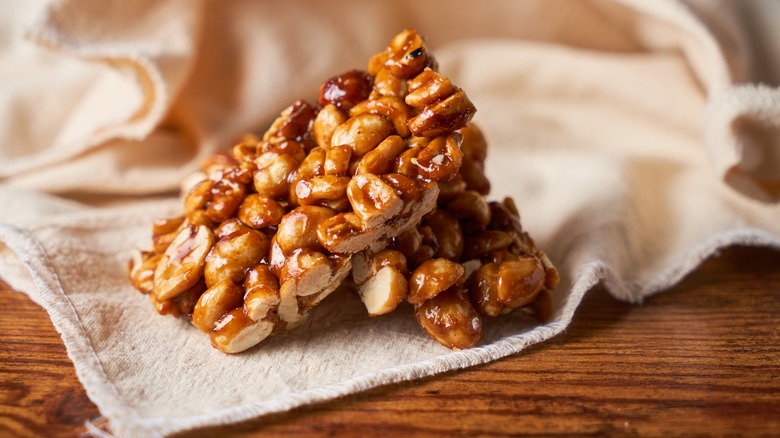
Heating the sugar to 340 degrees Fahrenheit will produce what's known as light caramel. This is used for making brittle or as a glaze for vegetables, like these Danish candied potatoes. Medium caramel, which occurs at 355 degrees Fahrenheit, is a light amber brown color and has a sightly nutty aroma. This is a favorite for making spun sugar, flans, or caramel apples. At 365 degrees Fahrenheit you get dark caramel, which is even deeper in flavor and color and can be added to ice cream or a French crème caramel. By the time you hit 380 degrees Fahrenheit, you've reached black or very dark caramel, which is only really used as a coloring agent. From here it's a blink of an eye until you burn the sugar at 392 degrees Fahrenheit. That result is only fit for the trash.
It's important to note that these levels of caramelization are different from the stages in candy making, such as hard ball, soft crack etc, all of which take place at lower temperatures than caramelization. These refer to textural differences based on the concentration of sugar in water.