

The Type Of Oil You Should Avoid When Seasoning A Wooden Cutting Board
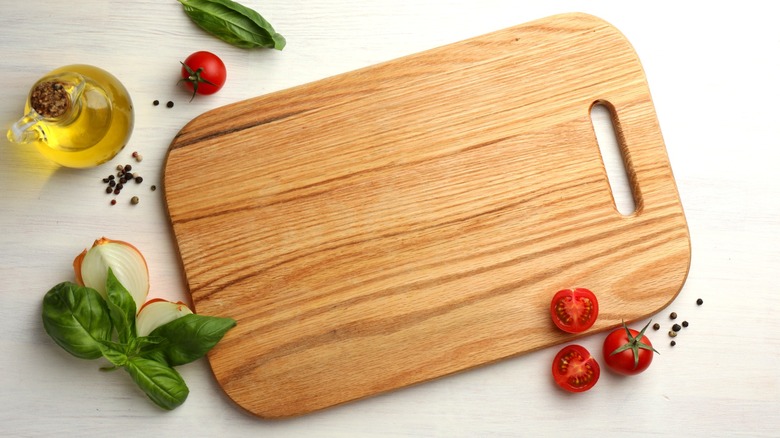
While plastic cutting boards are cheap, you'll end up paying for them in other ways: They're susceptible to scratches, can dull your precious cooking knives, and even deposit microplastics into your food. Wooden cutting boards avoid these pitfalls and last way longer, so long as you regularly season them with oil. Just be sure to avoid olive and other vegetable oils, or you'll be dealing with a smelly situation.
Learning how to season a wooden cutting board really matters because a rub-down with oil creates a protective finish on the surface. Without it, wood easily absorbs water and liquids from food, then eventually starts cracking, growing mold, and harboring dangerous bacteria and lingering odors (this is also why you need to oil wooden utensils). While convenient to buy, plant-derived cooking oils will go rancid after sitting on wood, creating a taste and smell that's even nastier than leftover food fumes. Olive, corn, sunflower, vegetable, canola, and coconut oil are the big ones to avoid.
Why do these oils easily go bad on a cutting board? Rancidity results from oxygen exposure and can be exacerbated by light and warm temperatures. In a sealed container in a cool, dark place, cooking oils can last quite a while at room temperature. A cutting board, though, has lots of surface area to expose the layer of oil to air. When you use the board, it might see sunlight from a window or get heat exposure from the nearby stove or oven. That's a fast track to a funky-smelling surface.
Good and bad oils for seasoning wooden cutting boards
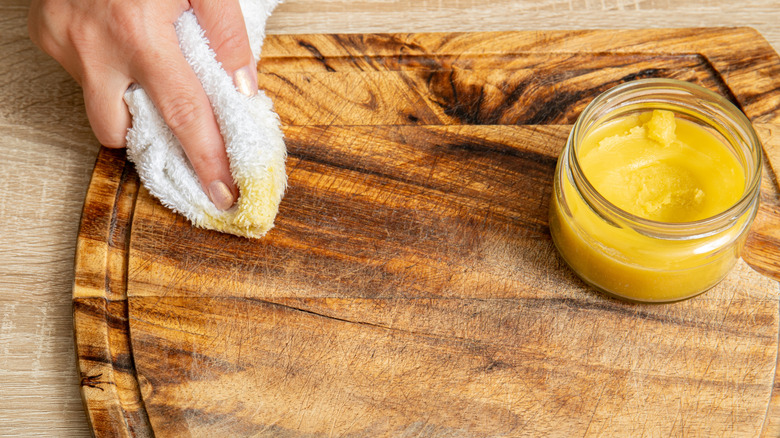
Vegetable and seed oils aren't the only substances that belong nowhere near wooden cutting boards. Lard and other animal fats not only go rancid when used for seasoning, but leave your board greasy and gross. Don't try to circumvent regular seasoning by using wood varnish, either, which is not food-safe and will chip off under your kitchen knives.
The best choice for seasoning wooden cutting boards is food-grade mineral oil. Derived from petroleum, it's tasteless, odorless, doesn't go rancid, and makes wood water-resistant while conditioning it thoroughly. Some cooks use a combination of pure beeswax and mineral oil, as the wax makes cutting boards shiny and moisture-repellent, but doesn't penetrate wood deeply. Mineral oil makes up for this for a one-two punch of lovely smoothness and resistance to damage.
As for when to season, cover your cutting board in a generous amount of oil as soon as you take it home. Rub the oil over the entire surface, front and back, and let the board sit for a few hours to absorb it, then repeat two or three more times. After that, season it at least once a month by repeating this process with a much smaller amount of oil. To further avoid water damage, stop drying your wooden cutting board lying down and never put it in the dishwasher. You'll also do yourself a favor by buying the types of wood cutting boards that are worth splurging on, as some are way more durable than others.