

The Old-School Meatball Dish That Relied On One Uncooked Ingredient
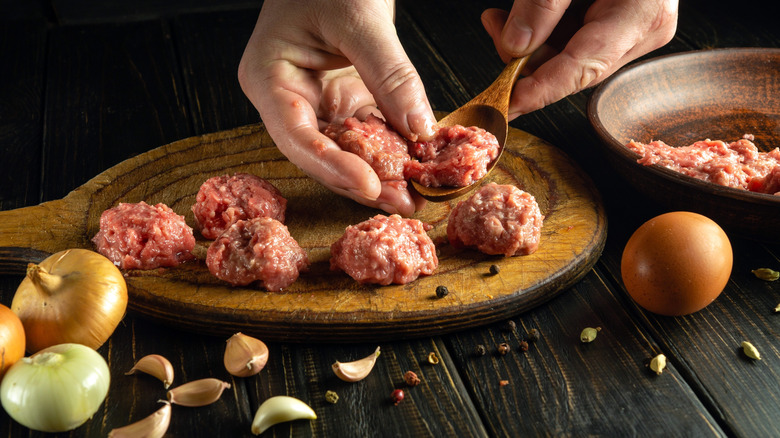
Old-school recipes often have the reputation of being hearty ways to stretch food during times when ingredients were much more expensive — but that doesn't mean they aren't delicious. Food necessity can be the mother of invention, and people of lesser means in the past needed to come up with affordable dishes they didn't mind eating over and over. Even famous dishes like French cassoulet, that might be considered fancy now, originated as peasant food that was stitched together from the cheapest ingredients available. And in that lineage of old-school budget recipes, another that holds up really well to this day are porcupine meatballs.
The unusual name for porcupine meatballs comes from its use of uncooked rice, which pokes out of the meatball mixture like spines. Recipes for porcupine meatballs date back to the early 20th century, but it became much more of a food fixture during the Great Depression, when rice was an even cheaper way to stretch meatballs, a food already designed to give people the most bang for their buck with ground meat. The frugality of the dish didn't lose its appeal after the Depression, and in the post World War 2 period, American households looking to feed big families with relatively easy, crowd-pleasing recipes could still turn to the dish. It even got a double-dose of modern convenience by incorporating canned tomato soup into the recipe in place of tomato sauce. And while it's not a staple anymore, porcupine meatballs' appeal is still just as apparent.
Porcupine meatballs are a simple way to stretch meat with rice

Beyond the rice, porcupine meatballs are surprisingly simple meatball recipe. The basic dish doesn't call for any of the normal meatball fillers like egg and breadcrumbs. Instead, water is added to the mixture along with the rice, to help make sure there is enough moisture that the rice cooks through while the meatballs are baking. Beyond that only some standard seasonings like herbs, garlic powder, and chopped onion are common. While ratios can vary by recipe, the typical is usually 1/2 cup long grain rice for every 1 pound of ground beef you are using, along with 1/2 cup of water.
The meatballs are then cooked in tomato sauce, although they can be browned first depending on your preference. The old-school sauce uses Campbell's canned tomato soup, and you can still make it that way, but modern recipes often swap it out for canned tomato sauce combined with stock, or homemade tomato sauce instead. Either way, you'll want about 2 cups of sauce for 1 pound of meat. Once the meatballs go into the sauce, the pan should be covered, and the meatballs are cooked simmering on a stovetop for about 45 minutes until cooked through, but still tender. There are also options to cook them in the oven. And that's it. Mixed with rice, porcupine meatballs are already a whole meal all by themselves — their savory, satisfying flavor will distract everyone from just how inexpensive to make they are.