

The Naturalized Mediterranean Fruit You May Be Overlooking That Pairs With Marinated Fish
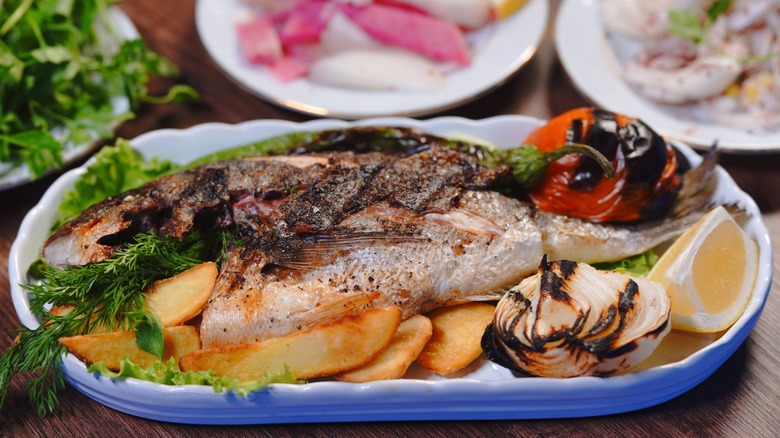
One of the most exciting and engaging parts of cooking is the pursuit of new flavors and new combinations that can expand your palate in unexpected ways. Food can be an adventure through cultures and history like almost nothing else in the world. Learning what flavors work together is a key component in understanding and mastering cooking as an art form. While you are probably familiar with traditional flavors for fish such as salt, pepper, lemon, butter, and dill, you may never have tried it with cactus fruit. You should.
Fish is one of the best canvases for cooking. There are many unexpected fish and fruit pairings that work surprisingly well. This works in part because many fruits are acidic and fish pairs wonderfully with acidity. Acid changes the protein in fish, which is why you can make a classic ceviche just by marinating fish in it. This process is essentially cooking without heat. Even with cooked fish, acid enhances the often subtle flavor. It also works as a palate cleanser preventing that lingering, fishy aftertaste.
Cactus fruit is not highly acidic but it does contain some acid, which is why it pairs best with an already marinated fish. It brings natural sweetness to balance the tartness of the marinade's acid. It also brings a distinct flavor profile to the mix.
Pairing cactus fruit and fish
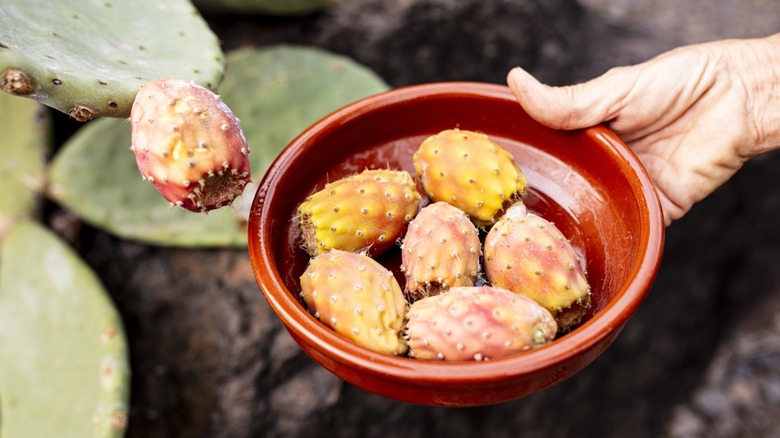
Cactus pears are not native to the Mediterranean. They originated in the Americas and were an important crop for the Aztec people. The capital city of the Aztec Empire was Tenochtitlan, which roughly translates to "place where cactus pear grows on stone," according to The Holland Center of Scottsdale, Arizona. They were an important food for the Aztecs, and they have since been exported and naturalized around the world, including in the Mediterranean. There, people have found out that this fruit also pairs well with many of their native flavors like citrus, fresh herbs, olive oil, and more.
The taste of cactus pear has been described as both sweet and tart with an earthiness and brightness that set it apart from many other flavors. Watermelon and cucumber are common comparisons, but so are some unexpected flavors like bubblegum and berries. Paired with a milder white fish, a sauce made from cactus fruit has a chance to shine without becoming overpowering or getting lost in the flavor of the fish.
The right kind of cactus pear can also make for a bold visual experience with your fish. While some of the fruit can be pale in color, including yellow, the sweetest and most popular cactus pears are typically bright red and very juicy. Mixed into a sauce, the color becomes extremely vibrant. So if you're focused on presentation, the end result can be something breathtaking as well as delicious.
If you have never cut a prickly pear before, you need to be careful at first. You'll want to avoid the tiny cactus needles, called glochids, that grow on the fruit. It's best to wear gloves to clean them off before peeling and cooking with it. Try it with your favorite fish and see what you think.