

The Only 2 States Without A Cinnabon Location
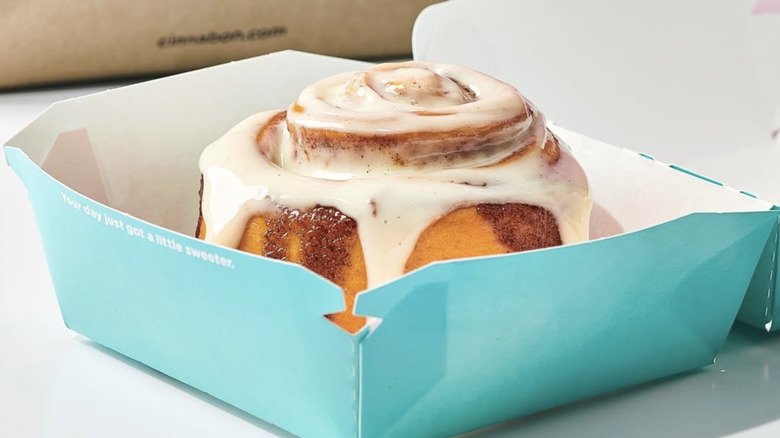
Cinnabon represents mall culture indulgence, with that famous cinnamon-sugar scent enveloping you before you even set sights on the kiosk. Since opening its first shop in the SeaTac mall in Seattle, Washington in 1985, the chain has spread across the U.S. and abroad — embedding itself in food courts, gas stations, and travel hubs as a reliable purveyor of cream cheese frosting and nostalgia. But, according to the franchise website, if you live in Maine or Vermont, you won't be able to find that familiar pastry in your local mall or rest stop.
It's not that New Englanders don't like Cinnabon — the regional bakeries just have their own strong traditions. For instance, the similar but sweetly different sticky buns are the tradition in Pennsylvania, while virtually anything maple-glazed can be found Vermont, and whoopie pies reign supreme across Maine. In some ways, those homegrown desserts already fill the niche that a Cinnabon would occupy. From a franchise perspective, rural populations and smaller mall footprints make expansion into those areas less of a priority, especially compared to the high-traffic airports or big-box centers in more densely populated states.
Cinnabons, cinnabons everywhere and not a bite to eat
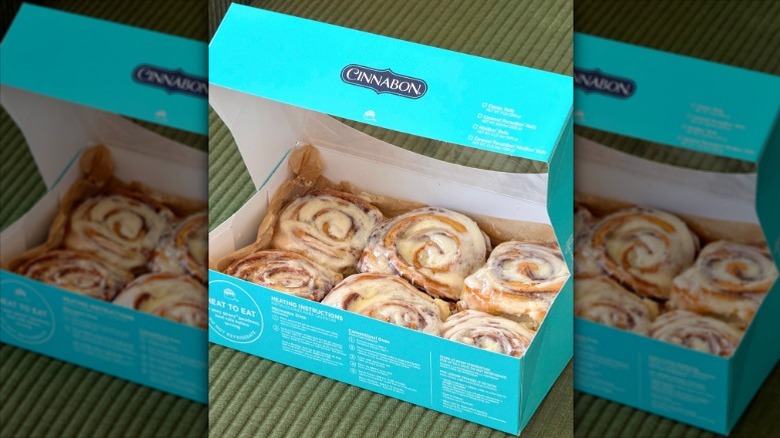
So what does it mean to live in a Cinnabon desert? For locals, probably not much — especially considering the fact that residents can still get Cinnabon products at grocery stores. The brand sells frozen buns and at-home baking kits in stores across the country, including Vermont and Maine. It's also worth noting that, apart from all of the other varieties of sweet pastries locals can find from small businesses, cross-border Cinnabon fixes aren't far away – New Hampshire and Massachusetts both have locations.
With locations in all of the other 48 states – including Alaska, the state that ranks last for fast food in America — Cinnabon is one of the most recognizable dessert brands in the world. Its rolls have been licensed into grocery store freezer aisles and even coffee creamers, so the absence of physical shops in two states amidst its near-country-wide-coverage feels strangely pointed. What's interesting is how exceptions like these sharpen the sense of ubiquity. The fact that you expect to see a Cinnabon almost anywhere is part of its successful commercial, and cultural impact.