

Before Opening A Package Of Bacon, Try This To Keep The Strips From Sticking
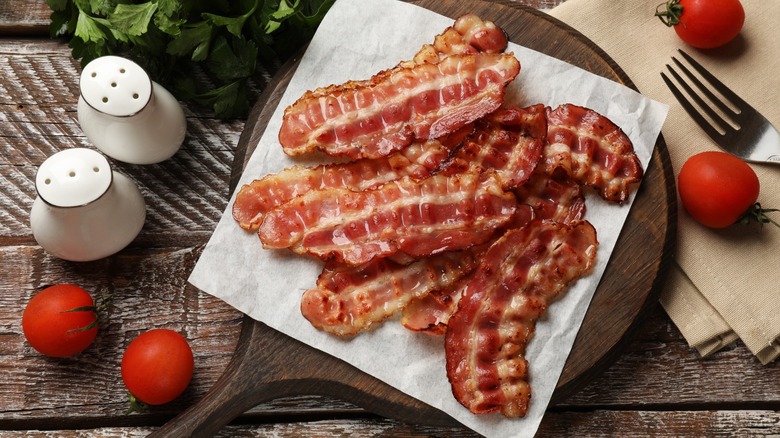
Picture a skillet of perfectly cooked bacon just coming off the heat. The grease is still crackling and popping, and the air in the kitchen is filled with the smoky, delicious scent. Your mouth has already been watering for five minutes, and the final flourish of your breakfast masterpiece is ready to join the eggs, toast, and hashbrowns.
If only it hadn't been such a hassle to pull those strips of bacon apart in the first place. Normally, most kinds of bacon are stuck together tightly in the package, and you have to pry them apart. This will often cause them to tear, especially along the break between the meat and the fat. Cheaper or thinner-cut bacon is especially prone to tearing. You often end up with strips of pure fat or chunks of layered meat, two or three slices thick.
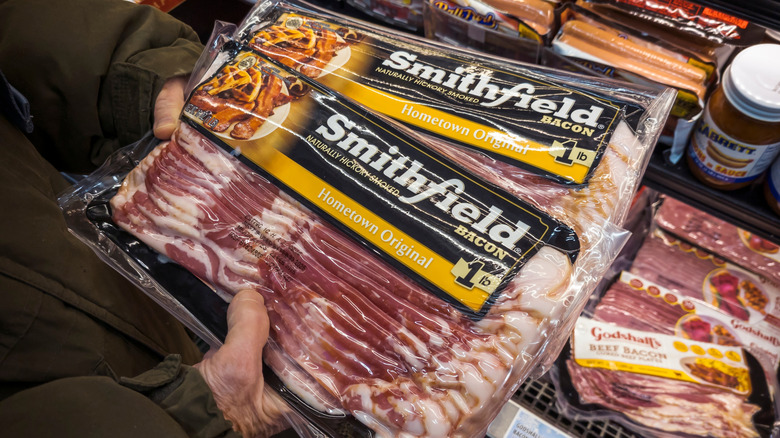
But it doesn't have to be this way. The secret lies in rolling your package of bacon before you even open it. While your package of bacon is still sealed, take it by one of the short ends and begin rolling it up like the dough for some cinnamon rolls. It doesn't need to be incredibly tight, just as firm as you can manage. Then unroll and slice open the package. After rolling, all of the slices should be loosened and separated enough to pull apart with ease, even thick-cut bacon.
The trick of the bacon roll
The bacon you buy in thin, sleeve-like envelopes at the supermarket is vacuum sealed. Bacon's fat content makes it work a bit like glue when it's refrigerated. The individual slices stick together, and prying them apart is all but impossible. You can help ameliorate this by letting the bacon get to room temperature before you try to cook it, but not everyone has the patience for that.
Rolling the bacon causes the vacuum-sealed strips to press together even more tightly and then pull apart as you unroll them. Bacon is usually packaged in shingle packs, where the bacon is layered in overlapping strips, or shingles. Flattening the bacon loosens the fatty bonds between the slices, making them easier to separate. It forces them to shift in a subtle enough way that they don't tear apart like they would if you were trying to separate them by hand. It's kind of like that trick of opening a thin plastic bag by rubbing it together between your hands so the layers part, instead of struggling to pull it apart unsuccessfully when you can't find the seam.
If you have bacon in a stack pack where each slice is stacked evenly, not overlapping like a shingle pack, the same trick can work, but it's a bit harder to pull off. The stack packs are thicker, so you can't form that same cylinder. Depending on the thickness, you may just fold the bacon instead, but it still applies enough pressure to separate the slices.
The next time you have bacon, take a minute to give this trick a try and see if it doesn't make a difference.