

Are Americans Finally Done With 'Guilt-Tipping' At Checkout?
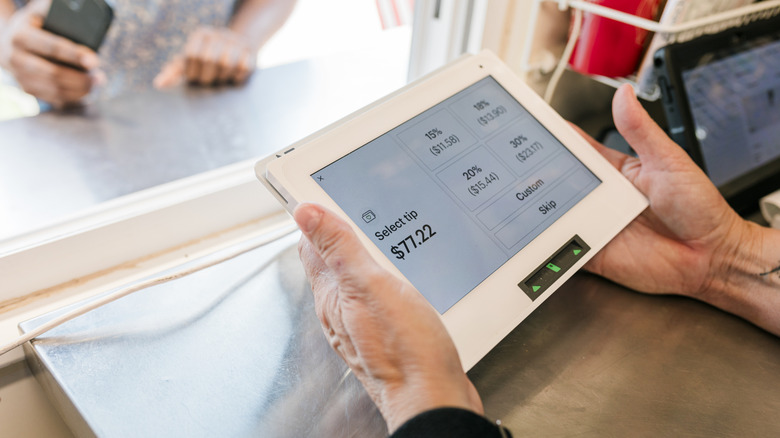
At the bakery I work at, we have this nifty little register that you've likely seen before. When a customer pays, a screen automatically flickers to life with a selection of buttons: each prompting them to add a different percentage of tip to their purchase. People on autopilot often get confused as to why their card isn't tapping, and ask if something is wrong. I feel as awkward as they do as I explain that they need to select an option –- so much so that I sometimes go ahead and press the "skip" option for them. The panic felt in that moment is a product of what's known as "guilt-tipping," and if the person serving you feels done with it, there's a very high chance that you do too.
Tipping is common in the U.S. — not only to show gratitude, but to help support the server's wages. The minimum federal cash wage for tipped employees is just $2.13 per hour, much lower than the standard $7.25 per hour. While it might not seem fair that you should feel pressured to bump up their wages or address restaurant inequalities by paying service fees, tipping has been a controversial American custom since the early 1900s. However, research suggests that Americans may finally be done with it. A survey conducted by Talker Research found that Americans spent an average of $24 a month on "guilt-tipping" in 2025 — down from the average of $37.80 they spent per month in 2024.
Americans' thoughts on 'guilt-tipping'
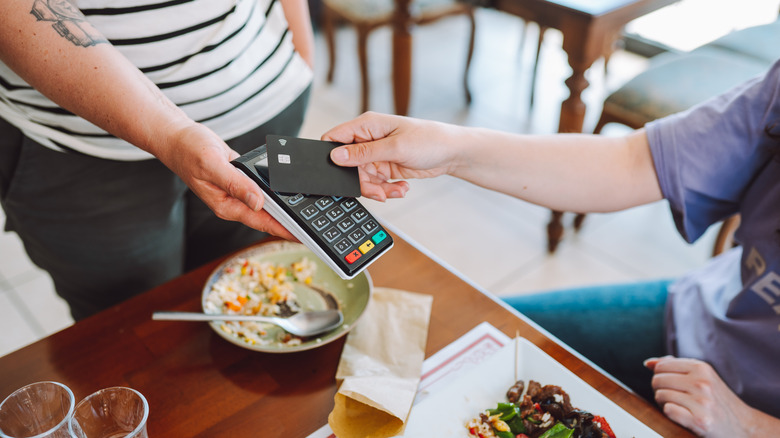
The days of being handed a bill and left to calculate a tip at your own discretion are gone. Now, those fancy screens do all the calculating for you — and they've been popping up in many places that aren't restaurants or bars since the pandemic. Employers are also using them as a way to retain workers — it's all been a big bone of contention. As a result, there are many groups on Reddit dedicated to the topic, where people have described their "extreme guilt" and an "out of control" problem.
"EVERYONE is getting sick of this tipping culture," wrote one Redditor. "I don't return to places with tip screens at the counter," wrote another. There are also conversations being had on Facebook and TikTok, and there are countless Youtube videos that discuss the controversies surrounding "guilt-tipping" too. If you live in the U.S., it's probably come up in your real life conversations as well. But even though it might not feel like it, how much you tip is always up to you — and it seems like Americans are coming to terms with that.
When to tip more or less
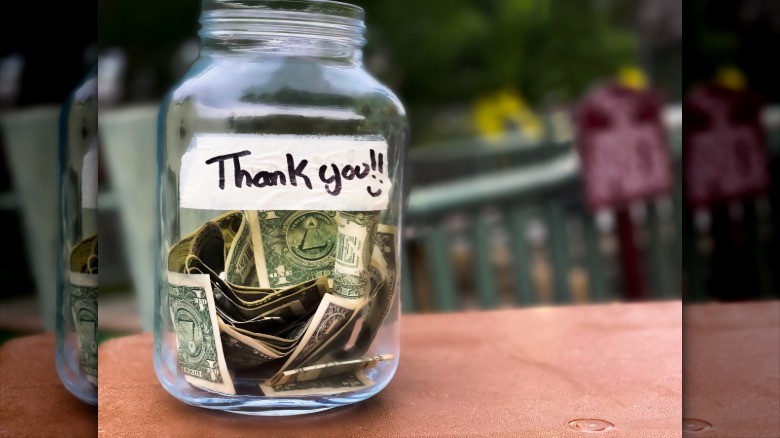
One of the things to keep in mind when tipping at restaurants is that anything between 15% and 25% is within the good rule of thumb to follow — so don't feel pressured to hit that 25% button every time, even if your server is staring directly at you. If the service wasn't superb, you're within your rights to select one of the lower percentage options — and you shouldn't feel guilty for it, either. If the food is being delivered, tipping the driver 10% is generally acceptable –- maybe more if there's bad weather. On the other hand, if it's counter-service or you're picking food up, the general consensus is that you can tip between 10% to 15%.
Exactly much you tip at the counter or upon pick up will depend on how simple or complex your order is. For instance, if you're picking up a large order for a party you're hosting, 15% might be warranted. But, if it's something like a coffee or the salad you get for lunch, don't feel like you need to tip more than 10%. A similar rule can be applied to cocktails — aim to tip at least $2 to $3 for mixed drinks and $1 for beer. Most people in the industry will tell you that you'll be treated much better if you do, and if you notice that the bartender is changing shifts, ask for the bill to ensure they get it.