

Here Are The Worst Mistakes To Make At A Fancy Restaurant
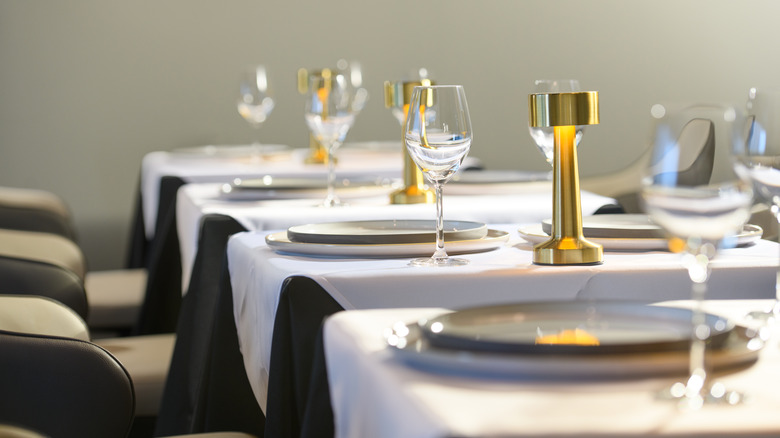
A night out at a fine dining restaurant is about more than just the food. It's a show, and there's an aspect of hospitality — it's essentially something special. The staff has rehearsed, the tables are set like a stage, and the pacing is as carefully choreographed as the tasting menus. But it only takes a few faux pas to make a meal out much less enjoyable.
To nail down the mistakes that make industry insiders cringe, we turned to two hospitality experts who know the world of upscale dining inside and out: Thomas Guillaume, director of sales & VIP services for Mr. Hospitality Miami, and Rick Camac, executive director of industry relations at the Institute of Culinary Education. Between them, they've seen every possible misstep, from baseball caps in the dining room to bills split eight ways. According to the experts, these are the most common mistakes guests make at fine dining restaurants, and how to avoid them the next time you're out.
Not taking time to appreciate the food
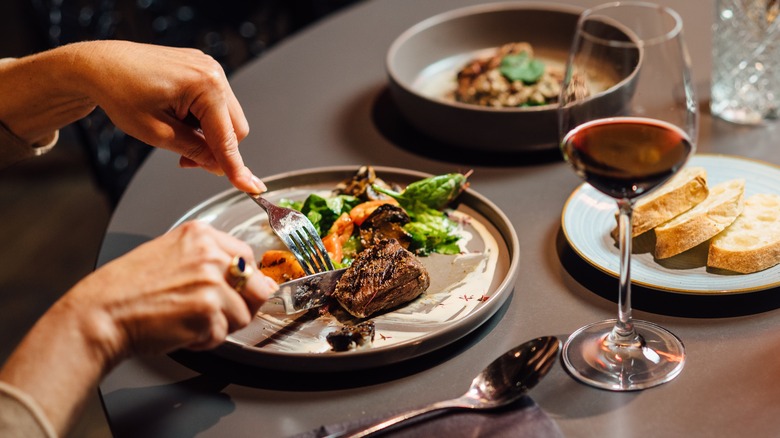
Patience may be in short supply these days, but in fine dining, it's non-negotiable. The entire experience is designed to unfold slowly, like a carefully staged performance. From the moment the host greets you to the final course, the pacing is deliberate, with every beat meant to be savored rather than rushed.
"The number one faux pas guests make is trying to rush through the experience," Thomas Guillaume says. "Guests do not listen to the spiel of the front of house team members, ignore the suggestions that have been carefully brainstormed to enhance that experience, and try to rush through the courses without taking the time to appreciate the magic we are here to create."
That "magic" isn't just about hospitality; it's also rooted in how the body processes food. Researchers at the University of California San Francisco found that the brain's appetite-regulating cells don't all work on the same schedule. Some respond to flavor almost instantly, while others take much longer (sometimes more than 10 minutes) to fully register satiety. In other words, eating slowly gives your body the physiological time it needs to both fully taste and feel satisfied.
The tongue plays a role here, too. A study by the journal PLOS Computational Biology, showed that the way food moves across the tongue changes how quickly flavors register. When bites move quickly, taste buds pick them up faster, while slower movements and larger molecules take longer to sink in. That means pacing doesn't just affect fullness; it also changes how deeply and how quickly flavors are perceived. This is exactly why lingering is part of what you're paying for. Fine dining is built on slowness and intention.
Not dressing for the occasion
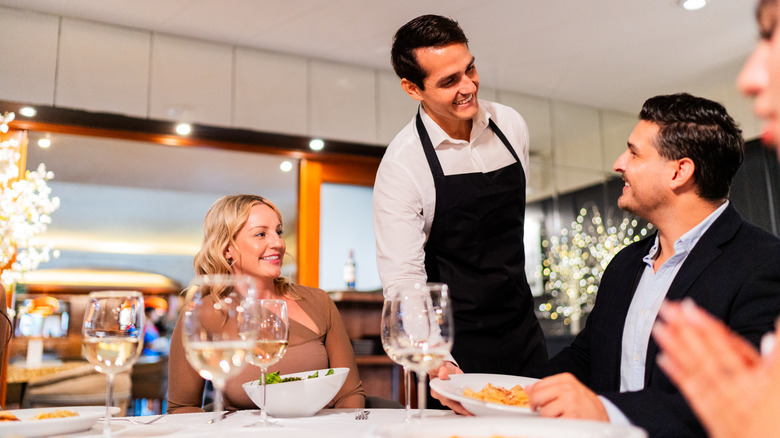
Even though dress codes have softened in recent years, attire still matters more than some people realize. A fine dining room may not require a jacket and tie the way it once did, but there's still an unspoken expectation to show up polished. "This has changed much over the years, but in most cases, in a fine dining establishment, hats, shorts, tees with logos, and in lesser cases, certain sneakers, are not appropriate," Rick Camac says.
Part of the shift has to do with the pandemic's ripple effects on style, as the Wall Street Journal reported. With remote work becoming the norm, people often head out to dinner straight from home rather than the office, showing up in outfits that look better suited for errands than a nice meal. This has led a handful of restaurants to quietly reinstate dress codes, swapping old-school requirements like "jackets only" for lesser but still deliberate standards like "smart casual."
Thomas Guillaume notes that effort is what counts, even in cities where nightlife and casual style dominate. "We know it gets warm in our lovely city of Miami, and we'd never expect guests to show up in a three-piece suit or evening gown every night," he tells us. "That said, we do ask that ladies skip the sandals and gentlemen leave the ripped jeans and baseball caps at home. A little effort helps keep the vibe elevated and enjoyable for everyone."
It's not about dressing to the nines, per se, but about matching the tone of the restaurant. The rule of thumb: dress like the restaurant is making an effort, and meet it halfway.
Not understanding the table layout
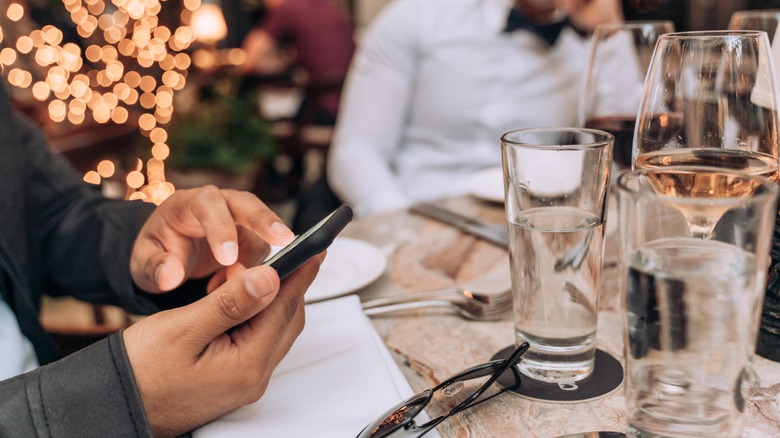
Every detail at a fine dining restaurant is intentional, especially the tablescape. From the napkin fold to the alignment of silverware, nothing is left to chance. "The napkin belongs on your lap, not on the table," Thomas Guillaume says. "In fact, nothing personal should go on the table; phones, handbags, or shopping bags disrupt the flow of service and take away from the overall experience." It might feel small, but putting your things away makes a big difference since it helps everyone stay focused on the meal and the experience rather than unnecessary distractions.
Plus, the placement of utensils and glassware matters more than most people realize. There are a few long-time rules that hold true across formal meals: the plate in the center, fork to the left, knife and spoon to the right, and water glass above and to the right. A salad fork goes next to the dinner fork, while a bread plate and butter knife sit just above and to the left. Wine glasses form a bit of a triangle with the water glass, which makes it easier for servers to pour without interrupting the flow of the meal. And, for the cherry on top, dessert utensils are set above the plate, waiting for the sweet finale.
The setup also guides the experience in more subtle ways. The right spacing gives people room to eat, and the alignment of utensils and glasses helps prevent awkward fumbling or spills. Even the smallest details, like the angle of a butter knife, work to keep the sense of order. Keep the table clear and your attention on the meal, because fine dining is one of the few places left to slow down a bit.
Raising your voice
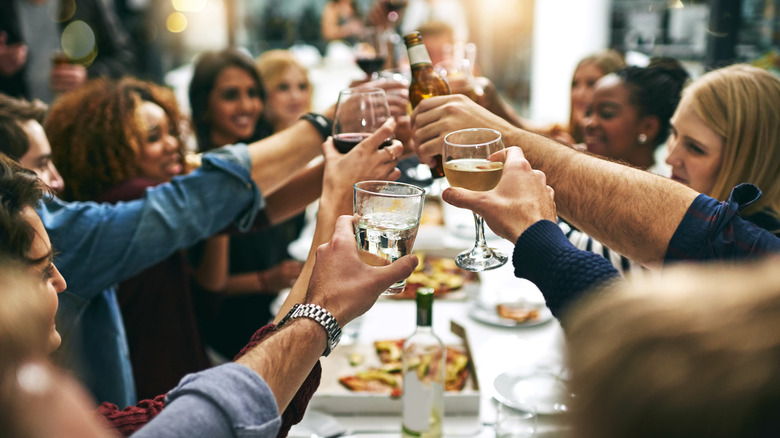
Dining out should be enjoyable and full of conversation, but it shouldn't sound like a sports bar. Part of what makes fine dining special is the balance between intimacy and atmosphere. When one table breaks that balance, the entire room feels it. "Loud talking, that other tables can hear, is quite annoying, if not inappropriate as well," says Rick Camac. Thomas Guillaume concurs, adding that keeping your voice at a normal, or even low, tone helps maintain the atmosphere around you.
Voices carry differently in a quiet dining room than they do in a crowded bar, and when one table gets rowdy, it can distract both guests and staff. The pacing of how dishes are served and wine is poured is meant to feel like part of the ambiance — your laughter shouldn't steal the show. If it drowns out the string quartet or makes other diners glance over mid-bite, it's too loud.
And here's the kicker: sound doesn't just set the mood, it can actually change how food tastes. Research reported in The Guardian found that high-pitched notes can make chocolate taste sweeter, while low ones bring out its bitterness. Strange, right? Now imagine that playing out in a quiet dining room. With sound being such a big secret ingredient, keeping your table in check matters. Too much noise, and you're not just being rude, you're actually messing with everyone's taste buds.
Stacking your plates
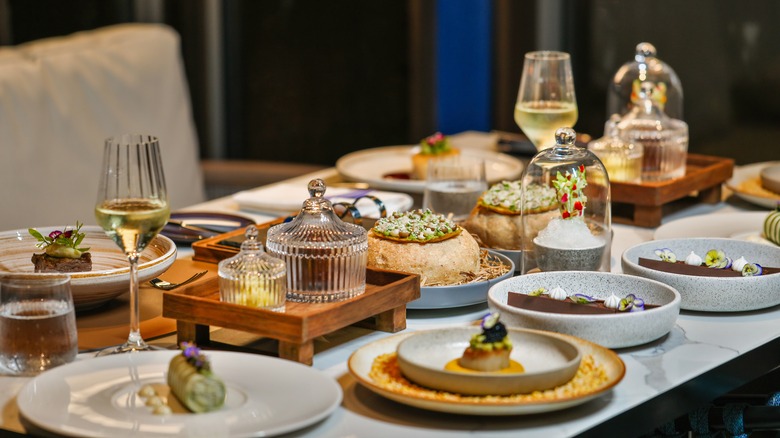
It might feel like you're helping by clearing your own plate, but in a fine dining setting, that small gesture can actually cause more trouble than good. "Let the staff take care of clearing plates off the table," says Guillaume. "It's part of the choreography of service, and much safer and smoother when left in our hands."
Everything at the table is timed just so: courses arrive at the right moment, glasses are topped up when needed, and the whole setup lets people focus on the food and atmosphere. When someone jumps in to stack plates or tidy up, it might feel like you're helping, but it actually throws off that rhythm.
It's also an easy way to show respect for the staff. Everything they do, from clearing plates to topping up water, is part of their training and routine. Stepping back and letting them manage the table is the best way to keep things going according to plan. The result? A meal that flows just right.
Making a mess of the check
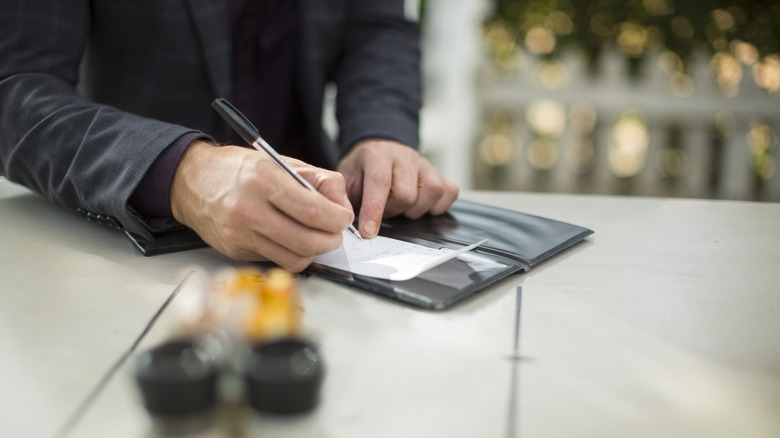
Nothing ruins the vibe of a meal quite like a chaotic payment process. "There should not be more than four cards presented for payment in most any situation," Rick Camac says. "Eight people, all presenting their own cards, should not be allowed — it is simply too time-consuming."
Anyone who's been in a dining room late at night has seen it happen: a group of friends leaning over the bill with calculators out, debating who had what and whether the shared appetizers should be divided by three or four. The process drags on, the server stands awkwardly by, and the rest of the dining room is left waiting as the staff can't turn the table. What should be a nice ending to the evening suddenly feels transactional, messy, and stressful.
On top of that, the math rarely works out. Guests often forget to include tax and service charges in their breakdowns, which means someone inevitably comes up short, requiring another round of tallying and sometimes an awkward discussion about who's covering the gap. Handing over six, seven, or even eight different cards only adds another layer of confusion, slowing things down even further.
The truth is, in the age of payment apps, there's no reason for this to happen. The better solution is to split the bill evenly across two or three cards at most and then settle up afterward. It's faster, easier, and lets the staff keep the flow of the dining room moving.
Sending back food or wine poorly
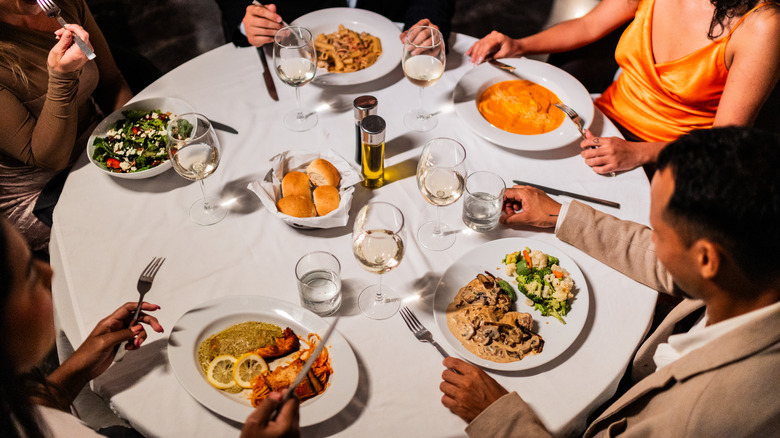
If something isn't right with your meal, the key is timing. "The right time to send something back is once the dish in question is first tasted," says Rick Camac. "The wrong time is after you've eaten half or more of the plate. I have seen many a guest complain about a dish that was mostly eaten."
This might seem obvious, but it's one of the most common faux pas in fine dining. Sending back a plate after polishing off most of it doesn't just raise eyebrows; it puts the staff in an impossible position. Kitchens want to correct mistakes quickly, whether that means remaking, swapping, or removing the dish entirely. But when diners wait until the end to raise an issue, it looks less like honest feedback and more like a play to get something comped.
The same courtesy applies to wine service. Sending back a bottle simply because it's not to your liking is widely considered bad form. Unless the wine is corked, oxidized, or otherwise flawed, it isn't grounds for rejection. A sommelier or server may recommend a bottle based on your preferences, but personal taste doesn't override the integrity of the wine itself. In other words, if you've committed to an expensive bottle, it's yours, even if it doesn't become your new favorite. The bottom line is, if something's wrong, say so right away. A bite or sip is all it takes to know whether the dish is off or the wine is flawed.
Over-customizing the menu
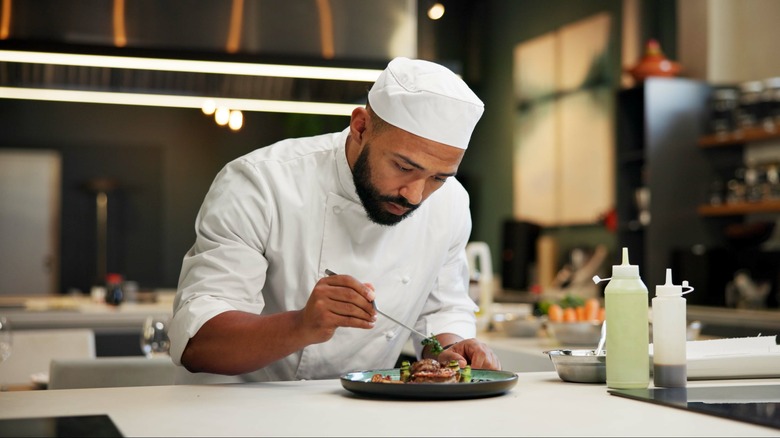
Fine dining is as much about the chef's vision as it is about the food itself. That's why over-customizing a dish can be a serious etiquette misstep. Asking for minor tweaks (like leaving off an ingredient due to an allergy or dietary restriction) is totally reasonable. But when requests start to strip a dish of its intended flavors or completely reconstruct it, it crosses the line.
"Restaurants need to accommodate diners the best they can, but too many requests likely means you're in the wrong restaurant for you," Rick Camac explains. "Perhaps a vegan should not go to a steakhouse and expect a myriad of menu choices. On the other hand, allergies should be inquired about (from the staff) and allergy information available, or on the menu."
Extreme alterations — think turning a signature steak into a salad, or asking for every component of a composed dish to be swapped — put the kitchen in a tricky position. It slows service, disrupts the rhythm, and undermines the dish the chef has created. Essentially, fine dining isn't a "build-your-own" exercise. Appreciating the thought behind each dish (and resisting the urge to turn it into a completely new meal) keeps the experience enjoyable for everyone.