

15 Medieval Dishes We'd Actually Eat Today
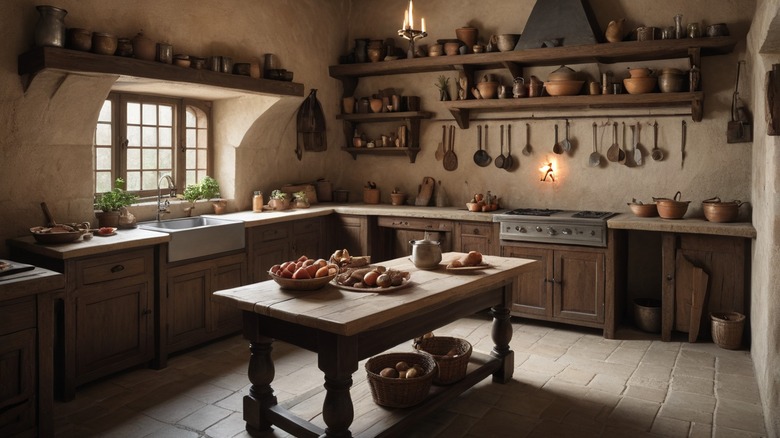
When you think of medieval cuisine, you probably think of a "Game of Thrones"-style banquet, complete with elaborate dishes like roasted swan, boar's head, and huge golden brown pies, all washed down with goblets of wine. It's true that special occasions for society's elite did involve extravagant table displays of flamboyant dishes, but for everyday people, recipes were, well, a bit more normal.
Rural peasants, for example, would sustain themselves on dishes like cabbage soup and salads made with produce from their own gardens. Even those who were better off would eat more simply on average days, opting for meals like fried beans and stuffed eggs. And of course, food habits varied from place to place. If you were in 10th century Baghdad, for example, you might snack on zalābiya, the ancestor to modern-day jalebi. We've researched some of the medieval dishes that honestly, we might consider making today (although some might need a few tweaks, of course — looking at you, frumenty with porpoise).
Cabbage pottage
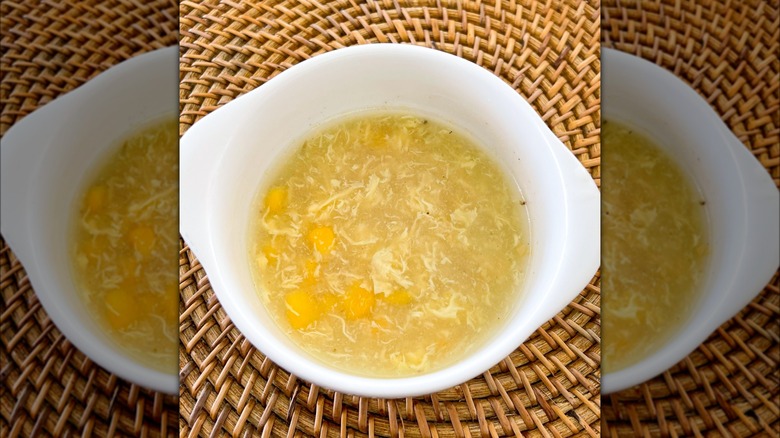
Cabbage has been a global staple for centuries. It's cheap, accessible, and nutrient-dense, which made it the ideal food for rural peasants during the medieval era. One popular English cabbage recipe, for example, was a type of thick stew, known as pottage. To make the dish, cabbage would be cooked alongside other simple, accessible vegetables in a cauldron. Think onions, leeks, and celery, for example, while fresh herbs would also often be added for flavor.
Cauldrons, now associated with witches and fairytales, used to be one of the only cooking devices available to poor medieval households. They could be compartmentalized to cook different dishes at once, and would also often serve as a source of light and heat, too. Like the peasants, richer households would use cauldrons to cook pottage, but theirs were usually made with much higher-quality materials. The pottage itself would also contain more expensive ingredients, like saffron and powder douce.
You don't need a cauldron to make pottage today. You can, of course, use a saucepan or large pot, but the process is still much the same. Combine stock with spices, herbs, cabbage, and other vegetables, simmer it all together, and serve with crusty bread.
Primrose salad
Nowadays, there's a salad recipe to satisfy any craving, from arugula loaded up with a zesty, citrusy dressing to creamy dill potatoes, or crispy chicken, celery, and scallions. People living in medieval rural England, however, did not have that luxury. What they did often have though, was access to a garden. This is why a popular dish during the 12th century, for example, was primrose salad.
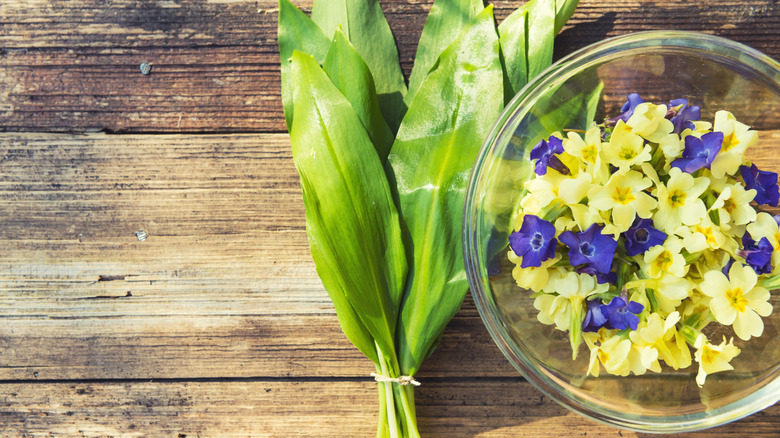
Primrose, which grows in the winter and spring in the U.K., has thick green leaves and a light yellow flower, both of which are edible. During medieval times, people would combine primrose with ingredients like fennel, garlic, rosemary, and lettuce to make a salad. So it's not too far from the type of salad dishes most of us would whip up today (but probably prettier, thanks to the flowers). If you want to add them to your next salad recipe, you can expect a pleasant mild and sweet flavor from the flowers and a slightly spicy taste from the leaves.
People ate primrose salads for sustenance, but many also believed that garden flowers and their leaves had medicinal properties. And maybe they weren't too far from the truth. Today, many people use primrose oil to soothe skin conditions like acne and eczema. However, it's important to note that there isn't much research available to back up primrose's healing benefits.
Quince connate
Currently, in the British Museum, there is a six-metre long scroll of parchment known as the "Forme of Cury." It might not look or sound like it initially, but it is actually one of only ten copies of the very first cookbook in Britain, written in the late 1300s. Inside, there are several different recipes, each of which was dictated to a scribe by King Richard II's team of cooks. There is cabbage pottage, for example, and another much sweeter dish: Quince connate.
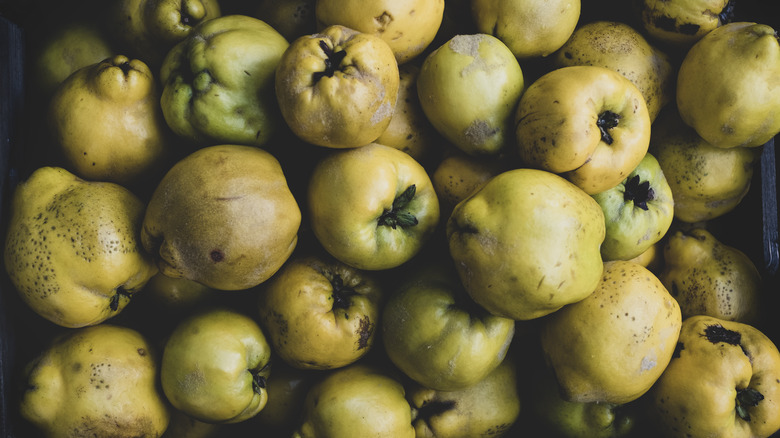
This medieval dessert might have looked like an Italian panna cotta, according to modern interpretations, and it probably tasted just as creamy and sweet. It's made by stewing quinces with lard until tender, before adding honey, egg yolks, and a little saffron. The final result was a little fruity, custardy, and incredibly delicate. English connate was very similar to another medieval dish: Condoignac from France. In a very similar way to creamy connate, condoignac was made by cooking quince with honey, although red wine would usually be added to the mix, too.
Benes yfryed
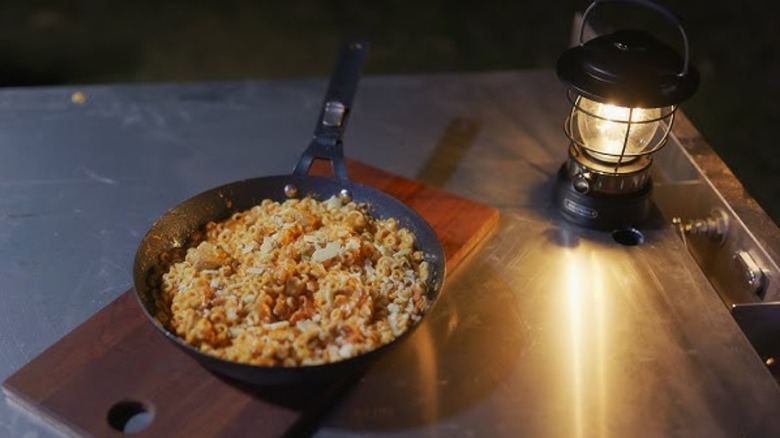
The "Forme of Cury" is an incredibly useful and insightful resource for people who want to learn about medieval English cooking. As well as connate, it also contains a recipe for benes yfryed, which is Old English for fried beans.
The simple dish involved boiling beans (likely fava beans) until they're soft, before sautéeing them with garlic, onions, and powdered douce (which was a mix of expensive spices, like ginger and nutmeg). And that's it. That's all there was to it. In the royal household, the fried beans then might be served with gravy and roasted pork chops in red wine (known as cormarye).
Benes yfryed is easy to recreate today, but you don't have to stick to fava beans. You can opt for black-eyed beans, cannellini beans, or any other type of beans you have hanging around in the pantry. Serve with pork if you wish, or maybe wilted greens, toasted walnuts, and a sprinkle of cheese.
Payne foundewe
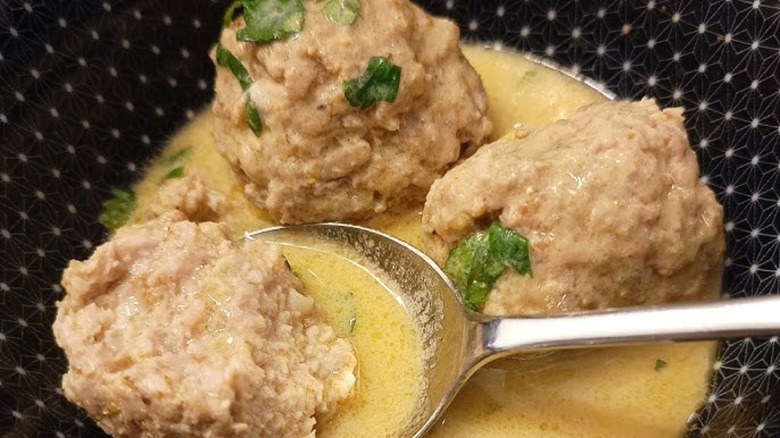
It might not sound familiar from the name, but this medieval dessert has actually stood the test of time. In fact, payne foundewe (also spelt as foundow) is basically just bread pudding. Of course, the recipe for bread pudding has been refined and modernized over time, so payne foundewe isn't identical to what you might eat today, but it is very similar.
The medieval version involves frying bread in grease, before combining it with ingredients like red wine, spices, raisins, and a honey mixture, and then grinding the whole thing down (which would be done manually, with a mortar and pestle). The thick mixture would then be served cold with a range of different toppings. Some would opt for just a touch of anise, for example, while others might go for coriander and sugar.
Today, you can serve payne foundewe just as you would any other bread pudding. Maybe drizzle it with cream, for example, or layer it up with ice cream, syrup, or custard.
Apple muse
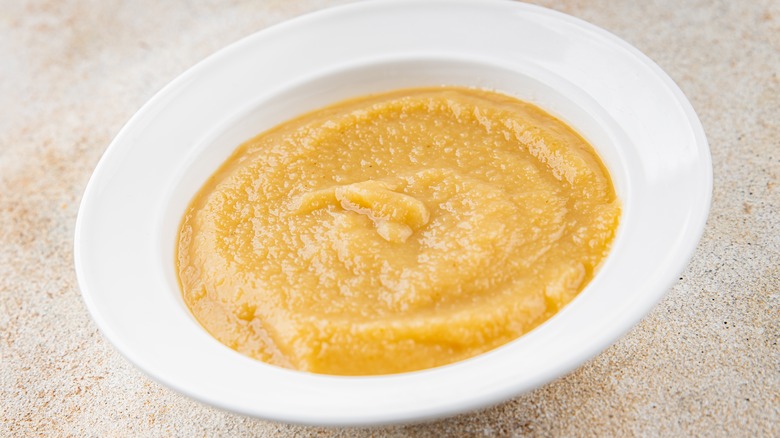
Medieval Europeans ate a lot of apples. It makes sense, because they would often grow the fruit in their gardens (alongside primroses, for the primrose salads, and other fruits like pears and plums). Of course, they could just eat them fresh from the tree, but another way people enjoyed eating apples was in a dessert called apple muse.
Apple muse was sweet, fruity, and creamy, and very simple to make. In fact, according to the written record of one 15th century recipe, it came together with just three key ingredients: Apples (of course), almond milk, and honey. The apples would be mashed through a sieve or with a pestle and mortar to form a puree, and then combined with the almond milk and honey before serving. Other ingredients for additional flavor and texture included grated bread, saffron, and salt.
Another earlier recipe for a similar dish called appulmoy, taken from "Forme of Cury," adds rice flour into the mix, too, probably to thicken it up. The dessert evolved over the medieval era, with slight variations with ingredients, but the core element of mushy apple puree remained the same.
Departed creamed fish
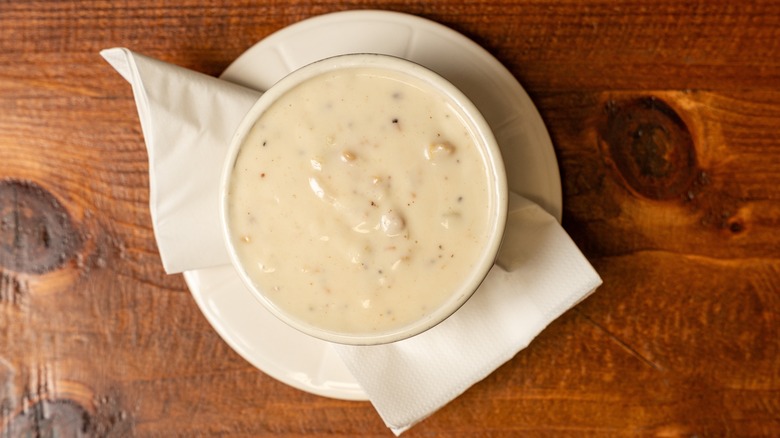
"Curye on Inglysch" published in 2013, is another incredibly useful historical resource, as it's loaded with recipes that have been gathered from 20 medieval texts. One of those recipes is for a dish called departed creamed fish, which was basically a thick, fish soup, made with skinned cod. It sounds like it should be overly fishy, but thanks to additional ingredients like sea salt, almonds, spices, and sugar, the seafood flavor is actually pretty mild.
Medieval cooks in France also made a similar dish to departed creamed fish, called mortrews, only they would often use meat or chicken liver, instead. The English might have opted for fish to make the creamy soup during Lent or other fasting days throughout the year, as the Church was extremely strict on limiting the consumption of meat during these periods. Fish was also easier to obtain, especially if you had access to the right equipment and a nearby water source.
Kishkiyya
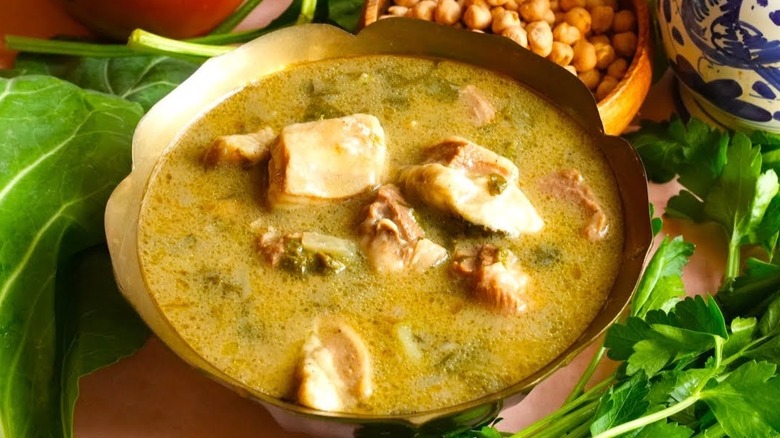
A hangover is not a modern condition. In fact, nursing a sore head after a few too many tipples the night before is one of the oldest human experiences. Research suggests the ancient Assyrians even tried to cure their hangovers with a mix of ground birds' beaks and myrrh. In medieval Iraq, though, people had a slightly more palatable-sounding solution: Kishkiyya.
Particularly popular in 10th century Baghdad during the Abbasid Dynasty, kishkiyya is basically a lamb stew. But there's a little more to it than throwing some lamb meat in a pot with a few vegetables. Kishkiyya was made with a flavorful mix of fatty lamb, kishka dried yogurt, verjuice, chickpeas, galangal, onions, cassia powder, greens, olive oil, and herbs.
And actually, in reality, kishkiyya probably did help to relieve a hangover. Firstly, it was hydrating due to the high water content, which is an essential part of relieving a hangover. Secondly, it was packed with nutrients and antioxidants, thanks to all the plant-based whole foods. So maybe next time you've over done it on the wine or the spicy margs, consider whipping up a batch of medieval kishkiyya to nurse yourself back to health.
Jalebi

You might be familiar with jalebi already. The crispy, crunchy, spiral-shaped sweet treat has medieval roots, but is still enjoyed all over the world today. It's sold as street food in India during Diwali, for example, and often served up in markets across Egypt, Nepal, Pakistan, and beyond.
One of the earliest recipes for jalebi, however, again dates back to 10th century Baghdad. Back then, it was called zalābiya, but the recipe, published in the Arabic cookbook Kitab al-Tabikh, was almost identical to modern-day jalebi. Side note: This is the same cookbook that gave us the hangover cure, kishkiyya.
Today, jalebi is typically made with a batter of corn starch, turmeric, and a fine white naan bread flour, called maida. This batter is then squeezed out through a dispenser with a sharp tip to make the spiral shape, and then fried in a pan with ghee. The final step is to cover the jalebi with a warm sugar syrup before serving. Crunchy, sweet, and delicious.
Soppes dorre
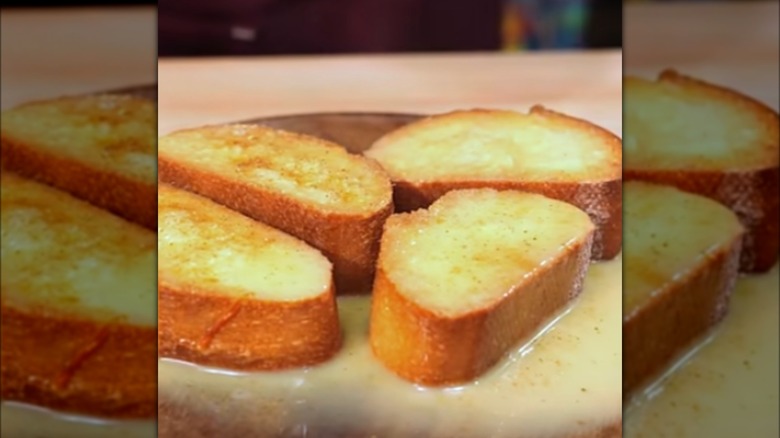
Nowadays, many of us start our day with cereal and milk. It's simple, but filling, and sets us up well for the busy day ahead. Things weren't so different in 15th century England, only instead of cereal, people often enjoyed their milk (which was often almond, not cow, by the way) with toasted white bread.
No, we're not talking about a glass of milk and some toast. The bread would actually sit in the milk, which was flavored with some spices, like cinnamon, ginger, and cloves, and mixed with white wine or ale (yes, people really did start their day with alcohol back then).
The milk and bread dish was called soppes dorre, and it was a popular choice for medieval families who had the time to actually sit down and eat breakfast together. It was eaten throughout the medieval period; in fact, a recipe for a similar dish called sowpes dorry was also published in the 14th century cookbook "Forme of Cury." Minus the booze, the soppes dorre sounds like a sweet, flavorful, and autumnal way to start the day.
Stuffed eggs
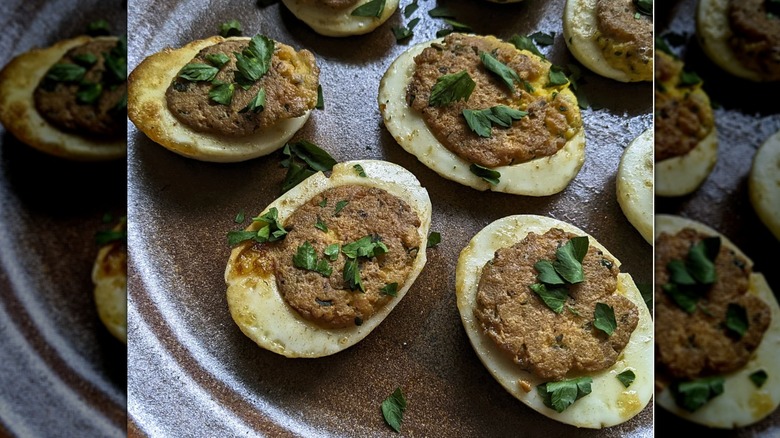
How do you like your eggs in the morning? Let's guess: It's boiled, poached, fried, or scrambled, right? But if you were Italian in the 1300s, you might have replied with another option: Stuffed. We know this because "Liber de Coquina," a cookbook from the 1300s that was likely written by two medieval French and Italian cooks, features a recipe for Italian stuffed eggs.
The recipe is pretty straightforward: It involves boiling the eggs before allowing them to cool and then stuffing them full with ingredients like marjoram, cloves, cheese, and saffron. After that, the eggs are fried and served with verjuice. It's kind of similar to a modern deviled egg, which is usually boiled, halved, and filled with ingredients like mustard, mayo, and Tabasco.
The Italians weren't the only ones who enjoyed stuffed eggs. Just after the medieval period, a Dutch cookbook called "Een notabel boecxken van cokeryen," was published, featuring a recipe for "split nun" eggs. Again, the eggs were usually stuffed, but this time with ingredients like apple and cinnamon.
Armored turnips
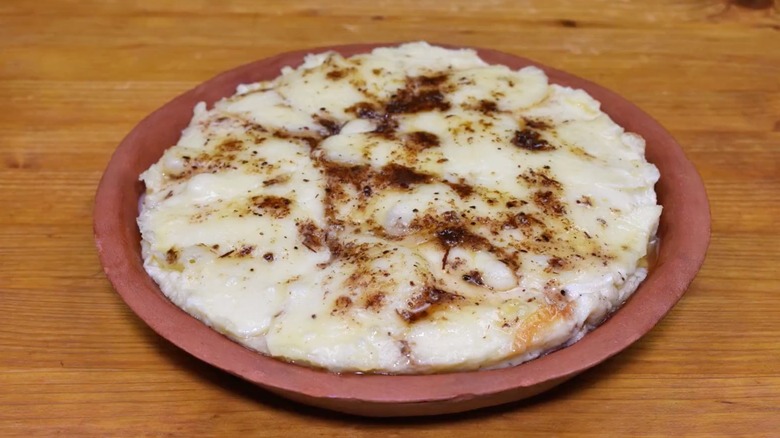
Armored turnips are another Italian medieval dish. The key ingredient is turnips (of course), which are boiled, thinly sliced, and then layered in a dish and coated with butter, powdered douce, and cheese. Creamy and full of flavor, armored turnips are very similar to the French dish, dauphinoise potatoes, for example, or the British favorite, cauliflower cheese.
One of the earliest recipes for armored turnips was published in the medieval Italian cookbook "De honesta voluptate et validudine." The book was written by Bartolomeo Sacchi, who was both a famous Italian humanist and gastronome. His works helped to document medieval cooking techniques, and allowed historians to learn about the tastes in Italy at the time (sugary sweet was having a big moment).
According to Sacchi, armored turnips should be made with a flavorful cheese, but it shouldn't be too aged or ripe. On that basis, mozzarella, which is a fresh Italian cheese, would make a great choice.
Frumenty
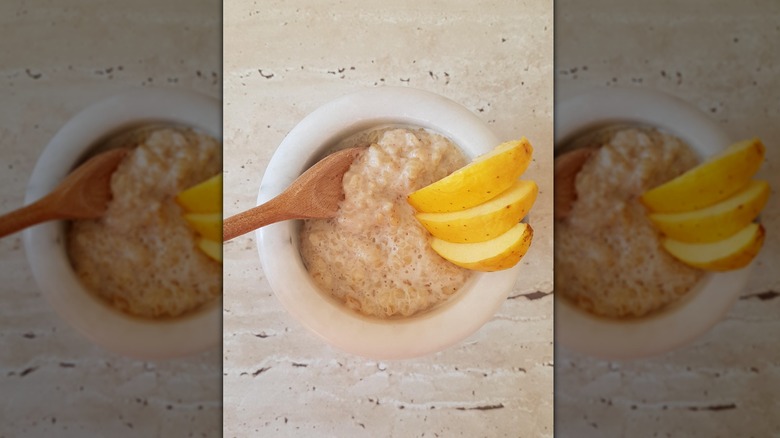
Porridge is one of those dishes that has never really gone away. Research suggests the dish was made as far back as the Stone Age, and it's still being eaten all over the world today (oatmeal, for example, is a type of porridge).
In medieval England, frumenty was a particularly popular type of porridge. It was usually made with wheat or barley, which was mixed with spices, sugar, and different fruits. Some would make it with almond milk and saffron, for example, while others would thicken up the mixture with eggs.
Making porridge with wheat, spices, sugar, milk, and fruit sounds particularly appetizing, but one type of frumenty we would probably think twice about before making today? Frumenty with porpoise. Yes, this was a real recipe, published by King Richard II's cooks in the "Forme of Cury." At the time, porpoise was a luxury, high-status ingredient, so it makes sense it was served in the royal court. Today, we'll probably stick to almond milk and saffron.
Suppa dorata
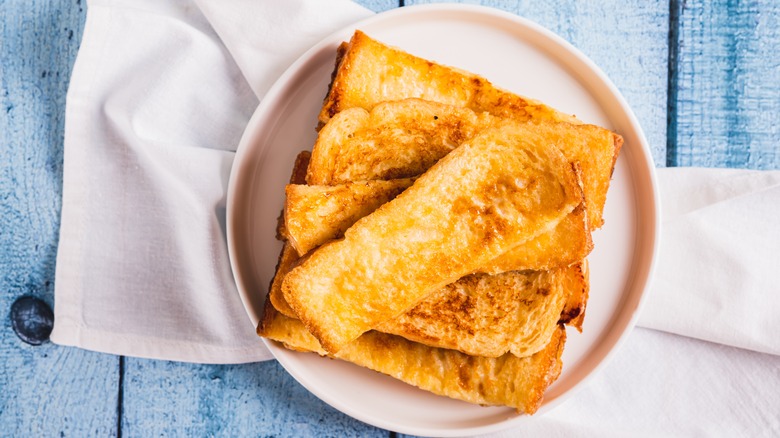
When it comes to delicious brunch dishes, it's hard to beat French toast. It's filling, satisfying, and versatile, as it can be topped with everything from fresh berries to chocolate chips. Medieval Italians also enjoyed French toast, only their version of the dish was called suppa dorata.
Just like French toast, suppa dorata is also made with eggs. But after this, things start to change direction. Trimmed bread is then soaked in the eggs, but only after they have been combined with ingredients like rose water and sugar. After the bread has been fried, it is then served topped with strained saffron and more rose water.
A recipe for the dish was first published in the 15th century cookbook "Libro de arte coquinaria." The work was written by Maestro Martino da Como and is considered to be one of the most important medieval Italian cookbooks of the time.
Dillegrout
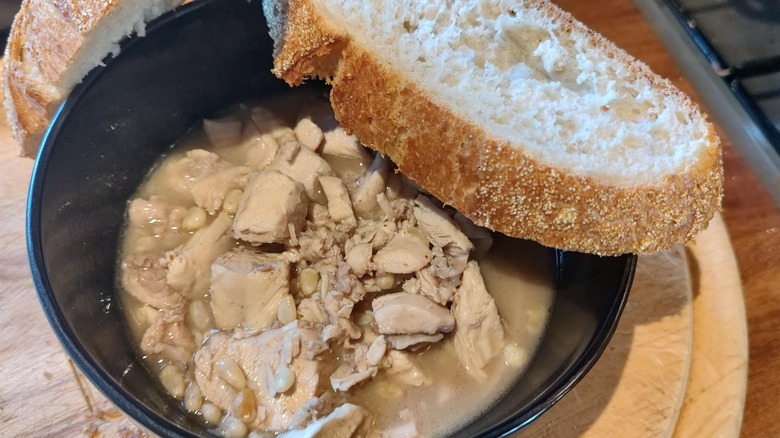
Dillegrout is chicken stew, but it probably doesn't taste like anything you've tried before. Often, modern chicken stews are made with broth, herbs, and spices, for example (of course, the exact ingredients vary depending on the region they come from). But it's unusual to find a chicken stew like dillegrout, which is made with a unique mix of ingredients, like almond milk, sweet wine, pine nuts, rose water, ginger, and sugar. Everything would be left to simmer together for around an hour, before being served out to hungry diners.
Stew is often seen as peasant food, and pottages (like the cabbage pottage we mentioned earlier), certainly were. But dillegrout was not in the same league as a simple vegetable pottage. This rich, sweet, and slightly spicy dish was actually served to royalty and their friends at several coronations. In fact, the first coronation it was served at was in the medieval era, in 1068, and the last was at the coronation of George IV, in 1821.