

Japanese Cucumbers Are A Super Substitute For English Cukes In Green Salads

Unbeknownst to many, there are over 50 different kinds of cucumbers out there, ranging from long and dark green to short, plump, and verging on yellow. Some of the most common types of cucumbers you might spot at the grocery store might be English, Garden, Gherkin, Kirby, and Persian, but that doesn't mean those are always the best-suited varieties for your cooking needs. Delicate English cukes might be the Cucurbitaceae of choice for tea sandwiches or tzatziki, but when it comes to upgrading leafy green salads, Japanese cucumbers are ideal.
Japanese cucumbers (named "Kyuri" in Japan) are slender, dark green vegetables that can vary in length from about 6 to 12 inches, whereas English cucumbers that have a lighter green color and longer length. Like English cukes, Kyuri — and many other species of edible cucumbers — have been bred to achieve lower levels of cucurbitacin in an effort to reduce bitterness. While English cucumbers are quite mild, Kyuri are instead revered for their sweet taste and flavor that's reminiscent of melons, which can add complexity to salads. Their crunchy and firm texture are another thing that makes them different from English cucumbers. Plus, the thin skin and lack of seeds of Kyuri also make them perfect to enjoy raw in salads.
From salads to sushi, Kyuri can do it all
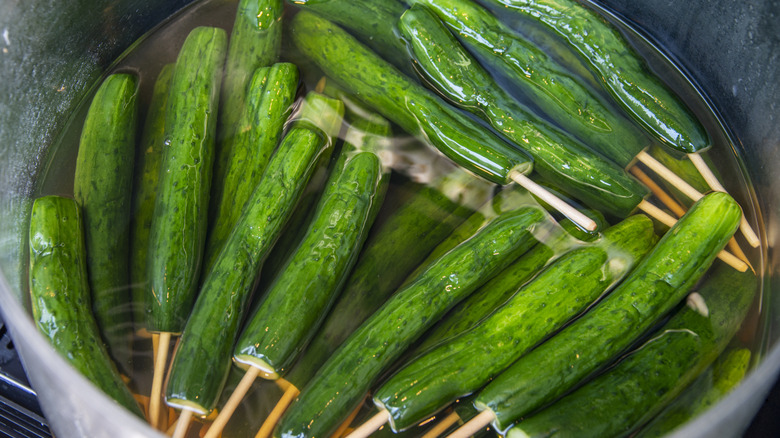
Japanese cucumbers shine in salads thanks to their high water content that provides a refreshing taste and crunchy texture. In fact, they're often the star in the Japanese cucumber salad called "sunomono." Recipes usually involve marinating sliced Kyuri in vinegar, soy sauce, sugar, and sesame seeds to create a dish you'll spot at places like Karasu, one of the 14 best Japanese steakhouses in NYC. Crunchy Kyuri are also popular in slaws and potato salads — you can even use them in our Thai smashed cucumber salad. They fare well in sushi rolls, sandwiches, wraps, pickled dishes, and stir-fries, too.
While not necessarily native to Japan, Kyuri were cultivated on Japanese soils over time and bred with Chinese cucumber varieties. The plants thrive in greenhouses, but also do a fairly fine job growing outdoors, climbing up to heights of six feet tall. When grown in greenhouses, there's no specific time of year to harvest, but in wild soils, the cukes are best harvested between May and early June. Kyuri might not always be easy to find at your local grocery store, but Japanese and Asian markets (occasionally, even farmers' markets) should have a supply for all of your salad-inspired needs.