

The Traditional Noodles That Make Pad Thai
We may receive a commission on purchases made from links.
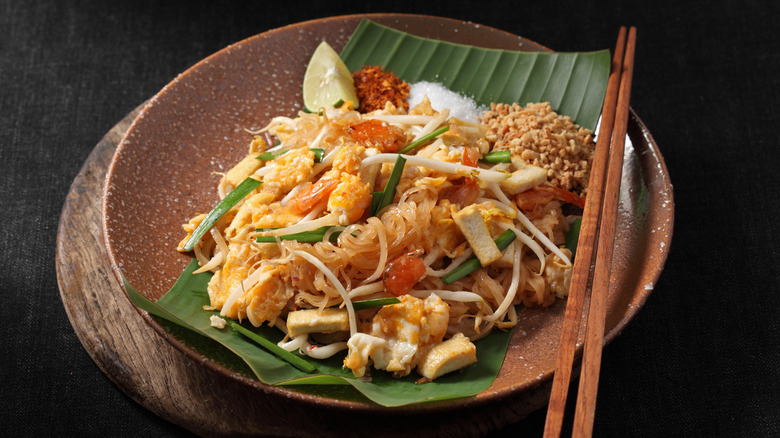
Few dishes are as vibrantly full-flavored and remarkably balanced as pad Thai. Whether you prefer sweet, sour, salty, or pungently savory flavors, this popular stir-fry has it. The base sauce (tamarind, fish sauce, sugar), choice of protein (shrimp, chicken, egg, tofu), and toppings (peanuts, lime, green onions, cilantro) all work together to create something deliciously tantalizing for taste buds without any element outshining another, making it easy to understand the dish's popularity. With all these components, you might overlook the noodles. However, they aren't just part of the dish, noodles ARE the dish. The only question is: what kind of noodles are they, anyway?
Traditionally used in pad Thai, sen lek are one of the many dried rice noodle varieties used in Asian cooking. Made from rice flour and water, these naturally gluten-free noodles (also called rice sticks) are short, thin, straight-cut, and flat. They come in a range of widths, with 3 millimeters being the sweet spot for stir-fries like pad Thai and noodle soups like tom yum. Their width makes them ideal for absorbing sauce, ensuring pad Thai's complex flavor is present in every bite, while their toothsomeness (when properly prepared) prevents them from falling apart or becoming gummy.
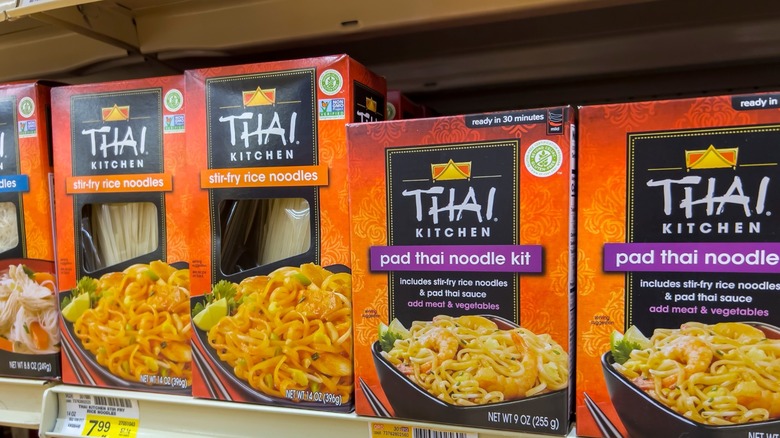
You can find sen lek noodles at most Asian grocery stores, in the international aisle at any supermarket, or even online from retailers like Amazon. Some popular brands include A Taste of Thai's noodles, Three Ladies, Thai Kitchen, or Lotus Foods.
How to prepare the noodles for pad Thai
Since the noodles "Thai" everything together in this dish, you'll want to prepare them correctly to make restaurant-quality pad Thai at home. Most importantly, don't boil them unless you're short on time. Rice noodles can quickly overcook and turn to mush. Instead, simply rehydrate the noodles by soaking them in room temperature water until they lose their stiffness for approximately 20 to 30 minutes. You can use warm water to speed up the process, but watch them closely since al dente noodles make all the difference in this entree. Otherwise, save time by soaking in advance. Then, drain and store the noodles in an airtight container in the fridge until needed.
While the rice noodles rehydrate, you can start the stir-fry for the pad Thai of your dreams, whether it be a mushroom and chicken pad Thai, shrimp pad Thai, or a tofu version. The noodles get added to the rest of the ingredients in your wok (or frying pan) during the last few minutes of cooking. Two tips to avoid breaking them are to never use a metal spatula and don't stab at them. Rather, gently toss and fold the noodles in with the other ingredients using a wooden spoon or spatula (or, ideally, both). The point is to have the noodles soak up all the sauce and flavors in the dish without losing any of their bouncy structure. Then, simply plate, garnish, and enjoy.