

Everyone Forgets To Sanitize Their Wood Cutting Board After Every Use — Here's Why It Matters
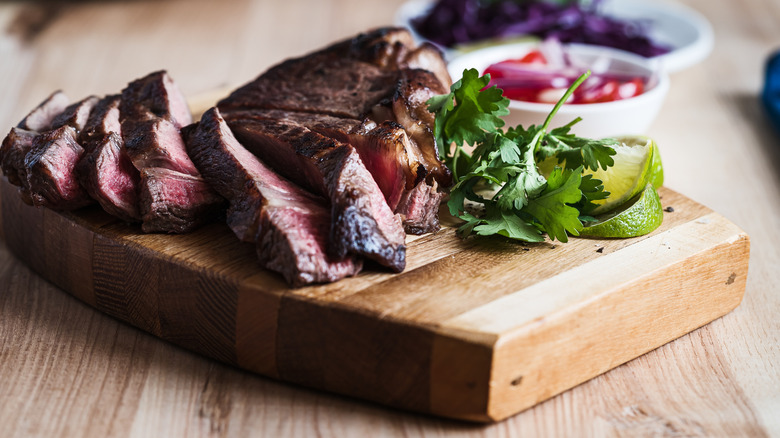
With pesky, deep cuts on wooden and plastic cutting boards, it's important to sanitize after every use. Especially on raw proteins such as white meat, red meat, and seafood, it's a no-brainer. But with items such as freshly cut fruit and vegetables, why is this second step needed? Over time, your cutting board can harbor and grow harmful bacteria and pathogens. These can build up, and if you're unlucky, unkempt cutting boards can even cause a foodborne illness. There are two simple steps to successfully ensure that your cutting board is ready for duty: clean and sanitize.
First, ensure your cutting board is free of leftover food particles by giving it a thorough wipe. Then, wash it with soapy warm water and rinse. Unfortunately, most stop here thinking that this initial clean is enough, and the most important part is often forgotten. Properly sanitizing your cutting board reduces bacteria to an amount that's considered safe by the FDA. Chlorine, iodine, and quaternary ammonium are currently the food-grade approved sanitizers by the FDA.
For a chlorine solution, you'll only need one simple household item, food-grade bleach, which is available over the counter. One tablespoon of bleach per gallon of water is the recommended ratio for cleaning. According to the most updated 2022 Food Code, a "contact time of at least 7 seconds for a chlorine solution of 50 mg/L that has a pH of 10 or less and a temperature of at least 100 degrees Fahrenheit or a pH of 8 or less and a temperature of at least 75 degrees Fahrenheit" is required for proper sanitation. In other words, keep your water hot, give it a good, long dip, and then let it air dry.
Other ways to properly care for your cutting boards
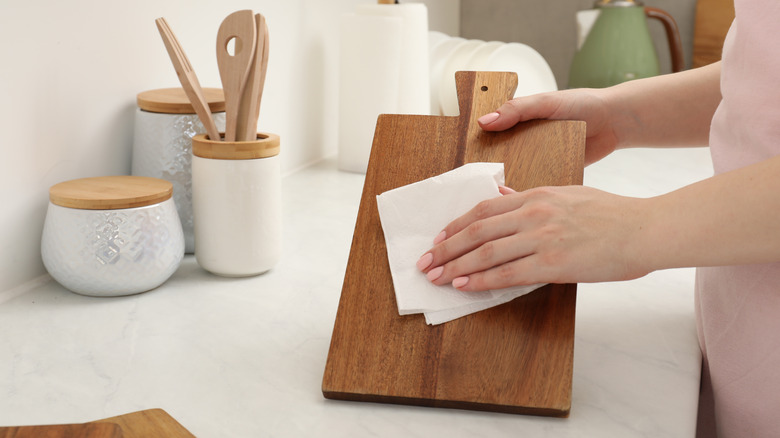
Keeping your cutting boards clean is a reliable way to increase their lifespan. Since this kitchen staple is used almost every day, what other tips and tricks can help extend a cutting board's limited life? For starters, keeping your wooden boards dry will save you from excess moisture, which can cause mold, pathogens, and warping. What is the best way to guarantee it air dries upright? Try this affordable and genius hack that makes inspired use of a Dollar Tree dish rack.
When it comes to stubborn, smelly, or messy food particles, something lightly abrasive and acidic can help, such as lemon and salt. Additionally, if you want to lock in that everlasting shine and keep them free from dampness, consider mineral oil on your wooden boards. Lastly, if you happen to have antique or vintage cutting boards, they may just require a little more TLC. We've compiled this guide concerning how to take care of vintage cutting boards in order to keep them in tip-top shape.