

The One Kitchen Spot You Never Clean Is Actually Crawling With Germs
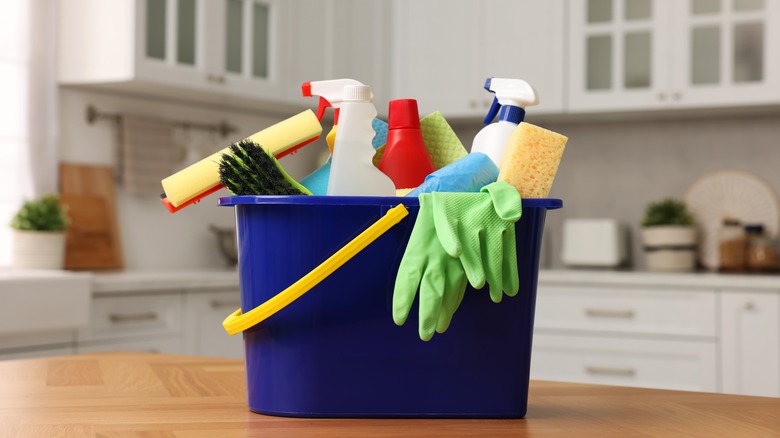
No matter how diligent you are, chances are there are spots in your kitchen you forget to clean but that do need a good wash. We tend to focus on zones that feel obvious because of all the food directly passing through them, like the refrigerator, oven, stove, and sink, and it's easy to remember to wipe down counter tops because those surfaces are right in front of us with visible crumbs, spills, and residue. But the kitchen is like your home's Grand Central Station, the busiest room in the house where everyone in the family is coming, going, and touching everything. Add food, sometimes raw or unwashed, to that mix, and you've got germs on truly every surface you can think of. One of the most frequently touched spots? The light switch.
Light switches are a part of the kitchen most of us don't think to clean because they don't immediately look dirty and they're also just there, blending into the background. But everyone in your home is constantly touching them, possibly in the middle of prepping food or cleaning other areas. Because of its universally essential status, the light switch becomes a breeding ground: Once one person touches it, there are germs there to be picked up by the next person, and these germs then get spread to every other surface. Cleaning a light switch stops an entire cycle of spreading bacteria in its tracks. Luckily, it's a small zone that's quick and easy to clean.
How to combat the danger of a dirty light switch
Light switches have been found to host a lot of bacteria, since it's a highly-trafficked area. We know that's a lot to take in — and frankly gross — but the reality is urgent. Bacteria that is hazardous to our health like salmonella and E. coli can thrive on light switches, especially when we don't think to clean them. And all that invisible bacteria is only encouraged to grow by the moisture levels and organic matter constantly available in the kitchen. If you touch a light switch that has bacteria on it and then cook something like raw meat, you could be transferring that bacteria to your food.
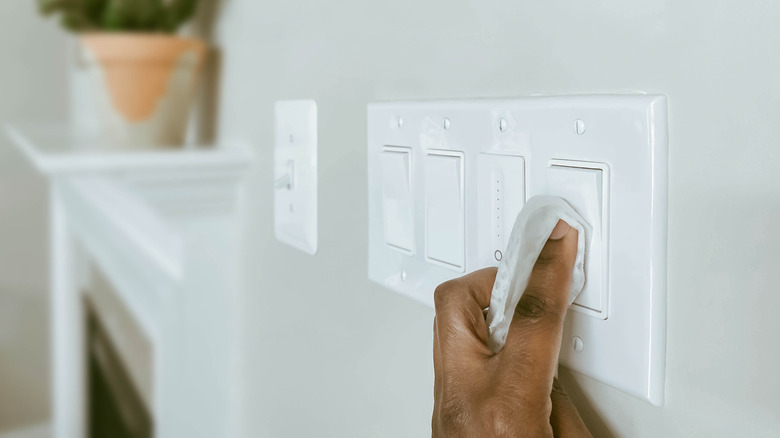
This is why a regular cleaning of your light switches is absolutely vital. A quick task, it's easy to incorporate into your weekly cleaning schedule, or even address more frequently on its own. To do so, make sure the switch is off and then use a wipe or damp microfiber cloth. You can use a mild disinfectant or a diluted vinegar solution to effectively kill bacteria without damaging the light switch or plate. Small, exposed, and usually flat and smooth depending on how decorative your plate might be, light switches are happily not one of the toughest things in your kitchen to clean. But this cleaning task is indeed monumentally impactful for stopping-cross contamination.