

What Does It Actually Mean To Cut Meat 'Against The Grain'?
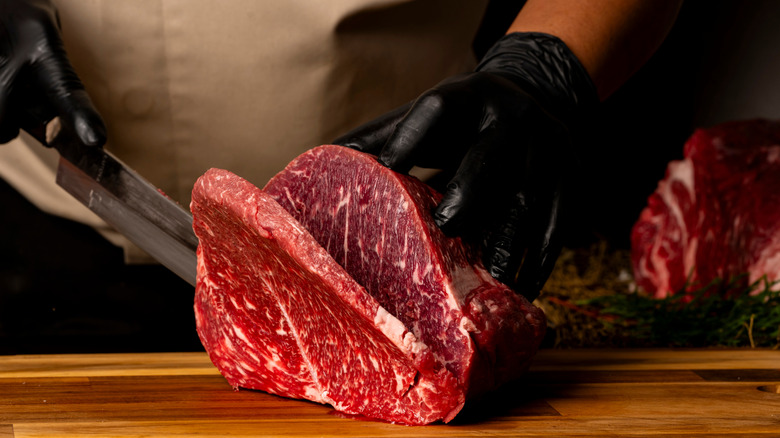
Every cut of meat is made up of bundles of muscle fibers that run in long, parallel lines. When you look at a raw flank steak or brisket, those lines show up as faint ridges or striations on the surface, and that's what meatheads call the "grain." If you slice along those fibers, each bite ends up with a long rope of intact muscle, which makes it tough and chewy. The way to make those same cuts tender is to break them up by turning the knife perpendicular to the fibers and cutting across them, which is exactly how steak is sliced at a steakhouse. That shortens the muscle strands so your teeth don't have to do as much work.
Chefs rely on this rule especially for lean, hardworking cuts like hanger steak or skirt steak, where the fibers are pronounced. Even when cooked perfectly, these cuts can feel leathery if sliced the wrong way. Against the grain, though, they taste dramatically different, particularly because they're easier to chew. The steak is also more flavorful because the shortened fibers release more juices in the bite. The rule applies to other cuts of meat as well; brisket, stir-fry beef strips, and even homemade jerky all benefit from that perpendicular cut "against the grain." Once you learn to spot the grain, you'll notice it every time you face a cutting board, and you'll know precisely how to position your knife.
'Against the grain' knife strategies for tender bites
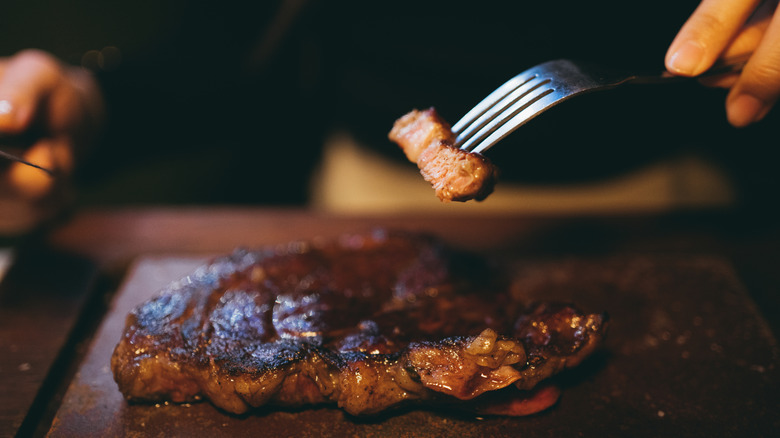
Finding the grain takes a little attention. Place the steak or roast on a cutting board and look closely at the muscle lines running across its surface. Rotate the meat so your knife is aimed at a 90-degree angle to those lines. For larger roasts like brisket, you may need to reposition halfway through because the grain can change direction. Use a sharp chef's knife and cut in steady, even slices about a quarter-inch thick for most steaks, or thinner if you're prepping stir-fry beef strips.
Resting the meat first is essential because the hot juices need time to redistribute, or they'll run out onto the board. Once rested, cutting against the grain not only makes the meat easier to chew but also helps it stay moist and flavorful. Short fibers trap moisture better, so each slice feels more tender. Professionals sometimes cut on a slight diagonal, which shortens the fibers even more and creates wider slices that look good on the plate.
If you want to see the difference firsthand, try cutting one section with the grain and another against it. The comparison makes the principle obvious; one side pulls like a rope, while the other gives easily under the bite. Once you've tried it, you'll never go back to slicing meat without checking the grain.