

The Sneaky Words To Look Out For On Soup Labels That Indicate A Ton Of Added Salt
We may receive a commission on purchases made from links.
The nutrition label as we know it has been around since the early '90s and mandatory since 1994. It's designed not only to provide transparency about ingredients, but also a breakdown of the nutrients and how they fit into the Food and Drug Administration's daily recommended intake.
It's a requirement that ingredients are listed by highest content in terms of weight. So if you're trying to avoid excess sodium, you might know to scan a soup label for salt or sodium chloride, to see how high up the list it is.
While this might seem straightforward, it's not always the case. Salt comes in many forms with different names. If you see the ingredients disodium phosphate, sodium citrate, sodium nitrate or nitrite, sodium benzoate, sodium caseinate, or monosodium glutamate (MSG), all of these add up to a lot of salt. Your best bet is to check the sodium level on the nutritional data panel, and remember that the recommended daily intake is just 2300 mg.
How much salt is in your soup
The problem with salt is that it's such a good flavor enhancer. So whether it's a classic tomato soup or a creamy chowder, salt is going to elevate the ingredients to be more than the sum of their parts. If you have a favorite canned soup on hand for a quick dinner or as a base for other recipes, it's more than likely it will have a good dose of sodium.
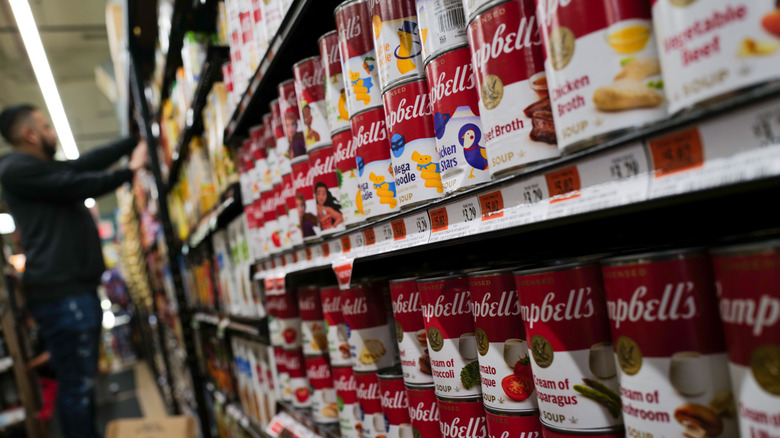
Taking a look at some of the most popular soups reveals that salt sells. A ½-cup serving of Campbell's Chicken Noodle will get you a hefty 39% of your recommended daily sodium intake, while Progresso's New England Clam Chowder packs 33% of the recommended amount into 1 cup. If you don't stick to the suggested serving size and eat the whole can instead, you get at least double the sodium.
A number of brands including Health Valley and Amy's Soup offer low-sodium or reduced-sodium options, but be aware that these are two different things. However, describing a product as having reduced sodium isn't the same as stating that the sodium content is low. So again, it pays to check the label for the exact numbers. If you do find a low-salt option, but you find that it just doesn't cut it in terms of taste, check out these great ways to boost the flavor of canned soup.